
Hanwha ARD-1610 vs Speco Technologies D16WVN8TB: Specification Comparison
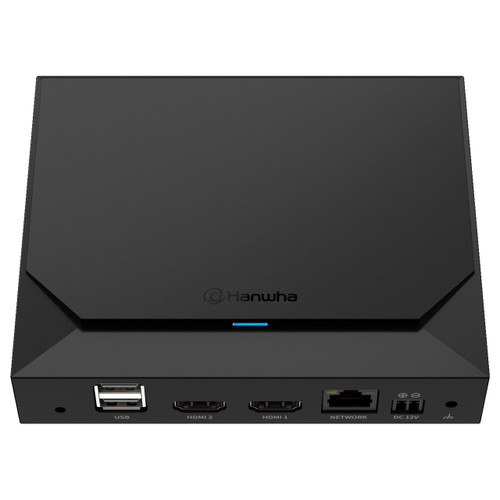
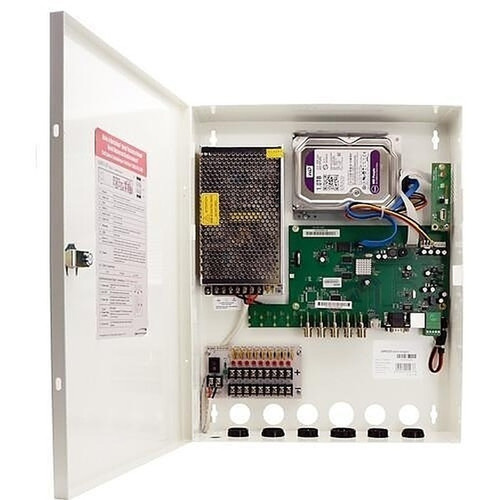
Both the Hanwha ARD-1610 and the Speco Technologies D16WVN8TB are 16-channel analog-HD video recorders capable of accepting TVI camera inputs, placing them squarely in the same product class for installers evaluating a hybrid or dedicated TVI DVR platform. The ARD-1610 is a 1U rackmount hybrid NVR/DVR supporting AHD, TVI, CVI, CVBS, and up to 18 IP channels; the D16WVN8TB is a wall-mount TVI DVR with an IK10/IP67-rated enclosure and NDAA/TAA certification. This comparison examines recording capability, storage, and integration to help integrators choose the right platform.
In This Guide
- What recording performance and camera input flexibility does each unit actually deliver?
- How much storage does each recorder provide and how is it managed?
- How do the two recorders integrate into a broader security or IT infrastructure?
- Which should you choose: the ARD-1610 or the D16WVN8TB?
- Side-by-Side Specs
- FAQ
What recording performance and camera input flexibility does each unit actually deliver?
The ARD-1610 supports 16 analog channels (AHD/TVI/CVI/CVBS) plus up to 2 additional IP channels for a maximum of 18 channels total. Analog recording tops out at 5MP @ 12fps or 2MP @ 15fps per channel, with a maximum recording bandwidth of 100 Mbps. It records in H.265, H.264, and MJPEG with four recording modes: Manual, Schedule, Event, and Dual Track. Live display reaches up to 4K via HDMI or VGA, with up to 20-division multi-screen layouts. The D16WVN8TB is rated as a 4K TVI DVR supporting 16 channels and uses H.265 and H.264 compression. Specific per-channel frame rate maximums, total recording bandwidth, and multi-screen layout counts are not published in the available specs for the D16WVN8TB.
How much storage does each recorder provide and how is it managed?
The ARD-1610 includes 2 SATA HDD bays with a maximum supported capacity of 12 TB total (up to 6 TB per drive). No hard drive is included at purchase; the buyer must supply drives. Power consumption with two 6 TB HDDs installed reaches 40.8 W. The D16WVN8TB ships with an 8 TB HDD pre-installed, providing immediate deployment without a separate drive purchase. Maximum total storage capacity, number of HDD bays, and power draw are not specified in the available specs for the D16WVN8TB. Both units support H.265 compression, which meaningfully extends effective storage life compared to H.264 at equivalent quality.
How do the two recorders integrate into a broader security or IT infrastructure?
The ARD-1610 exposes a comprehensive protocol stack: TCP/IP, RTSP, ONVIF Profile-S, SUNAPI (Wisenet-native), HTTPS, SNMP, 802.1x authentication, and IP address filtering with user access logging and recording encryption. Remote access supports up to 10 live unicast users, 20 multicast users, and 3 simultaneous search sessions. It provides RS-485 for PTZ, 4 alarm inputs, 1 relay alarm output, a 1 Gbps Ethernet port, and coaxial control (Pelco-C/AHD/CVI/TVI). Playback clients include web viewer, Wisenet Viewer desktop CMS, and iOS/Android mobile apps. The D16WVN8TB confirms ONVIF compliance and two-way audio with a built-in microphone, and carries NDAA and TAA certifications — a critical differentiator for federal, state, and government-funded projects. Specific protocol lists, remote user counts, alarm I/O counts, and network port speeds are not published for the D16WVN8TB.
Which should you choose: the ARD-1610 or the D16WVN8TB?
Our take: The ARD-1610 is the stronger choice when maximum camera input flexibility, documented network integration depth, and a known protocol stack are the primary requirements; the D16WVN8TB is the correct choice when NDAA/TAA compliance, physical environmental hardening, and a bundled 8 TB drive are required. Concretely: the ARD-1610 adds up to 2 IP channels beyond its 16 analog inputs (18-channel total) while the D16WVN8TB's IP expansion capacity is unspecified; the ARD-1610 supports 100 Mbps recording bandwidth across AHD/TVI/CVI/CVBS signal types versus TVI-only on the D16WVN8TB; and the D16WVN8TB carries IK10 impact and IP67 ingress ratings suitable for harsh or semi-outdoor enclosures, a specification the ARD-1610 entirely lacks. Integrators building Wisenet-ecosystem installations or requiring granular remote-access controls should select the ARD-1610; those deploying in government-funded, federally regulated, or physically demanding environments where NDAA compliance and an IP67/IK10 enclosure are mandatory should select the D16WVN8TB.
Side-by-Side Comparison
Spec-for-spec, from manufacturer data.
| Specification | Hanwha ARD-1610 | Speco Technologies D16WVN8TB |
|---|---|---|
| Channels (Analog) | 16 (AHD/TVI/CVI/CVBS) | 16 (TVI) |
| Max Total Channels | 18 (16 analog + 2 IP) | — |
| Form Factor | 1U Rackmount | Wall-mount |
| Compression | H.265, H.264, MJPEG | H.265, H.264 |
| Max Recording Bandwidth | 100 Mbps | — |
| Analog Resolution (Max) | 5MP | 4K TVI |
| Max Frame Rate (Analog) | 5MP @ 12fps; 2MP @ 15fps | — |
| HDD Bays | 2x SATA | — |
| Max Storage Capacity | 12 TB (2x 6TB) | — |
| Included Storage | None (drives sold separately) | 8 TB (pre-installed) |
| ONVIF | Yes (Profile-S) | Yes |
| NDAA / TAA Certified | No | Yes |
| IP Rating | — | IP67 |
| Impact Rating | — | IK10 |
| Two-Way Audio | Yes (4x RCA in, 1x RCA out) | Yes (built-in mic) |
| Alarm I/O | 4x In, 1x Relay Out (NO/NC/COM) | — |
| Network Port | RJ-45 1 Gbps | — |
| Remote Live Users (Max) | 10 unicast / 20 multicast | — |
| Power (Max) | 40.8 W (with 2x 6TB HDD) | — |
| Operating Temp | 0°C to +40°C | — |
| Warranty | — | 3-year |
Frequently Asked Questions
Which should you choose: the ARD-1610 or the D16WVN8TB?
The ARD-1610 is the stronger choice when maximum camera input flexibility, documented network integration depth, and a known protocol stack are the primary requirements; the D16WVN8TB is the correct choice when NDAA/TAA compliance, physical environmental hardening, and a bundled 8 TB drive are required. Concretely: the ARD-1610 adds up to 2 IP channels beyond its 16 analog inputs (18-channel total) while the D16WVN8TB's IP expansion capacity is unspecified; the ARD-1610 supports 100 Mbps recording bandwidth across AHD/TVI/CVI/CVBS signal types versus TVI-only on the D16WVN8TB; and the D16WVN8TB carries IK10 impact and IP67 ingress ratings suitable for harsh or semi-outdoor enclosures, a specification the ARD-1610 entirely lacks. Integrators building Wisenet-ecosystem installations or requiring granular remote-access controls should select the ARD-1610; those deploying in government-funded, federally regulated, or physically demanding environments where NDAA compliance and an IP67/IK10 enclosure are mandatory should select the D16WVN8TB.
Can either recorder be used in a federal or government-funded project?
Only the D16WVN8TB carries NDAA and TAA certifications, making it suitable for federally regulated or government-funded deployments. The ARD-1610's certifications (UL, CE, FCC, KC) do not include NDAA or TAA, so it would not meet those procurement requirements.
Does either unit support IP cameras in addition to analog HD inputs?
The ARD-1610 explicitly supports up to 2 additional IP channels (ONVIF/SUNAPI) beyond its 16 analog inputs for an 18-channel maximum. The D16WVN8TB's available specs confirm ONVIF compliance but do not specify an IP channel expansion count.
Which recorder comes ready to record out of the box?
The D16WVN8TB ships with an 8 TB HDD pre-installed and can begin recording immediately after configuration. The ARD-1610 ships without drives; the installer must purchase and install up to two SATA HDDs (maximum 12 TB total) before the unit can record.
Get a Second Opinion on Your Camera Choice
Share your site layout, coverage goals, and budget. Our team will validate the camera selection, flag anything we would change, and recommend products that match the use case.