
Hanwha A8014R vs Hanwha QNF-8010: Specification Comparison
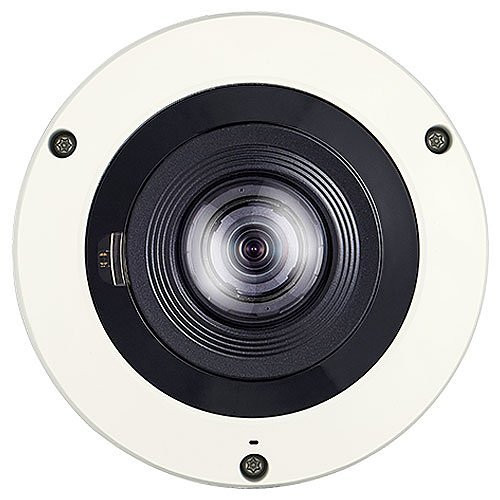
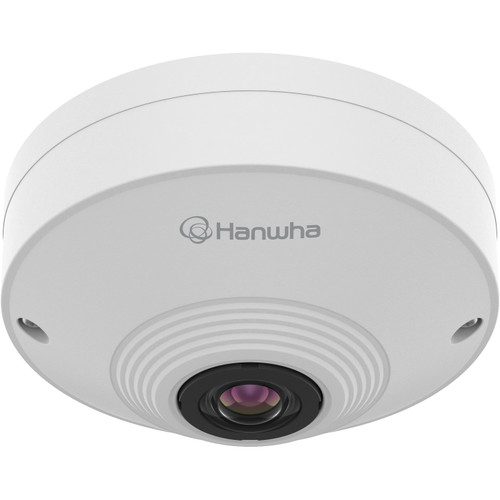
Both the Hanwha XNF-A8014R and the Hanwha QNF-8010 are indoor fisheye cameras sharing the same 6MP 2048×2048 resolution class and fixed-lens form factor, making them genuine cross-shop candidates for single-sensor panoramic coverage in retail, lobby, or open-plan environments. This comparison examines how they differ across imaging performance, installation requirements, and integration capabilities, drawing exclusively from the specifications provided for each model.
In This Guide
How do the imaging specs compare?
Both cameras deliver 6MP resolution at 2048×2048 pixels, but their optical and sensor characteristics diverge meaningfully. The QNF-8010 lists a 1/1.8-inch CMOS sensor, a 1.14mm f/2.5 fixed focal lens, a minimum illumination of 0.2 lux (color), and a rated 120dB Wide Dynamic Range via Hanwha's SSDR/BLC/HLC/WDR stack, with a 30fps maximum frame rate at full resolution under H.264/H.265. The A8014R spec sheet does not list sensor size, minimum illumination in lux, aperture, or a quantified dB WDR value — it notes WDR as a feature but provides no dB figure. The A8014R uses a 1.76mm fixed fisheye lens yielding a 185° horizontal and vertical field of view, versus the QNF-8010's 1.14mm lens covering 187°×187°×187° (H/V/D). Frame rate for the A8014R is not specified in the provided data.
On night vision, both cameras include built-in IR illumination, but the QNF-8010 specs a minimum object distance of 0.3m while the A8014R lists an IR distance of 0.5m — meaning the A8014R's IR illuminates to a slightly greater minimum working range, though neither spec provides a maximum throw distance for meaningful low-light range comparison. The QNF-8010's Day & Night mode is listed as Auto (Electrical — i.e., no mechanical IR-cut filter), whereas the A8014R is listed as Day/Night: Yes without specifying mechanical or electronic switching.
What about installation and environment?
Both cameras carry an IP42 rating, providing protection against solid objects greater than 1mm and drip-resistant splash protection — suitable for indoor use only; neither is rated for outdoor or wash-down environments. Neither spec sheet lists an IK impact rating. The QNF-8010 is powered by PoE IEEE 802.3af (Class 3, max 6.4W typical 4.6W), which is compatible with standard PoE switches and injectors. The A8014R requires PoE+ (IEEE 802.3at), drawing more power — the exact wattage is not listed in the provided specs — meaning the A8014R demands a PoE+ capable switch or injector, a non-trivial infrastructure consideration.
The QNF-8010 provides precise dimensional and weight data: Ø99×49mm and 320g (0.71 lb). The A8014R is listed at 2.2 lbs (approximately 998g) with no dimensional footprint provided — over three times heavier, which may affect ceiling tile or junction-box mounting decisions. Operating temperature for the QNF-8010 is specified at -10°C to +55°C; no operating temperature range is listed in the provided A8014R specifications. The QNF-8010 also includes a CVBS analog video output (720×480/576) for installation alignment, a feature not mentioned in the A8014R spec data.
Which fits your VMS and analytics better?
The QNF-8010 offers substantially more documented integration depth. It supports ONVIF Profile S/G/T, SUNAPI (Hanwha's HTTP API), and the Wisenet open platform, with a detailed protocol list covering IPv4/IPv6, RTSP, SNMP v1/v2c/v3, 802.1X (EAP-TLS, EAP-LEAP), and more. On-board analytics include people counting, heatmap, motion detection (8 polygonal zones), defocus detection, and tampering detection. Edge storage tops out at microSD/SDHC/SDXC up to 256GB, with alarm-triggered FTP/email upload and NAS recording. The camera supports up to 3 simultaneous streaming profiles, unicast (6 users) or multicast, and Hanwha's WiseStream II smart codec for bandwidth optimization. RAM is listed at 1024MB with 256MB Flash.
The A8014R lists ONVIF compatibility and microSD storage support but does not specify ONVIF profile levels (S/G/T), supported protocols, analytics capabilities, streaming profiles, alarm I/O, audio in/out, or RAM/Flash. No audio specifications are listed for either camera in the provided data. Buyers integrating into Hanwha's Wisenet VMS ecosystem will find the QNF-8010's SUNAPI and open-platform support explicitly documented; for the A8014R, VMS compatibility beyond generic ONVIF is not confirmed by the provided specs.
Which should you choose: the A8014R or the QNF-8010?
Our take: The QNF-8010 is the stronger choice when documented integration depth, low-power PoE infrastructure, and verified analytics are the decision drivers. The QNF-8010 provides a quantified 120dB WDR rating versus no dB figure for the A8014R; it draws a maximum of 6.4W over standard 802.3af versus the A8014R's PoE+ (802.3at) requirement; and it weighs 320g versus the A8014R's 998g, simplifying ceiling mounting. The QNF-8010's people counting, heatmap, and 8-zone motion analytics are explicitly spec-confirmed, while no analytics are listed for the A8014R. The A8014R may be preferred where a 1.76mm lens geometry (185° FOV) better suits a specific mounting geometry than the QNF-8010's 1.14mm/187° coverage, or where the Hanwha XNF product line's platform certifications are required — but buyers should verify frame rate, sensor size, and wattage directly with Hanwha, as those specs are absent from the provided A8014R data.
Side-by-Side Comparison
Spec-for-spec, from manufacturer data.
| Specification | Hanwha A8014R | Hanwha QNF-8010 |
|---|---|---|
| Resolution | 6MP (2048×2048) | 6MP (2048×2048) |
| Image Sensor | — | 1/1.8" CMOS |
| Lens / Focal Length | 1.76mm fixed fisheye | 1.14mm fixed focal |
| Max Aperture | — | F2.5 |
| Angular Field of View | 185° H × 185° V | 187° H / 187° V / 187° D |
| Min. Illumination | — | 0.2 lux (color) |
| IR / Night Vision | Built-in IR, 0.5m range | Built-in IR, 0.3m min. object distance |
| Wide Dynamic Range | WDR (no dB specified) | 120dB WDR |
| Max Frame Rate | — | 30fps @ 2048×2048 (H.264/H.265) |
| Video Compression | H.265, H.264, MJPEG | H.265, H.264, MJPEG; WiseStream II |
| IP Rating | IP42 | IP42 |
| Operating Temperature | — | -10°C to +55°C |
| Power Input / PoE Class | PoE+ (802.3at), Class 3 | PoE (802.3af), Class 3, max 6.4W |
| Edge Storage | microSD (capacity not specified) | microSD/SDHC/SDXC up to 256GB |
| Analytics | — | People counting, Heatmap, Motion (8 zones), Defocus, Tampering |
| ONVIF | ONVIF (profile level not specified) | ONVIF Profile S/G/T |
| Dimensions | — | Ø99 × 49mm (Ø3.9 × 1.93") |
| Weight | 2.2 lb (approx. 998g) | 0.71 lb (320g) |
| Warranty | 5-year | 3-year |
Frequently Asked Questions
Which should you choose: the A8014R or the QNF-8010?
The QNF-8010 is the stronger choice when documented integration depth, low-power PoE infrastructure, and verified analytics are the decision drivers. The QNF-8010 provides a quantified 120dB WDR rating versus no dB figure for the A8014R; it draws a maximum of 6.4W over standard 802.3af versus the A8014R's PoE+ (802.3at) requirement; and it weighs 320g versus the A8014R's 998g, simplifying ceiling mounting. The QNF-8010's people counting, heatmap, and 8-zone motion analytics are explicitly spec-confirmed, while no analytics are listed for the A8014R. The A8014R may be preferred where a 1.76mm lens geometry (185° FOV) better suits a specific mounting geometry than the QNF-8010's 1.14mm/187° coverage, or where the Hanwha XNF product line's platform certifications are required — but buyers should verify frame rate, sensor size, and wattage directly with Hanwha, as those specs are absent from the provided A8014R data.
Is the A8014R or QNF-8010 better for low-light performance?
Based on the provided specifications, the QNF-8010 has a documented minimum illumination of 0.2 lux (color, f/2.5, 1/30 sec) and a 120dB WDR rating. The A8014R lists IR as a night-vision feature and a 0.5m IR distance but does not provide a minimum lux figure or a quantified WDR dB value in the supplied specs, so a direct low-light comparison cannot be made from available data alone.
Do I need a PoE+ switch to install the A8014R, or will a standard PoE port work?
Yes — the A8014R is specified as PoE+ (IEEE 802.3at), which requires a PoE+ capable switch or injector. The QNF-8010 operates on standard PoE (IEEE 802.3af, Class 3, max 6.4W), compatible with any 802.3af port. If your existing switch infrastructure is 802.3af-only, the QNF-8010 installs without an infrastructure upgrade.
Which camera supports people counting and heatmap analytics out of the box?
The QNF-8010 explicitly lists people counting and heatmap as on-board analytics in its specifications, along with motion detection (8 polygonal zones), defocus detection, and tampering detection. No analytics features are listed in the provided A8014R specifications, so buyers requiring edge-based business intelligence analytics should verify A8014R firmware capabilities directly with Hanwha before specifying it for that use case.
Get a Second Opinion on Your Camera Choice
Share your site layout, coverage goals, and budget. Our team will validate the camera selection, flag anything we would change, and recommend products that match the use case.