
Hanwha A6001/KDO vs i-PRO U11301-F3: Specification Comparison
Both the Hanwha PNB-A6001/KDO and the i-PRO WV-U11301-F3 are 2MP indoor box cameras designed for fixed-mount surveillance applications where an operator-supplied lens or a fixed lens is chosen to fit the scene. Buyers in regulated, government, or enterprise environments frequently evaluate these two models side by side because both carry compliance credentials and target access-point or lobby monitoring. This comparison examines imaging capability, installation and environmental fit, and platform integration strictly from the stated specifications.
In This Guide
How do the imaging specs compare?
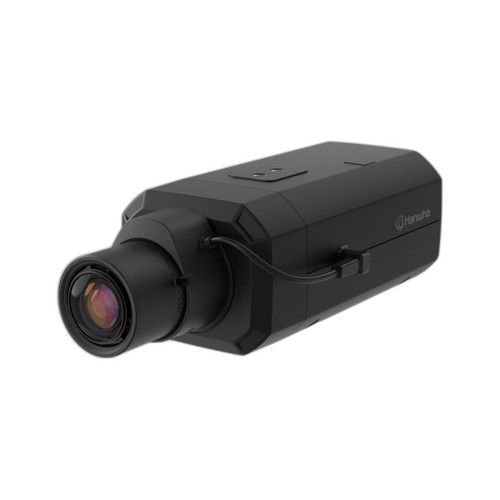
The Hanwha PNB-A6001/KDO delivers 1920×1080 (2MP) resolution using a Wisenet 7 SoC. Its lens type is motorized varifocal, giving installers adjustable focal length without manually swapping glass — a practical advantage for access-point and LPR deployments where the coverage zone may need fine-tuning post-mount. Minimum illumination and WDR figures are not stated in the provided specifications for the A6001/KDO, so no numeric low-light or dynamic-range comparison can be made for that model.
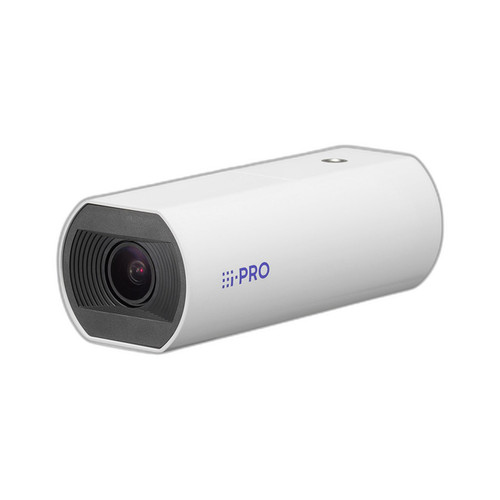
The i-PRO WV-U11301-F3 pairs a 1/2.8-inch CMOS sensor with a fixed 3.2mm F2.0 lens at 30 fps (25 fps mode available). Its low-light floor is 0.07 lx in color and 0.003 lx in B&W (both at F2.0, AGC 11), and it delivers 120 dB Super Dynamic WDR. Built-in IR supports operation down to 0.003 lx B&W. The fixed 3.2mm focal length suits wide-angle interior scenes but cannot be adjusted without a lens swap; the A6001/KDO's motorized varifocal offers flexibility the U11301-F3 does not.
What about installation and environment?
Both cameras are rated for indoor use only; neither specification lists an IP or IK rating. The A6001/KDO accepts PoE 802.3af or 12V DC, providing a dual-power option that can ease retrofits into older analog-era wiring. Its operating temperature range is 0°C to +55°C. The U11301-F3 is powered exclusively by PoE (IEEE 802.3af, PoE Class 0, 13W max estimated), with a slightly wider cold-end range of −10°C to +50°C — a 10°C advantage at the low end, though the warm-side ceiling is 5°C lower.
Physical dimensions are available only for the U11301-F3 (59mm W × 49mm H × 142mm D, white housing). Dimensions and weight for the A6001/KDO are not provided in the supplied specifications. Both cameras support wall and ceiling mounting. The A6001/KDO does not list microSD storage; the U11301-F3 supports microSD edge recording. Signed firmware and secure boot are confirmed for the U11301-F3; equivalent secure-boot documentation is not present for the A6001/KDO spec set.
Which fits your VMS and analytics better?
The Hanwha PNB-A6001/KDO integrates natively with Wisenet WAVE and SSM VMS platforms and supports ONVIF Profile S, G, and T. Its AI analytics engine uses deep-learning object classification on the Wisenet 7 SoC — a more computationally capable analytics tier than traditional rule-based motion detection. Audio support is not mentioned in the provided specifications for the A6001/KDO.
The i-PRO WV-U11301-F3 supports ONVIF Profile S, G, and T and includes i-VMD intelligent motion detection, scene change detection, and audio detection. It features a built-in microphone with audio recording, adding an audio evidence layer without additional hardware. Its FIPS 140-3 Level 3 certified SecureElement (EdgeLock SE052F by NXP Semiconductors) exceeds typical camera cybersecurity certifications and is explicitly confirmed for NDAA compliance. microSD local storage is supported. Native VMS partner integrations beyond ONVIF are not listed in the provided specifications for the U11301-F3.
Which should you choose: the A6001/KDO or the U11301-F3?
Our take: The A6001/KDO is the stronger choice when scene coverage flexibility and deep-learning AI analytics on a proven Hanwha/Wisenet VMS stack are the primary requirements. Its motorized varifocal lens allows post-install coverage adjustments that the U11301-F3's fixed 3.2mm optic cannot match, and its Wisenet 7 AI object-classification engine is a tier above the U11301-F3's rule-based i-VMD. However, the U11301-F3 holds meaningful advantages in three measurable areas: its 120 dB Super Dynamic WDR and 0.07 lx color / 0.003 lx B&W low-light floor give documented imaging benchmarks the A6001/KDO spec sheet does not provide; its FIPS 140-3 Level 3 SecureElement certification sets a higher cybersecurity bar for regulated-network deployments; and its −10°C cold-end operating range is 10°C broader than the A6001/KDO's 0°C floor. Choose the U11301-F3 where FIPS-level cybersecurity mandates, documented low-light performance, or sub-zero ambient temperature are non-negotiable.
Side-by-Side Comparison
Spec-for-spec, from manufacturer data.
| Specification | Hanwha A6001/KDO | i-PRO U11301-F3 |
|---|---|---|
| Resolution | 2MP (1920×1080) | 2MP (1920×1080) |
| Image Sensor | Not specified | 1/2.8-inch CMOS |
| Lens Type | Motorized varifocal | Fixed 3.2mm, F2.0 |
| Min Illumination (Color) | Not specified | 0.07 lx |
| Min Illumination (B&W) | Not specified | 0.003 lx |
| Built-in IR | Not specified | Yes |
| Wide Dynamic Range (WDR) | Not specified | 120 dB Super Dynamic |
| Max Frame Rate | Not specified | 30 fps (25 fps mode available) |
| Video Compression | H.265 / H.264 / MJPEG / WiseStream II | H.265 / H.264 / MJPEG |
| IP / Ingress Rating | Not specified (Indoor) | Not specified (Indoor) |
| Operating Temperature | 0°C to +55°C | -10°C to +50°C |
| Power Input | PoE 802.3af / 12V DC | PoE 802.3af (Class 0, ~13W max) |
| ONVIF Profiles | Profile S / G / T | Profile S / G / T |
| Edge Analytics | AI deep-learning object classification (Wisenet 7) | i-VMD; Scene Change Detection; Audio Detection |
| Audio | Not specified | Built-in microphone; audio recording |
| Edge Storage | Not specified | microSD |
| Cybersecurity Certification | NDAA compliant | FIPS 140-3 Level 3 (EdgeLock SE052F); NDAA compliant |
| TAA Compliance | Yes | Not specified |
| Native VMS | Wisenet WAVE / SSM | Not specified beyond ONVIF |
| Dimensions | Not specified | 59mm W × 49mm H × 142mm D |
| Housing Color | Not specified | White |
| Secure Boot / Signed Firmware | Not specified | Yes / Yes |
Frequently Asked Questions
Which should you choose: the A6001/KDO or the U11301-F3?
The A6001/KDO is the stronger choice when scene coverage flexibility and deep-learning AI analytics on a proven Hanwha/Wisenet VMS stack are the primary requirements. Its motorized varifocal lens allows post-install coverage adjustments that the U11301-F3's fixed 3.2mm optic cannot match, and its Wisenet 7 AI object-classification engine is a tier above the U11301-F3's rule-based i-VMD. However, the U11301-F3 holds meaningful advantages in three measurable areas: its 120 dB Super Dynamic WDR and 0.07 lx color / 0.003 lx B&W low-light floor give documented imaging benchmarks the A6001/KDO spec sheet does not provide; its FIPS 140-3 Level 3 SecureElement certification sets a higher cybersecurity bar for regulated-network deployments; and its −10°C cold-end operating range is 10°C broader than the A6001/KDO's 0°C floor. Choose the U11301-F3 where FIPS-level cybersecurity mandates, documented low-light performance, or sub-zero ambient temperature are non-negotiable.
Is the A6001/KDO or the U11301-F3 better for low-light performance?
Based on the provided specifications, only the U11301-F3 publishes low-light figures: 0.07 lx in color and 0.003 lx in B&W with built-in IR. Minimum illumination data for the A6001/KDO is not included in its specification set, so a numeric comparison cannot be made. If documented low-light performance is a bid requirement, the U11301-F3 has citable numbers; the A6001/KDO does not.
Which camera is better suited for a federal or government procurement?
Both cameras carry NDAA compliance. The A6001/KDO adds TAA compliance, which is required for GSA Schedule and many federal contracts — the U11301-F3's TAA status is not stated in the provided specifications. The U11301-F3 counters with FIPS 140-3 Level 3 SecureElement certification, which is mandated on many classified or regulated government networks. The right answer depends on whether the procurement requires TAA (A6001/KDO advantage) or FIPS 140-3 cybersecurity certification (U11301-F3 advantage).
Does either camera support on-board edge storage and audio?
The U11301-F3 explicitly supports microSD edge storage and includes a built-in microphone with audio recording and audio detection analytics. The A6001/KDO specification does not list microSD storage or audio capability in the data provided. If local recording redundancy or audio evidence capture is required, the U11301-F3 meets those needs as specified; the A6001/KDO cannot be confirmed from available specs.
Get a Second Opinion on Your Camera Choice
Share your site layout, coverage goals, and budget. Our team will validate the camera selection, flag anything we would change, and recommend products that match the use case.