
Geovision TBL475W-0010 vs Geovision TBL480W-0010: Specification Comparison
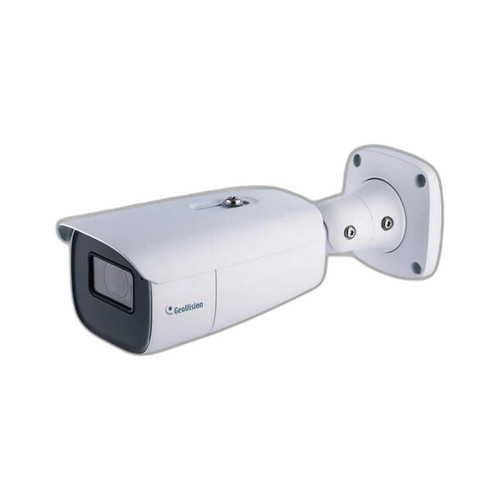
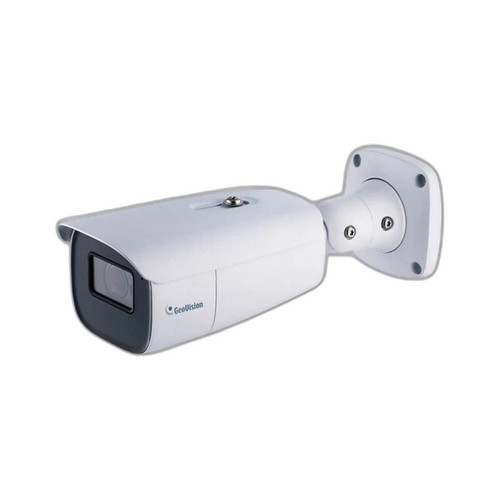
The Geovision TBL475W-0010 and TBL480W-0010 are both 4MP fixed bullet IP cameras from the same manufacturer, aimed at installers evaluating outdoor or perimeter coverage with IR night vision and WDR. Both share ONVIF compliance and a bullet form factor, making them genuine cross-shop candidates for a PoE-based IP surveillance deployment. This comparison examines where their imaging capabilities, installation profiles, and VMS integration options diverge based strictly on the published specifications for each model.
In This Guide
How do the imaging specs compare?
Both cameras are rated at 4MP resolution and share WDR Pro as their wide dynamic range technology, so contrast-handling performance is nominally equivalent on paper. The TBL475W-0010 specifies a 4mm fixed lens, while no lens focal length is listed in the provided specs for the TBL480W-0010—buyers requiring a specific angle of view for the TBL480W-0010 should confirm with the datasheet. Both cameras carry IR for low-light operation; however, the TBL480W-0010 specifies 850nm IR wavelength explicitly, while the TBL475W-0010 does not state a wavelength—it does add 'super low lux' to its IR descriptor, suggesting enhanced sensitivity in marginal light conditions.
On compression, the TBL480W-0010 explicitly lists H.265, which delivers approximately 50% bandwidth and storage reduction versus H.264. The TBL475W-0010 provides no compression codec in its spec data, which is a meaningful gap for storage-budget planning. Neither model provides minimum illumination figures (lux), IR range in meters, maximum frame rate, or image sensor size in the provided specifications, so direct numeric low-light or frame-rate comparisons cannot be made from available data.
What about installation and environment?
The TBL480W-0010 explicitly lists PoE as its power input, confirming single-cable installation over a standard 802.3af/at infrastructure. The TBL475W-0010 does not specify a power input type in its provided specs—PoE compatibility cannot be confirmed from this data alone. Neither model includes an IP ingress-protection rating, IK impact rating, operating temperature range, or dimensional/weight data in the provided specifications, which limits a rigorous environmental suitability comparison.
For mounting, the TBL475W-0010 lists Wall, Corner, and Overhang mount types, offering more declared mounting flexibility. The TBL480W-0010 lists Wall and Ceiling only. Both are bullet form-factor cameras. Installers with non-standard mounting requirements—corner brackets or overhang arms—should note the TBL475W-0010's broader declared compatibility, though neither model's enclosure rating is confirmed in the provided data.
Which fits your VMS and analytics better?
Both cameras are ONVIF-compliant, enabling basic interoperability with third-party VMS platforms. The TBL480W-0010 specifies ONVIF Profile S explicitly, which defines a standardized feature set including live video, PTZ control signaling, and event handling—this gives integrators a concrete interoperability baseline. The TBL475W-0010 lists ONVIF compliance without specifying a profile level, leaving the exact feature set of its ONVIF implementation unconfirmed from available data.
The TBL480W-0010 also explicitly lists Geovision-native VMS and third-party NVR platforms among its compatibility targets. The TBL475W-0010 references ONVIF-compliant systems and names Milestone, Hikvision, and Axis ecosystems in its card copy, but those are marketing-layer claims rather than spec-sheet entries. Neither model's provided specifications include audio input/output, edge/onboard storage (SD card), or analytics capabilities, so those factors cannot be compared from the supplied data.
Which should you choose: the TBL475W-0010 or the TBL480W-0010?
Our take: The TBL480W-0010 is the stronger choice when H.265 compression, confirmed PoE power delivery, and a declared ONVIF Profile S baseline are priorities for a mixed-vendor NVR deployment. Three concrete spec advantages support this: it explicitly lists H.265 (reducing bandwidth and storage roughly 50% versus H.264), confirms PoE as its power source enabling clean single-cable runs, and specifies ONVIF Profile S rather than generic ONVIF compliance—giving integrators a defined interoperability contract. The TBL475W-0010 counters with a stated 4mm fixed lens (no focal length is listed for the TBL480W-0010), 'super low lux' sensitivity alongside its IR, and three declared mount types versus two. If lens selection certainty and mounting flexibility matter more than compression efficiency, the TBL475W-0010 warrants closer evaluation. For either model, IP rating, operating temperature, and IR range are absent from the provided specs and should be confirmed against the respective datasheets before specifying for harsh-environment or long-range applications.
Side-by-Side Comparison
Spec-for-spec, from manufacturer data.
| Specification | Geovision TBL475W-0010 | Geovision TBL480W-0010 |
|---|---|---|
| Resolution | 4 MP | 4 MP |
| Form Factor | Bullet | Bullet |
| Lens / Focal Length | 4mm fixed | — |
| WDR | WDR Pro | WDR Pro |
| IR Night Vision | IR; super low lux | IR (850nm) |
| IR Wavelength | — | 850nm |
| Video Compression | — | H.265 |
| Power Input | — | PoE |
| ONVIF | Yes | Yes |
| ONVIF Profile | — | Profile S |
| VMS Compatibility | ONVIF-compliant systems | ONVIF Profile S; Geovision; Third-party NVR |
| Mount Types | Wall; Corner; Overhang | Wall; Ceiling |
Frequently Asked Questions
Which should you choose: the TBL475W-0010 or the TBL480W-0010?
The TBL480W-0010 is the stronger choice when H.265 compression, confirmed PoE power delivery, and a declared ONVIF Profile S baseline are priorities for a mixed-vendor NVR deployment. Three concrete spec advantages support this: it explicitly lists H.265 (reducing bandwidth and storage roughly 50% versus H.264), confirms PoE as its power source enabling clean single-cable runs, and specifies ONVIF Profile S rather than generic ONVIF compliance—giving integrators a defined interoperability contract. The TBL475W-0010 counters with a stated 4mm fixed lens (no focal length is listed for the TBL480W-0010), 'super low lux' sensitivity alongside its IR, and three declared mount types versus two. If lens selection certainty and mounting flexibility matter more than compression efficiency, the TBL475W-0010 warrants closer evaluation. For either model, IP rating, operating temperature, and IR range are absent from the provided specs and should be confirmed against the respective datasheets before specifying for harsh-environment or long-range applications.
Is the TBL475W-0010 or TBL480W-0010 better for low-light performance?
Based on available specs, neither model provides a minimum illumination (lux) figure or IR range in meters, so a direct numeric comparison is not possible. The TBL475W-0010 adds 'super low lux' to its IR descriptor, which suggests enhanced sensitivity in marginal light, while the TBL480W-0010 specifies 850nm IR wavelength. Confirm minimum illumination values in each model's datasheet before making a low-light selection.
Does the TBL480W-0010 save meaningful storage compared to the TBL475W-0010?
Potentially yes—the TBL480W-0010 explicitly lists H.265 compression, which typically reduces storage and bandwidth by approximately 50% versus H.264. The TBL475W-0010 does not list a video compression codec in its provided specifications, so its storage footprint cannot be estimated from available data. If storage efficiency is a budget driver, the TBL480W-0010 has a clear declared advantage on this point.
Can the TBL475W-0010 be mounted in a corner or on an overhang where the TBL480W-0010 cannot?
Based on provided specifications, yes. The TBL475W-0010 declares Wall, Corner, and Overhang mount types. The TBL480W-0010 lists Wall and Ceiling only. Whether appropriate mounting accessories are included or sold separately is not stated in either model's available spec data—verify with the respective datasheets or manufacturer.
Get a Second Opinion on Your Camera Choice
Share your site layout, coverage goals, and budget. Our team will validate the camera selection, flag anything we would change, and recommend products that match the use case.