
Geovision MFD1501-4F vs Geovision VD25000-001U: Specification Comparison
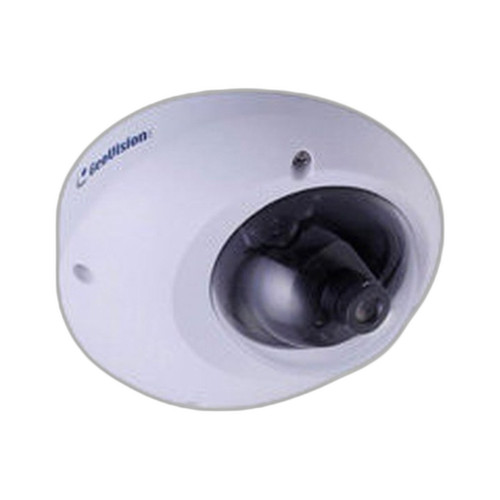
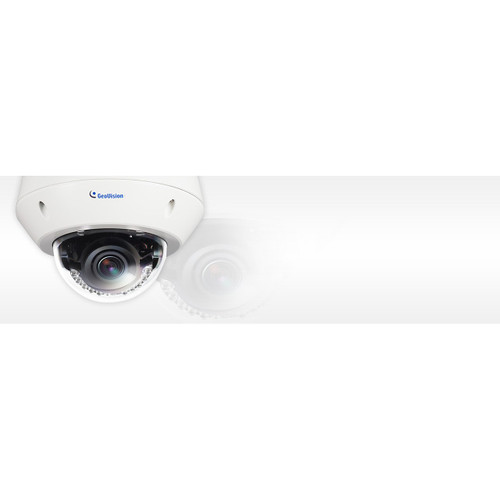
Both the Geovision GV-MFD1501-4F and the Geovision 84-VD25000-001U are single-channel IP dome cameras in the 1–2 MP resolution band, powered by 802.3af PoE, and intended for indoor or light-outdoor surveillance. The MFD1501-4F is a 1.3 MP ultra-compact mini fixed dome aimed at confined spaces, while the VD25000-001U is a 2 MP vandal-resistant IR dome built for demanding physical environments. This comparison covers imaging capability, installation and environmental suitability, and VMS integration to help integrators choose the right unit for a given deployment.
In This Guide
How do the imaging specs compare?
The GV-MFD1501-4F delivers 1.3 MP resolution through a fixed 2.1 mm wide-angle lens, relying on a super low-lux sensor for dim-light performance rather than active IR illumination. No IR range, WDR rating, or minimum illumination figure is provided in the supplied specifications, so those parameters cannot be quantified here. The fixed lens limits field-of-view flexibility but eliminates focus drift after installation.
The 84-VD25000-001U steps up to 2 MP and pairs a varifocal 3–9 mm lens with an IR illuminator, Day/Night switching, and the same super low-lux sensor class. The varifocal range gives the installer meaningful field-of-view adjustment at commissioning without swapping optics. IR distance, minimum illumination, WDR capability, and maximum frame rate are not stated in the provided specifications for either model.
What about installation and environment?
The GV-MFD1501-4F is rated for ceiling and wall mounting in a dome form factor with a fixed 1.3 m cable tail. It draws 5 W over 802.3af PoE. No IP rating, IK impact rating, or operating temperature range is specified, placing it in an unrated indoor category by default. Its compact footprint and short pigtail suit recessed or confined-ceiling installations where space is restricted.
The 84-VD25000-001U carries an IP66 weatherproof rating and is described as vandal-resistant, supporting ceiling and wall mounting in the same dome form factor. It accepts 802.3af/at PoE (class unspecified beyond that range). Its operating temperature range of −40 °C to 60 °C makes it suitable for unheated enclosures, outdoor soffits, and harsh-environment interiors. No IK numeric impact rating, wattage figure, cable length, or dimensions are provided in the supplied specifications.
Which fits your VMS and analytics better?
The GV-MFD1501-4F declares ONVIF compatibility and explicit native support for Geovision NVR/DVR systems without additional licensing. No ONVIF profile version (S, T, or G) is listed in the supplied specifications. Edge analytics, on-board storage, and audio capability are not mentioned in the provided data.
The 84-VD25000-001U declares ONVIF Profile S and Profile T compliance, offering a higher degree of interoperability assurance with third-party VMS platforms that mandate those profiles. Native Geovision VMS compatibility is not stated in the supplied specifications for this model. Edge analytics, on-board storage, and audio are likewise absent from the provided data for both units.
Which should you choose: the MFD1501-4F or the VD25000-001U?
Our take: The VD25000-001U is the stronger choice when the deployment requires outdoor or harsh-environment coverage, adjustable field of view, or broad third-party VMS compatibility. Three concrete spec deltas support this: first, the VD25000-001U delivers 2 MP versus the MFD1501-4F's 1.3 MP, yielding greater pixel density for identification at distance; second, its IP66 rating and −40 °C to 60 °C operating range give it verified environmental suitability the MFD1501-4F's unrated enclosure cannot match; third, its varifocal 3–9 mm lens versus the MFD1501-4F's fixed 2.1 mm optic allows on-site field-of-view tuning without hardware swaps. The MFD1501-4F remains the appropriate selection when the installation is strictly indoors in a confined or recessed ceiling space, the VMS is a native Geovision system, and the 5 W 802.3af budget is a hard constraint.
Side-by-Side Comparison
Spec-for-spec, from manufacturer data.
| Specification | Geovision MFD1501-4F | Geovision VD25000-001U |
|---|---|---|
| Resolution | 1.3 MP | 2 MP |
| Lens / Focal Length | Fixed 2.1 mm | Varifocal 3–9 mm |
| Low-Light Technology | Super low-lux (no IR) | IR; Day/Night; Super low-lux |
| IR Illuminator | — | Yes (range not specified) |
| Video Compression | H.264 | — |
| IP Rating | — | IP66 |
| IK / Impact Rating | — | Vandal-resistant (IK rating not specified) |
| Operating Temperature | — | −40 °C to 60 °C |
| Power Input / PoE Standard | 802.3af | 802.3af/at |
| Power Consumption | 5 W | — |
| Form Factor | Dome | Dome |
| Mount Type | Ceiling; Wall | Ceiling; Wall |
| ONVIF | Yes (profile not specified) | Profile S / Profile T |
| Native VMS Support | Geovision NVR/DVR; ONVIF | ONVIF (Geovision native not stated) |
Frequently Asked Questions
Which should you choose: the MFD1501-4F or the VD25000-001U?
The VD25000-001U is the stronger choice when the deployment requires outdoor or harsh-environment coverage, adjustable field of view, or broad third-party VMS compatibility. Three concrete spec deltas support this: first, the VD25000-001U delivers 2 MP versus the MFD1501-4F's 1.3 MP, yielding greater pixel density for identification at distance; second, its IP66 rating and −40 °C to 60 °C operating range give it verified environmental suitability the MFD1501-4F's unrated enclosure cannot match; third, its varifocal 3–9 mm lens versus the MFD1501-4F's fixed 2.1 mm optic allows on-site field-of-view tuning without hardware swaps. The MFD1501-4F remains the appropriate selection when the installation is strictly indoors in a confined or recessed ceiling space, the VMS is a native Geovision system, and the 5 W 802.3af budget is a hard constraint.
Is the MFD1501-4F or VD25000-001U better for low-light performance?
Both cameras list a super low-lux sensor, but the VD25000-001U also adds an active IR illuminator and Day/Night switching, giving it a clear advantage in true darkness. The MFD1501-4F relies solely on its low-lux sensor with no IR. Minimum illumination figures are not provided in the specifications for either model, so a direct lux comparison cannot be made from the available data.
Can I use either camera with a non-Geovision VMS?
Both cameras declare ONVIF support. The VD25000-001U specifies ONVIF Profile S and Profile T compliance, which are the profiles most commonly required by third-party VMS platforms. The MFD1501-4F lists ONVIF compatibility but does not specify a profile version in the provided specifications, so confirming interoperability with a specific third-party VMS would require verification against that platform's tested device list.
Which camera is suitable for outdoor or unheated-space installation?
The VD25000-001U is the clear choice: it carries an IP66 weatherproof rating, a vandal-resistant housing, and a −40 °C to 60 °C operating temperature range. The MFD1501-4F has no IP rating, no IK rating, and no operating temperature range stated in the supplied specifications, making it unsuitable for outdoor or environmentally exposed locations based on available data.
Get a Second Opinion on Your Camera Choice
Share your site layout, coverage goals, and budget. Our team will validate the camera selection, flag anything we would change, and recommend products that match the use case.