
Geovision FD220-D02U vs Geovision VD25000-001U: Specification Comparison
Both the Geovision FD220-D02U and the VD25000-001U are 2MP fixed IP dome cameras from Geovision, designed for indoor/outdoor surveillance deployments with PoE connectivity and ONVIF compatibility. They share a varifocal lens range and IR night-vision capability, making them direct cross-shop candidates for installers selecting a 2MP dome for a new site or expanding an existing Geovision or ONVIF-based system. The key differentiators lie in environmental hardening, PoE class, ONVIF profile depth, and low-light technology.
In This Guide
How do the imaging specs compare?
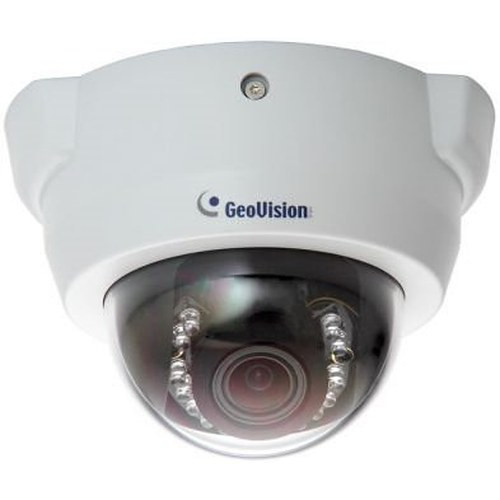
Both cameras deliver 2MP resolution with IR-assisted night vision and varifocal lenses, but their optical ranges differ slightly. The FD220-D02U provides a 2.7–9mm varifocal lens, while the VD25000-001U offers a 3–9mm varifocal range. The FD220-D02U's wider minimum focal length (2.7mm vs. 3mm) allows a marginally broader field of view at the widest zoom setting, which can be meaningful in tight interior spaces. Both models support motorized or manual focus adjustment at installation, eliminating the need for fixed-lens SKU variants.
On low-light performance, the VD25000-001U is specified with 'IR; Day/Night; Super Low Lux' capability, explicitly calling out Super Low Lux as a distinct imaging mode beyond standard IR cut-filter day/night switching. The FD220-D02U is listed as 'IR Low Lux' without the Super Low Lux designation. Neither product spec provides a minimum illumination figure (lux value), IR distance, or sensor size, so a direct numerical low-light comparison cannot be made from available data. WDR, frame rate, and sensor type are not specified for either model.
What about installation and environment?
Environmental hardening is a clear differentiator. The VD25000-001U carries an IP66 ingress-protection rating and an operating temperature range of -40°C to 60°C, making it explicitly rated for outdoor and harsh-environment deployment including extreme cold. The FD220-D02U has no IP rating listed in the provided specifications, and no operating temperature range is given. Buyers requiring a confirmed weatherproof or outdoor-rated unit cannot verify the FD220-D02U meets their environmental specification from the data available.
Both cameras support ceiling and wall mounting in a dome form factor and are powered via PoE over standard Cat5e cabling. However, the PoE standards differ: the FD220-D02U is specified at 802.3af only, while the VD25000-001U supports both 802.3af and 802.3at (PoE+). The 802.3at support on the VD25000-001U provides headroom for features or accessories that draw higher power, and it offers backward compatibility with af switches. Neither model lists IK impact resistance, dimensions, or weight in the provided specifications.
Which fits your VMS and analytics better?
Both cameras are ONVIF-compliant, but the VD25000-001U specifies ONVIF Profile S and Profile T compliance, while the FD220-D02U lists only generic ONVIF compatibility without naming a specific profile. Profile S covers baseline IP camera integration (streaming, PTZ, events); Profile T adds H.265, HTTPS, and motion alarm metadata support. Installers deploying VMS platforms that leverage Profile T features—such as metadata overlays or encrypted streams—will find the VD25000-001U's declared profile support more verifiable. The FD220-D02U's ONVIF profile depth cannot be confirmed from the provided specifications.
Both cameras output H.264 compression; the VD25000-001U's ONVIF Profile T declaration implies H.265 support may also be present, but this is not explicitly listed in the provided specs and should not be assumed. Neither model specifies edge storage (SD card slot), onboard audio (microphone or line input), or built-in video analytics in the available specification data. Buyers requiring any of these features should consult the full datasheet before selecting either model.
Which should you choose: the FD220-D02U or the VD25000-001U?
Our take: The VD25000-001U is the stronger choice when the installation site demands confirmed outdoor or harsh-environment performance, while the FD220-D02U is a viable alternative for indoor or controlled-environment use cases where its wider 2.7mm minimum focal length provides value. Three concrete spec differences drive this assessment: (1) the VD25000-001U carries an IP66 weatherproof rating versus no IP rating listed for the FD220-D02U; (2) the VD25000-001U supports PoE 802.3af/at versus the FD220-D02U's 802.3af-only, providing higher power headroom; and (3) the VD25000-001U declares ONVIF Profile S/T compliance versus the FD220-D02U's unspecified ONVIF level, which matters for VMS platforms requiring Profile T metadata or encryption. Specify the VD25000-001U for outdoor, industrial, or temperature-extreme deployments (-40°C to 60°C confirmed); revisit the FD220-D02U only after verifying its IP rating and ONVIF profile against the full datasheet.
Side-by-Side Comparison
Spec-for-spec, from manufacturer data.
| Specification | Geovision FD220-D02U | Geovision VD25000-001U |
|---|---|---|
| Resolution | 2MP (implied) | 2MP |
| Form Factor | Fixed Dome | Dome |
| Lens / Focal Length | Varifocal 2.7–9mm | Varifocal 3–9mm |
| IR / Low Light | IR Low Lux | IR; Day/Night; Super Low Lux |
| Video Compression | H.264 | — |
| ONVIF Profile | ONVIF (profile not specified) | ONVIF Profile S/T |
| IP Rating | — | IP66 |
| Operating Temperature | — | -40°C to 60°C |
| Power / PoE Standard | PoE 802.3af | PoE 802.3af/at |
| Mount Type | Ceiling; Wall | Ceiling; Wall |
Frequently Asked Questions
Which should you choose: the FD220-D02U or the VD25000-001U?
The VD25000-001U is the stronger choice when the installation site demands confirmed outdoor or harsh-environment performance, while the FD220-D02U is a viable alternative for indoor or controlled-environment use cases where its wider 2.7mm minimum focal length provides value. Three concrete spec differences drive this assessment: (1) the VD25000-001U carries an IP66 weatherproof rating versus no IP rating listed for the FD220-D02U; (2) the VD25000-001U supports PoE 802.3af/at versus the FD220-D02U's 802.3af-only, providing higher power headroom; and (3) the VD25000-001U declares ONVIF Profile S/T compliance versus the FD220-D02U's unspecified ONVIF level, which matters for VMS platforms requiring Profile T metadata or encryption. Specify the VD25000-001U for outdoor, industrial, or temperature-extreme deployments (-40°C to 60°C confirmed); revisit the FD220-D02U only after verifying its IP rating and ONVIF profile against the full datasheet.
Is the FD220-D02U or VD25000-001U better for low light?
The VD25000-001U is specified with 'Super Low Lux' capability in addition to standard IR and Day/Night modes, giving it an explicitly higher low-light designation than the FD220-D02U's 'IR Low Lux.' However, neither model provides a minimum illumination value in lux in the available specifications, so a direct numerical comparison is not possible. Consult each product's datasheet for minimum lux figures before making a final decision.
Can either camera be used outdoors?
The VD25000-001U is rated IP66, confirming protection against dust ingress and powerful water jets, and it operates from -40°C to 60°C—making it suitable for outdoor and harsh-environment installations. The FD220-D02U does not list an IP rating or operating temperature range in the provided specifications. Outdoor suitability of the FD220-D02U cannot be confirmed without referencing its full datasheet.
Will both cameras work with my existing ONVIF VMS?
Both cameras declare ONVIF compliance, so basic integration with any ONVIF-compatible VMS is expected. The VD25000-001U additionally specifies ONVIF Profile S and Profile T, providing a verifiable compatibility baseline for platforms that require those profiles—including support for H.265, HTTPS, and motion metadata under Profile T. The FD220-D02U lists ONVIF compatibility without specifying a profile level, so its depth of VMS feature support should be verified against its datasheet or the Geovision ONVIF conformance documentation before deployment on a Profile T-dependent platform.
Get a Second Opinion on Your Camera Choice
Share your site layout, coverage goals, and budget. Our team will validate the camera selection, flag anything we would change, and recommend products that match the use case.