
DMP PP-6005B vs DMP P-500-H-A: Specification Comparison
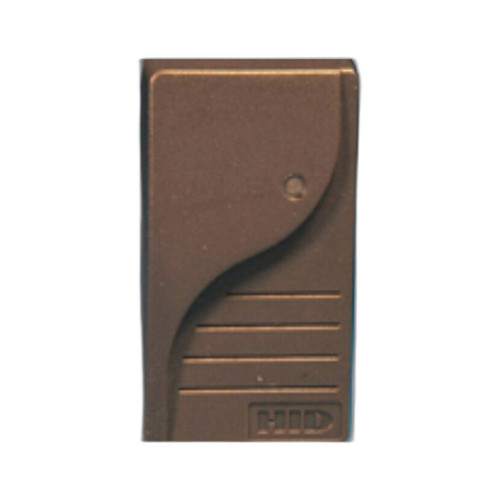
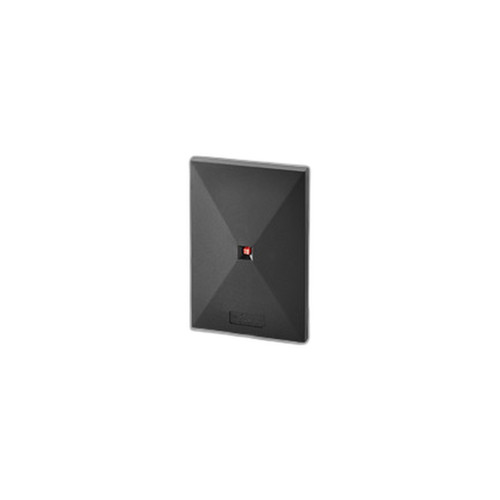
Both the DMP PP-6005B ProxPoint Plus and the DMP P-500-H-A Alps are wired proximity card readers in DMP's access control ecosystem, designed for door-level credential verification using proximity cards. They occupy the same product class and device type—wired prox readers intended for integration with DMP control panels and keypads—making them legitimate cross-shop candidates for installers specifying a DMP-based system who need to choose between two proximity reader form factors differing in communication architecture, credential bit-format support, and physical installation characteristics.
In This Guide
- How does each reader connect to the control system, and what does that mean for installation complexity?
- Which credential formats and read-range characteristics does each reader support?
- What are the power, dimensional, and environmental characteristics that govern where each reader can be installed?
- Which should you choose: the PP-6005B or the P-500-H-A?
- Side-by-Side Specs
- FAQ
How does each reader connect to the control system, and what does that mean for installation complexity?
The PP-6005B uses a supervised loop wired connection, tying directly into DMP control panels—specifically cited as compatible with DMP 734, 7073/7073A, 7173, and 7873 panels. Supervised loop wiring provides tamper detection inherent to the loop topology, which can simplify compliance documentation for higher-security installations. Conduit runs and wire counts follow standard DMP supervised-loop conventions.
The P-500-H-A uses direct keypad integration wiring. One spec field describes communication as 'Wired (direct keypad integration),' while a separate spec field cites 'TCP/IP network' and 'distributed IP network topology.' These two statements conflict within the provided specification data and cannot be reconciled from the specs alone. Buyers should verify with the P-500-H-A datasheet (/content/product-datasheets/P-500-H-A.pdf) before specifying. The PP-6005B's communication architecture is internally consistent across all spec fields.
Which credential formats and read-range characteristics does each reader support?
The PP-6005B explicitly supports two credential formats: 26-bit and 35-bit proximity cards. This dual-format capability is confirmed across multiple spec fields and is relevant for sites running mixed card populations or migrating from a legacy 26-bit deployment toward a higher-capacity 35-bit format without replacing cards all at once.
The P-500-H-A is specified for proximity cards generically, with no bit-format detail provided in the supplied specifications. However, the P-500-H-A spec includes an 8-inch read range claim (Card Bullet 1), described as suited for high-traffic turnstile applications where precise card positioning is impractical. No read range figure is provided for the PP-6005B, so a range comparison cannot be made from available data. If read range is a deciding factor, that figure must be sourced from the PP-6005B datasheet.
What are the power, dimensional, and environmental characteristics that govern where each reader can be installed?
The PP-6005B is rated for 4.75–16VDC input, with a nominal spec of 16VDC. Its physical footprint is documented at 3.135" × 1.7" × 0.51"—a slim, single-gang-style profile. The specs reference a 'weatherized enclosure' suited for covered exterior door installations, indicating some degree of environmental protection, though an IP/NEMA rating is not stated in the provided data.
The P-500-H-A is rated for 5–16V input, a range that overlaps substantially with the PP-6005B's 4.75–16VDC. The P-500-H-A's lower bound of 5V versus the PP-6005B's 4.75V is a marginal difference unlikely to affect most installations. No physical dimensions or enclosure rating are provided for the P-500-H-A. Card Bullet 3 states that metal-surface mounting maintains full read range on steel door frames, suggesting the reader incorporates anti-metal-surface compensation, but no formal specification confirms this.
Which should you choose: the PP-6005B or the P-500-H-A?
Our take: The PP-6005B is the stronger choice when credential-format flexibility, verified panel compatibility, and consistent specification data are priorities. It explicitly supports both 26-bit and 35-bit proximity cards—a concrete advantage over the P-500-H-A, which lists no bit-format detail—and its supervised loop communication is confirmed compatible with four named DMP panel models (734, 7073/7073A, 7173, 7873). Its 4.75V lower power threshold is marginally wider than the P-500-H-A's 5V floor. The P-500-H-A carries a potential advantage in read range—an 8-inch figure is cited versus no figure provided for the PP-6005B—and its anti-metal-surface claim may benefit steel-frame installations. However, conflicting communication specs (keypad-integration versus TCP/IP) in the P-500-H-A's data require datasheet verification before deployment. Specify the PP-6005B for straightforward DMP supervised-loop architectures with mixed 26/35-bit card populations; revisit the P-500-H-A only after resolving its communication architecture discrepancy.
Side-by-Side Comparison
Spec-for-spec, from manufacturer data.
| Specification | DMP PP-6005B | DMP P-500-H-A |
|---|---|---|
| Product Line | ProxPoint Plus | Alps |
| SKU | PP-6005B | P-500-H-A |
| Device Type | Proximity Reader | Proximity Card Reader |
| Communication Architecture | Supervised loop | Keypad integration (TCP/IP also listed — conflicting specs) |
| Credential Format — 26-bit | Yes (explicit) | Not specified |
| Credential Format — 35-bit | Yes (explicit) | Not specified |
| Credential Type | Proximity card | Proximity card |
| Input Voltage Range | 4.75–16VDC | 5–16V |
| Nominal Voltage | 16VDC | Not specified |
| Read Range | Not specified | 8 inches (per Card Bullet 1) |
| Dimensions (L × W × D) | 3.135" × 1.7" × 0.51" | Not specified |
| Mount Type | Wall | Wall (metal-surface compatible per Card Bullet 3) |
| Panel Compatibility | DMP 734, 7073/7073A, 7173, 7873 (explicit) | DMP keypads and control nodes (general) |
| Weatherization / Enclosure | Weatherized enclosure (exterior covered door) | Not specified |
| Anti-Metal-Surface Compensation | Not specified | Claimed (Card Bullet 3; no formal spec) |
| Warranty | Manufacturer Warranty | Manufacturer Warranty |
Frequently Asked Questions
Which should you choose: the PP-6005B or the P-500-H-A?
The PP-6005B is the stronger choice when credential-format flexibility, verified panel compatibility, and consistent specification data are priorities. It explicitly supports both 26-bit and 35-bit proximity cards—a concrete advantage over the P-500-H-A, which lists no bit-format detail—and its supervised loop communication is confirmed compatible with four named DMP panel models (734, 7073/7073A, 7173, 7873). Its 4.75V lower power threshold is marginally wider than the P-500-H-A's 5V floor. The P-500-H-A carries a potential advantage in read range—an 8-inch figure is cited versus no figure provided for the PP-6005B—and its anti-metal-surface claim may benefit steel-frame installations. However, conflicting communication specs (keypad-integration versus TCP/IP) in the P-500-H-A's data require datasheet verification before deployment. Specify the PP-6005B for straightforward DMP supervised-loop architectures with mixed 26/35-bit card populations; revisit the P-500-H-A only after resolving its communication architecture discrepancy.
Can I use the PP-6005B or P-500-H-A with my existing 26-bit proximity cards?
The PP-6005B explicitly supports 26-bit proximity cards (as well as 35-bit). The P-500-H-A lists proximity card support generically but provides no bit-format detail in the available specifications. If your site runs 26-bit cards and you need confirmed compatibility from spec data, the PP-6005B is the documentable choice; verify P-500-H-A format support against its datasheet (P-500-H-A.pdf).
Which reader is better for a high-traffic entry point like a turnstile?
The P-500-H-A specifies an 8-inch read range and describes suitability for high-traffic turnstile use where precise card positioning is impractical. No read range figure is provided for the PP-6005B in the available specifications, so a direct range comparison cannot be made from spec data alone. For turnstile applications, the P-500-H-A's stated read range is a relevant differentiator—but its unresolved communication-architecture discrepancy should be clarified with DMP before deployment.
Does either reader work on steel door frames without losing read performance?
The P-500-H-A includes a spec note stating that metal-surface mounting maintains full read range on steel door frames and enclosures, suggesting design consideration for ferrous surfaces. No equivalent claim or anti-metal-surface specification is provided for the PP-6005B. If the installation involves steel door frames and read range on metal is a verified requirement, the P-500-H-A's stated characteristic is relevant—though it is not backed by a formal IP or material-tolerance spec in the supplied data.
More Access Control Reader Comparisons
- HID 5365EGP00 vs Comelit 909020116
- HID 5365EGP00 vs Speco Technologies AP500HA
- HID 5365EGP00 vs Comelit 909020113
- HID 5365EGP00 vs HID 20NKS-00-000000
- HID 5365EGP00 vs HID 40NKS-00-000000
- Comelit 909020116 vs Speco Technologies AP500HA
Access Control Reader Buying Guides
Get a Second Opinion on Your Camera Choice
Share your site layout, coverage goals, and budget. Our team will validate the camera selection, flag anything we would change, and recommend products that match the use case.