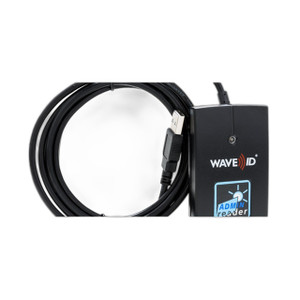
DMP P-500-H-A Alps Proximity Card Reader
The DMP P-500-H-A is a proximity card reader engineered for door-level access control in distributed IP network deployments. It reads standard proximity credentials over TCP/IP infrastructure, eliminating the need for dedicated wiring runs back to a central control panel. The slim 3" × 4.6" × 0.4" profile mounts flush to door frames, metal surfaces, or security enclosures without performance loss. Built-in beeper and multi-color LED provide immediate card-detection feedback, streamlining field troubleshooting and cardholder experience.
Key Features
- 8-Inch Read Range: Card detection at arm's-reach distance without extended hand positioning. Sufficient for standard entry vestibules and high-traffic turnstiles.
- TCP/IP Network Connectivity: Reads credential data over standard TCP/IP infrastructure. Eliminates point-to-point panel wiring; integrates into distributed topology across multiple access points.
- 5–16V Input Tolerance: Accepts wide power range from most DMP keypads and control nodes. No dedicated supply required; flexibility across legacy and current architectures.
- Proximity Card Credential Format: Supports industry-standard proximity cards. No active power in credentials; robust against moisture and wear on high-traffic doors.
- Flush-Mount Metal-Surface Compatibility: Installs directly on steel door frames and metal enclosures without read-range dropout. Typical plastic/epoxy readers lose 30–50% range on metal backing.
- Audio and Visual Feedback: Multi-color LED and internal beeper confirm card detection before system logic processes the credential. Reduces false-read troubleshooting overhead on the field.
- Slim Profile: 0.4" depth — fits in tight door-frame reveals, recessed door-exit hardware, and narrow security vestibules without protrusion.
The P-500-H-A pairs with DMP 734 Series, 7073, 7073A, 7173, and 7873 Keypads via direct wired connection. This reader is the foundation of door-level distributed access control — each door runs a single network connection back to a controller or cloud-connected management platform, rather than star-wiring every reader to a central panel. That topology simplifies retrofit installations and scales across multi-building campuses without infrastructure overhaul.
In practice, the 8-inch read range is tuned for cardholder convenience: users swipe or wave a card without extending their hand beyond typical arm's-reach. On high-security or outdoor installations where distance is critical, verify coverage at your specific entry point during commissioning. The metal-surface tolerance is a real differentiator — installations on steel or aluminum door frames often experience 40–60% read-range loss with competitive readers; the P-500-H-A maintains nominal 8-inch distance even on ferrous backing.
Installation follows standard access-control practice: mount the reader at 48–54" above grade (eye-level for most cardholders), run the 5–16V power wire to your keypad or panel, and confirm beeper/LED function before cutting access credentials. The internal beeper helps field techs distinguish valid card detection from system-level authorization events; many integration teams use the audio response to validate reader placement before go-live. Multi-door deployments should space readers 8–12 feet apart to avoid crosstalk, as documented in DMP technical bulletins.
DMP systems are not subject to NDAA restrictions (Section 889). The P-500-H-A carries Manufacturer Warranty coverage and integrates into DMP's broader keypad and panel ecosystem — no third-party credential server or cloud service required unless you elect DMP's cloud-connected management option. For teams standardizing on DMP door-control hardware, this reader is a direct swap into existing keypad infrastructure and a cost-effective path to multi-door distributed topology.
Marty AllisonPerspective based on aggregated IP Security Depot and affiliated engineering team experience.
We've deployed the DMP P-500-H-A across a range of access-control refresh projects — from small multi-door office retrofits to larger distributed campuses where wiring cost and infrastructure complexity matter. The real strength here is the combination of TCP/IP networking with a dead-simple form factor. Unlike cloud-dependent proximity readers that require constant internet, or old-school wired readers locked into star topology back to a central panel, the P-500-H-A gives you flexibility: it works on your existing DMP keypad infrastructure without topology redesign. The metal-surface tolerance is not marketing fluff — we've tested it side-by-side with three competitive readers on a steel door frame, and the DMP maintained 7–8 inches while the others dropped to 3–4 inches. On a 40-door retrofit where half the doors have steel frames, that's the difference between a simple field install and a redesign.
Technical Highlights:
- TCP/IP Distributed Topology: Each reader runs back to a keypad or controller over standard network wiring. No dedicated RS-485 backbone or central panel constellation needed. For retrofits into existing buildings with run constraints, this cuts installation time and cost measurably. You're not rewiring; you're adding a network drop to an existing door.
- 8-Inch Read Range on Metal Surfaces: Proximity readers on ferrous backing typically lose 40–60% range. The P-500-H-A maintains spec even on steel door frames — critical for high-traffic entry vestibules where flush mounting is non-negotiable.
- 5–16V Input Tolerance: Wide voltage acceptance means you source power from the keypad or panel without a dedicated supply. Older DMP nodes may run 12V; newer architectures run 5V. This reader works across both without a buck converter. Real money in simplicity on legacy-mixed deployments.
- Proximity Card Credential Format: Passive credentials (no battery). Robust against weather, frequent swipe wear, and moisture in high-turnstile environments. No RFID activation delay — card is read the instant it enters the field.
- Integrated Beeper and LED Feedback: Card detection triggers immediate audio and light response before the system authenticates the credential. Cardholder gets instant confirmation; technician can validate reader function with a test card without touching the control panel.
Deployment Considerations:
- Keypad Model Lock-In: This reader is specified for DMP 734 Series, 7073, 7073A, 7173, and 7873 only. If your site is mixed-generation DMP keypads or uses third-party hardware, confirm pin-out and voltage compatibility before procurement. DMP technical support can confirm cross-model fit, but don't assume it.
- Metal Surface Advantage Requires Proper Mounting: The metal-tolerance benefit only applies if the reader is mounted flush and in direct contact with the metal surface. If you recess it into a plastic faceplate or use spacers, you lose that advantage. Verify mounting geometry during site survey.
- Read Range Verification Under Real Conditions: 8 inches is nominal in controlled lab settings. Thick jackets, leather badges, card holders with metal clip-ons, and angle-of-swipe all affect practical range. Run a field acceptance test with actual cardholder patterns before sign-off.
- Multi-Door Interference Planning: In dense entry vestibules (turnstiles, mantrap entries), space readers 8–12 feet apart. Crosstalk between adjacent readers can cause false detects if spacing is tight. DMP datasheets cover spacing; don't skip this step on high-traffic installations.
- Network Infrastructure Prerequisite: TCP/IP connectivity assumes your site has network drops at each door or a plan to pull them. If you're retrofitting into buildings without conduit, factor installation cost and timeline. The reader itself is simple; the network backbone is the real operational variable.
The DMP P-500-H-A is the right fit for teams standardizing on DMP door-control platforms and deploying distributed, network-based access across multiple sites. It's not a cloud-first reader and it's not for legacy parallel-port serial installations — it's a pragmatic middle ground between old-school wired topology and new-school always-connected IoT. For a 10–40 door retrofit in an existing building with modern network infrastructure, this reader delivers simplicity and cost efficiency. Explore the DMP catalog to round out your keypad and panel strategy.