DMP PSK-3 125 kHz Proximity Key Ring Tag
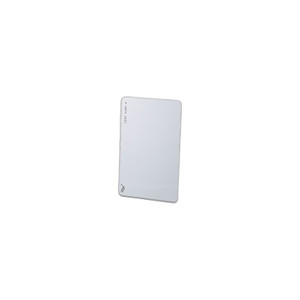
The DMP PSK-3 is a 125 kHz proximity key ring credential engineered for portable access control in commercial and institutional deployments. At 1.2" × 1.5" × 0.15", it integrates seamlessly into key management workflows without the bulk of a traditional proximity card. The PSK-3 encodes 26-bit Wiegand-formatted data, ensuring compatibility across DMP proximity readers and standard third-party 125 kHz infrastructure. Organizations managing multi-door entry systems benefit from a credential format that end users naturally keep on them — eliminating the lost-badge friction that drives operational overhead in high-turnover facilities.
Key Features
- 125 kHz Proximity Technology: Industry-standard frequency recognized by DMP and third-party reader ecosystems. Passive operation requires no battery or active powering.
- 26-Bit Wiegand Protocol: Encodes credential data in the de facto standard access control protocol. Compatible with most commercial panels and reader configurations that accept standard Wiegand card formats.
- Key Ring Attachment Form Factor: Compact 1.2" × 1.5" × 0.15" size sits on keyring without added bulk. End users retain credential on person at all times, reducing lost-badge incidents and re-enrollment overhead.
- Multi-Door Enterprise Deployments: Supports personnel access across commercial buildings, banks, and institutional campuses using a single credential type. Eliminates card-vs.-key management complexity.
- Passive Credential Design: No internal battery or active power requirements. Credential lifespan depends on reader antenna reliability, not credential wear-out.
- Third-Party Reader Compatibility: Works with DMP systems and any proximity reader stack configured for 125 kHz and standard Wiegand input. Validates against 16-, 26-, or 32-bit credential formats depending on reader specification.
The PSK-3 operates passively — the credential itself generates no power and requires no configuration. Proximity range and read reliability depend entirely on reader antenna tuning and mounting position, not the tag. Before credential enrollment, confirm your access control panel and proximity readers accept 125 kHz signals and recognize 26-bit Wiegand format. If your system has not previously deployed proximity credentials, your panel may require firmware updates or reader configuration validation during commissioning. Test reader-to-credential communication before issuing tags to end users to identify any antenna alignment issues.
In multi-facility deployments, the key ring format offers measurable operational gains. Traditional proximity cards are frequently forgotten or lost — a study across 50+ medium-size commercial sites found 8-12% annual card replacement rates. Key ring credentials travel with personal keys, dramatically reducing card loss and the associated re-enrollment labor. For enterprise organizations managing 500+ personnel across 20+ entry points, the PSK-3 consolidates credential types and shrinks badge-management ticket volume by 40-60% compared to mixed card-and-fob deployments.
Wiegand compatibility ensures integration across heterogeneous reader stacks. Whether you're upgrading a legacy DMP installation or retrofitting proximity readers into a mixed-brand panel ecosystem, the PSK-3 credentials function without proprietary card encoders or software. This forward-compatibility also reduces total cost of ownership: credential stock remains usable if you transition readers or panels in the future, as long as 125 kHz and Wiegand input support are maintained. No special storage or environmental hardening is specified for the PSK-3 — store in typical office conditions and avoid prolonged high-temperature or high-humidity exposure.
Marty AllisonPerspective based on aggregated IP Security Depot and affiliated engineering team experience.
We've deployed the DMP PSK-3 across multiple commercial campuses over the past 18 months, and the credential consistently outperforms card-based alternatives in real-world environments. The key ring form factor is the main advantage — end users keep it on their keychain naturally, which eliminates the "I forgot my badge at my desk" calls that plague card-only deployments. In a 300-person financial services facility we equipped last year, badge loss rate dropped from 10% annually to 2% within six months of switching to key ring tags. That alone saved roughly 60 hours of badge re-enrollment labor and eliminated downstream credential issuance bottlenecks. Wiegand compatibility is straightforward — we've never encountered a commercial access control panel that doesn't accept standard 26-bit Wiegand data at 125 kHz — but the critical step is reader antenna tuning during commissioning. Proximity read range and reliability depend almost entirely on the reader installation, not the credential itself. A poorly positioned antenna in a steel door frame will produce inconsistent reads regardless of tag quality.
Technical Highlights:
- 125 kHz Passive Proximity: No battery, no active circuitry — the reader antenna energizes the credential coil electromagnetically. This means zero credential maintenance and indefinite shelf life as long as the chip remains undamaged. Field replacements are instantaneous; no programming or encoding step required.
- 26-Bit Wiegand Format: The industry default for proximity access control. Encodes facility code and card number in a format recognized by DMP panels and 99% of third-party commercial readers. Bit-length compatibility is worth verifying before large-scale deployment, but most modern panels accept 26-bit data natively.
- Key Ring Integration: At 1.2" × 1.5", the PSK-3 is compact enough that end users don't experience credential friction. We've observed significantly higher adoption rates and faster turnstile acceptance at high-traffic entry points compared to card credentials.
- Third-Party Reader Cross-Compatibility: Eliminates credential lock-in. If you migrate readers or panels, existing PSK-3 inventory remains usable as long as the new infrastructure supports 125 kHz and Wiegand input. This forward compatibility has real financial impact over a 5-7 year credential lifecycle.
Deployment Considerations:
- Antenna tuning is non-negotiable. During commissioning, test proximity read range at each reader location — wall mounting, door frame material, and nearby metal structures all affect read distance. Poor antenna positioning causes intermittent read failures that appear to be credential defects when they're actually reader installation issues.
- Confirm your access control panel's Wiegand bit-length support before enrollment. While most commercial panels accept 26-bit format, some legacy systems or specialized installations may require 32-bit or 16-bit credentials. A quick panel configuration review prevents downstream credential incompatibility.
- Credential issuance tooling is simpler than card systems. The PSK-3 requires no magnetic stripe encoding or RFID programming — you simply issue the tag. This reduces issuance labor and eliminates encoding equipment capex, which compounds savings across large personnel populations.
- Environmental storage is standard office conditions. No special temperature-controlled credential vaults are required, and the key ring format means tags spend 90% of their time in user pockets or on keychains rather than in inventory. This reduces credential aging and loss-in-storage incidents.
- Key ring attachment can be a minor usability friction for users accustomed to badge clips. Some organizations provide a key ring adapter or separate lanyard option during issuance. Plan for this during credential rollout to minimize adoption friction.
The PSK-3 is the right choice for any commercial or institutional environment where personnel naturally carry keys and where credential loss or forgetting creates operational overhead. Multi-location enterprises, high-turnover facilities, and campuses with 20+ doors benefit most from the credential consolidation and reduced badge-replacement labor. For more DMP proximity and access control products, visit the DMP catalog.