
Digital Watchdog DWC-XPZA08Mi vs i-PRO X66700-Z3S: Specification Comparison
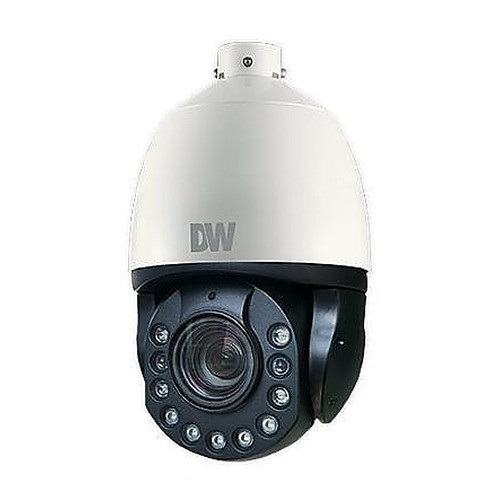
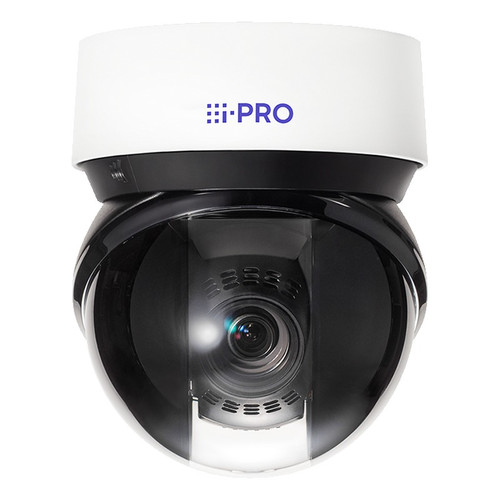
Both the Digital Watchdog DWC-XPZA08Mi and the i-PRO WV-X66700-Z3S are outdoor-rated 8MP (4K) PTZ IP cameras aimed at large-area surveillance deployments requiring long-range optical zoom, rugged environmental ratings, and enterprise VMS integration. The DWC-XPZA08Mi is a bullet-body PTZ emphasizing 40x optical reach and long-range IR illumination, while the WV-X66700-Z3S is a dome-body rapid PTZ with on-chip AI analytics, a faster preset speed, and a significantly wider operating-temperature floor.
In This Guide
How do the imaging specs compare?
The DWC-XPZA08Mi uses a 1/1.8-inch CMOS sensor with a 6.5–260 mm varifocal lens delivering 40x optical zoom and 16x digital zoom. Its horizontal field of view spans 64.1° (wide) to 1.6° (tele). Minimum color illumination is rated at 0.005 lux, and the camera includes Smart IR illumination with a specified range of 1,148 ft (350 m). True WDR is listed but no dB figure is provided in the supplied specifications. The WV-X66700-Z3S uses a smaller 1/2.8-inch CMOS sensor with a 4.5–135 mm lens delivering 30x optical zoom and up to 90x digital zoom at 1280×720 resolution. Its horizontal field of view spans 62°–2.5°. Minimum illumination is 0.1 lux (B&W); no color lux figure is provided in the supplied specifications. WDR is rated at a maximum 132 dB with adjustable Super Dynamic (0–31), adaptive black stretch (0–255), and BLC/HLC controls.
On raw sensor size and IR reach, the DWC-XPZA08Mi holds a measurable advantage: the 1/1.8-inch sensor is physically larger than the 1/2.8-inch sensor, and the 40x / 260 mm telephoto extends nearly twice as far as the i-PRO's 30x / 135 mm. The i-PRO offsets this with a quantified 132 dB dynamic range and published DORI distances — at tele, DORI Identify is rated at 352 m (1,154 ft) — whereas DW does not publish a dB WDR figure or DORI table. The i-PRO also includes a built-in gyro-sensor image stabilizer, whereas DW lists a Digital Image Stabilizer (DIS) without specifying the stabilization method.
What about installation and environment?
Both cameras carry IP66 weatherproofing and IK10 impact resistance. Operating temperature ranges differ meaningfully: the DWC-XPZA08Mi is rated –30°C to +60°C (–22°F to +140°F), while the WV-X66700-Z3S is rated –50°C to +60°C (–58°F to +140°F) — a 20°C advantage at the cold end relevant to northern or high-altitude installations. The i-PRO additionally specifies wind resistance up to 40 m/s (~89 mph) and carries UL/c-UL, CE, IEC 62368-1, FCC, and NEMA-TS2 certifications; the DWC-XPZA08Mi's supplied specifications do not list third-party safety certifications.
Power requirements differ in class: the DWC-XPZA08Mi requires a high-power PoE injector and draws up to 75 W at 1.363 A, and the supplied specifications note the injector is included. The WV-X66700-Z3S draws 37.8 W via PoE++ (802.3bt, Class 6) — less than half the DW's power draw — and is compatible with a 802.3bt-capable switch port without a separate injector. Form factor is also distinct: the DWC-XPZA08Mi is a bullet-body PTZ (226 × 364 mm, 5.77 kg), while the WV-X66700-Z3S is a dome PTZ (φ167 mm × 205 mm H, approx. 3 kg). Mounting accessories are listed as required and sold separately for the DW; mounting requirements for the i-PRO are not detailed in the supplied specifications.
Which fits your VMS and analytics better?
Both cameras conform to ONVIF Profiles G, M, S, and T, making them compatible with any compliant VMS. The DWC-XPZA08Mi supports H.265, H.264, and MJPEG with CBR, VBR, and Hybrid bitrate modes, up to four simultaneous streams (Quad + 3 secondary), and protocols including SRT, RTMP, MPEG-TS, WS-Discovery, and Zeroconf. The WV-X66700-Z3S supports H.265, H.264, and JPEG (MJPEG) with CBR/VBR/Unicast/Multicast, supports SNMPv1/v2/v3, MQTT, SRTP, NTCIP, IEEE 802.1X, DiffServ, and up to 14 simultaneous users. On-board storage is absent on the DWC-XPZA08Mi (not listed in supplied specifications); the WV-X66700-Z3S supports microSDXC cards up to 512 GB with manual, alarm, scheduled, and network-failure-backup recording modes.
Edge analytics represent a significant differentiator. The WV-X66700-Z3S includes on-chip AI analytics powered by an Ambarella CV22 SoC: AI Video Motion Detection, AI Face Detection, Scene Change Detection, audio detection with AI sound classification (gunshot, yell, vehicle horn, glass break), up to 32 privacy zones, and VIQS (variable-image-quality-on-specified-area). The DWC-XPZA08Mi lists motion detection, auto-tracking, and 8 programmable privacy masks but does not specify an AI analytics engine or sound classification in the supplied specifications. Audio codec support also differs: the DWC-XPZA08Mi supports G.711; the WV-X66700-Z3S supports G.726, G.711, and AAC-LC, with half- and full-duplex audio modes.
Which should you choose: the DWC-XPZA08Mi or the X66700-Z3S?
Our take: The WV-X66700-Z3S is the stronger choice when edge AI analytics, certified low-temperature operation, and lower power draw are priorities. Three concrete spec deltas support this: first, the i-PRO's operating temperature floor is –50°C versus the DW's –30°C, a 20°C advantage in cold climates. Second, the i-PRO draws 37.8 W (PoE++ Class 6) versus the DW's 75 W, halving switch-port power budgets and eliminating the need for a separate injector. Third, the i-PRO includes on-chip AI Face Detection, AI VMD, and AI sound classification on an Ambarella CV22 SoC, plus 512 GB on-board storage — none of which are listed in the DW's supplied specifications. Conversely, the DWC-XPZA08Mi is the stronger choice when maximum optical reach and IR distance are the overriding requirements: its 40x / 260 mm lens outreaches the i-PRO's 30x / 135 mm, and its Smart IR is rated to 1,148 ft versus the i-PRO's 3.0 m IR focus range listed in specifications.
Side-by-Side Comparison
Spec-for-spec, from manufacturer data.
| Specification | Digital Watchdog DWC-XPZA08Mi | i-PRO X66700-Z3S |
|---|---|---|
| Resolution | 8MP (3840×2160) | 8MP (3840×2160) |
| Image Sensor | 1/1.8" CMOS | 1/2.8" CMOS |
| Form Factor | Bullet-body PTZ | Dome PTZ |
| Optical Zoom / Focal Length | 40x / 6.5–260 mm | 30x / 4.5–135 mm |
| Digital Zoom | 16x | Up to 90x (at 1280×720) |
| Min. Illumination (Color / B&W) | 0.005 lux (color) / 0.0 lux (B&W) | Not specified / 0.1 lux (B&W) |
| IR Range | 1,148 ft Smart IR | 3.0 m (per supplied spec) |
| Wide Dynamic Range | True WDR (dB not specified) | Max. 132 dB Super Dynamic |
| Pan Speed (Preset) | 250°/sec | 700°/sec |
| Preset Positions | 500 | 256 |
| Edge Analytics | Motion detection, auto-tracking (no AI engine specified) | AI VMD, AI Face Detection, AI sound classification (Ambarella CV22) |
| Video Compression | H.265, H.264, MJPEG | H.265, H.264, MJPEG (JPEG) |
| ONVIF Profiles | G, M, S, T | G, M, S, T |
| On-Board Storage | Not listed in supplied specifications | microSDXC up to 512 GB |
| Power / PoE Class | 75 W; high-power PoE injector (included) | 37.8 W; PoE++ 802.3bt (Class 6) |
| IP / IK Rating | IP66 / IK10 | IP66 / IK10 |
| Operating Temperature | –30°C to +60°C (–22°F to +140°F) | –50°C to +60°C (–58°F to +140°F) |
| Audio Codecs | G.711 | G.726, G.711, AAC-LC |
| Dimensions | 226 × 364 mm | φ167 mm × 205 mm (H) |
| Weight | 5.77 kg (12.72 lbs) | Approx. 3 kg (without attachment) |
| Warranty | 2 years | 5 years |
Frequently Asked Questions
Which should you choose: the DWC-XPZA08Mi or the X66700-Z3S?
The WV-X66700-Z3S is the stronger choice when edge AI analytics, certified low-temperature operation, and lower power draw are priorities. Three concrete spec deltas support this: first, the i-PRO's operating temperature floor is –50°C versus the DW's –30°C, a 20°C advantage in cold climates. Second, the i-PRO draws 37.8 W (PoE++ Class 6) versus the DW's 75 W, halving switch-port power budgets and eliminating the need for a separate injector. Third, the i-PRO includes on-chip AI Face Detection, AI VMD, and AI sound classification on an Ambarella CV22 SoC, plus 512 GB on-board storage — none of which are listed in the DW's supplied specifications. Conversely, the DWC-XPZA08Mi is the stronger choice when maximum optical reach and IR distance are the overriding requirements: its 40x / 260 mm lens outreaches the i-PRO's 30x / 135 mm, and its Smart IR is rated to 1,148 ft versus the i-PRO's 3.0 m IR focus range listed in specifications.
Is the DWC-XPZA08Mi or WV-X66700-Z3S better for low-light performance?
The DWC-XPZA08Mi specifies 0.005 lux in color and 0.0 lux in B&W, plus Smart IR illumination rated to 1,148 ft. The WV-X66700-Z3S specifies 0.1 lux in B&W; no color lux figure is provided in the supplied specifications. On rated minimum illumination and IR range, the DWC-XPZA08Mi has a significant advantage — though the i-PRO's 132 dB Super Dynamic WDR provides superior highlight handling in mixed-light scenes.
Which camera is easier to power in an existing PoE infrastructure?
The WV-X66700-Z3S draws 37.8 W via standard PoE++ (802.3bt, Class 6) and works directly from a compatible switch port. The DWC-XPZA08Mi requires up to 75 W and a high-power PoE injector (included in box), which means it cannot be powered from a standard 802.3bt port and requires injector placement at each camera run.
Does either camera support on-board video storage without a separate NVR?
Yes — the WV-X66700-Z3S supports microSDXC cards up to 512 GB with manual, alarm, scheduled, and network-failure-backup recording. The DWC-XPZA08Mi's supplied specifications do not list any on-board storage capability; a separate NVR or VMS with storage would be required.
Get a Second Opinion on Your Camera Choice
Share your site layout, coverage goals, and budget. Our team will validate the camera selection, flag anything we would change, and recommend products that match the use case.