
Digital Watchdog DWC-MB95Wi28TW vs Hanwha QNO-8020R: Specification Comparison
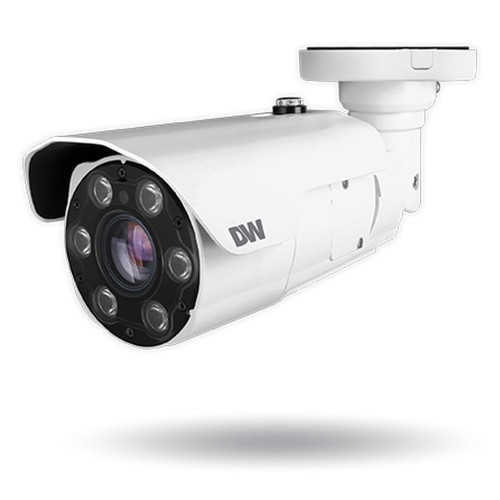
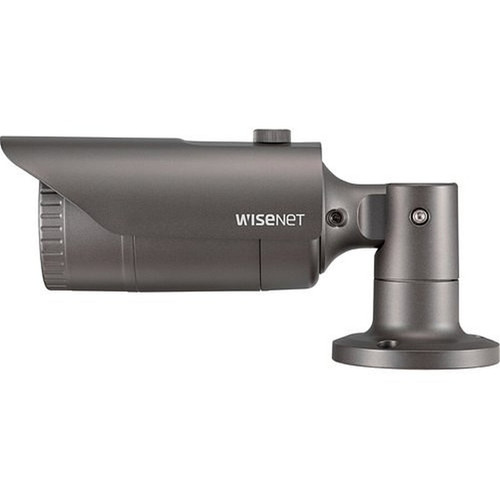
Both the Digital Watchdog DWC-MB95Wi28TW and the Hanwha QNO-8020R are 5MP fixed outdoor bullet IP cameras designed for perimeter and area surveillance, making them direct cross-shop candidates for installers specifying wired PoE cameras in the same resolution class. This comparison examines how their imaging performance, environmental ratings, power requirements, and VMS integration capabilities differ based solely on published specifications—giving integrators and IT buyers the data needed to match each model to a deployment scenario.
In This Guide
How do the imaging specs compare?
Both cameras produce 5MP at 2592×1944. The DWC-MB95Wi28TW uses a 1/2.7" CMOS sensor with a 2.8mm fixed lens (98.5° HFOV) or an optional 3.6mm variant (81.4° HFOV), while the QNO-8020R uses a 1/2.8" CMOS sensor with a single 4.0mm fixed lens at a narrower 80° HFOV and F1.6 aperture. The DWC-MB95Wi28TW reaches 0.02 lux in color mode; the QNO-8020R specifies 0.15 lux in color mode, giving the Digital Watchdog a measurable low-light advantage in color operation. Both rate WDR at 120dB.
IR range is a meaningful differentiator: the DWC-MB95Wi28TW claims 164 feet (approximately 50m) using its Smart IR system, while the QNO-8020R specifies 25m (82 feet) from its 850nm IR LEDs—roughly half the claimed range. Both cameras support auto day/night switching; the QNO-8020R explicitly uses an ICR (IR Cut filter Removable) mechanism, while the DWC-MB95Wi28TW specifies auto day/night but does not call out ICR in the provided specs. Both deliver up to 30fps at full 5MP resolution.
What about installation and environment?
The DWC-MB95Wi28TW carries an IP67 rating and IK10 vandal resistance with an aluminum die-cast housing; the QNO-8020R is rated IP66 and IK10, also in aluminum. IP67 provides an additional margin of protection against temporary water immersion versus IP66's protection against powerful water jets, which may matter in wash-down or flood-prone environments. Operating temperature ranges are nearly identical: the DWC-MB95Wi28TW covers -30°C to +60°C (-22°F to +140°F); the QNO-8020R covers -30°C to +55°C (-22°F to +131°F), giving the DWC-MB95Wi28TW a 5°C upper-temperature edge.
Both cameras are PoE-powered with no adapter included. The DWC-MB95Wi28TW specifies a maximum draw of 9.0W; the QNO-8020R is IEEE 802.3af Class 3 with a maximum of 7.5W (typical 6.1W), making it the more power-efficient unit on PoE budgets. The QNO-8020R provides one alarm input and one alarm output; the DWC-MB95Wi28TW specs list one audio input (line level) but do not specify a dry-contact alarm I/O pair. Physical dimensions are similar in profile—the DWC-MB95Wi28TW measures 220.8×80.5×70.6mm (1.52 lbs) and the QNO-8020R measures ø70×246mm (1.50 lbs).
Which fits your VMS and analytics better?
Both cameras support ONVIF and H.265/H.264/MJPEG compression with CBR/VBR bitrate control. The QNO-8020R adds ONVIF Profile S/G/T compliance, SUNAPI (Wisenet HTTP API), WiseStream II smart codec for bandwidth reduction, SNMPv3, Bonjour, LLDP, and AES-encrypted SD card storage—a broader protocol and security stack. It also supports up to three simultaneous streaming profiles (unicast up to 6 users or multicast), while the DWC-MB95Wi28TW specifies dual-stream capability. The QNO-8020R's security feature set is more extensive: firmware encryption, device certificates, SRTP, WSS, and brute-force attack prevention are listed; the DWC-MB95Wi28TW specifies digest authentication, IP filtering, and MAC filtering.
On analytics, the DWC-MB95Wi28TW lists object classification (humans vs. objects), line crossing, perimeter intrusion, and video tampering detection (scene change, blur, abnormal color). The QNO-8020R includes motion detection with polygonal zones, tampering, defocus detection, virtual area (intrusion/enter/exit), and virtual line (crossing/direction). Edge storage on the DWC-MB95Wi28TW supports microSD/SDHC/SDXC up to 1TB; the QNO-8020R's edge storage spec lists 128GB maximum. The DWC-MB95Wi28TW includes a 1-channel line-level audio input; the QNO-8020R does not list an audio input in the provided specifications.
Which should you choose: the DWC-MB95Wi28TW or the QNO-8020R?
Our take: The DWC-MB95Wi28TW is the stronger choice when IR range and low-light color sensitivity are the primary selection criteria. It delivers approximately double the IR throw—164 feet versus the QNO-8020R's 82 feet—and a lower color-mode minimum illumination of 0.02 lux versus 0.15 lux, both meaningful advantages for perimeter surveillance at distance or in poorly lit environments. It also holds an IP67 ingress rating versus the QNO-8020R's IP66, a 5°C higher upper operating temperature limit, and includes a built-in audio input the QNO-8020R does not list. Conversely, the QNO-8020R is the better fit where Wisenet VMS integration (SUNAPI), a richer network security posture (AES SD encryption, device certificates, SRTP), alarm I/O contacts, WiseStream II bandwidth optimization, or a lower PoE power budget (7.5W max versus 9.0W) are deciding factors. Its ONVIF Profile G/T compliance also broadens NVR compatibility. Warranty terms differ: Digital Watchdog offers 5 years; Hanwha offers 3 years.
Side-by-Side Comparison
Spec-for-spec, from manufacturer data.
| Specification | Digital Watchdog DWC-MB95Wi28TW | Hanwha QNO-8020R |
|---|---|---|
| Resolution | 5MP (2592×1944) | 5MP (2592×1944) |
| Image Sensor | 1/2.7" CMOS | 1/2.8" CMOS |
| Lens / Focal Length | 2.8mm fixed (98.5° HFOV); 3.6mm variant | 4.0mm fixed (80° HFOV), F1.6 |
| Min. Illumination (Color) | 0.02 lux | 0.15 lux |
| Min. Illumination (B&W / IR) | 0.0 lux | 0 lux IR |
| IR Range | 164 ft (≈50m) Smart IR | 25m (82 ft) 850nm IR LED |
| Wide Dynamic Range | 120dB True WDR | 120dB WDR |
| Max Frame Rate | 30fps at all resolutions | 30fps @ 5MP |
| Video Compression | H.265, H.264, MJPEG | H.265, H.264, MJPEG |
| IP Rating | IP67 | IP66 |
| IK / Impact Rating | IK10 | IK10 |
| Operating Temperature | -30°C to +60°C (-22°F to +140°F) | -30°C to +55°C (-22°F to +131°F) |
| Power Input / PoE Class | PoE, max 9.0W (class not stated) | PoE IEEE 802.3af Class 3, max 7.5W |
| Edge Storage | microSD/SDHC/SDXC up to 1TB | microSD/SDHC/SDXC up to 128GB |
| Alarm I/O | — | 1 input / 1 output |
| Audio | 1 audio input (line level) | — |
| ONVIF Profile | ONVIF (profile not specified in provided specs) | ONVIF Profile S/G/T |
| Warranty | 5 years | 3 years |
Frequently Asked Questions
Which should you choose: the DWC-MB95Wi28TW or the QNO-8020R?
The DWC-MB95Wi28TW is the stronger choice when IR range and low-light color sensitivity are the primary selection criteria. It delivers approximately double the IR throw—164 feet versus the QNO-8020R's 82 feet—and a lower color-mode minimum illumination of 0.02 lux versus 0.15 lux, both meaningful advantages for perimeter surveillance at distance or in poorly lit environments. It also holds an IP67 ingress rating versus the QNO-8020R's IP66, a 5°C higher upper operating temperature limit, and includes a built-in audio input the QNO-8020R does not list. Conversely, the QNO-8020R is the better fit where Wisenet VMS integration (SUNAPI), a richer network security posture (AES SD encryption, device certificates, SRTP), alarm I/O contacts, WiseStream II bandwidth optimization, or a lower PoE power budget (7.5W max versus 9.0W) are deciding factors. Its ONVIF Profile G/T compliance also broadens NVR compatibility. Warranty terms differ: Digital Watchdog offers 5 years; Hanwha offers 3 years.
Is the DWC-MB95Wi28TW or QNO-8020R better for low-light performance?
Based on published specs, the DWC-MB95Wi28TW has an advantage in two low-light metrics: its color minimum illumination is 0.02 lux versus the QNO-8020R's 0.15 lux, and its IR range is specified at 164 feet (approximately 50m) compared to the QNO-8020R's 25m (82 feet). If extended IR throw or superior color sensitivity in near-darkness is the priority, the DWC-MB95Wi28TW's specs support that use case more directly.
Which camera is easier to integrate with a Wisenet or third-party VMS?
The QNO-8020R is purpose-built for Wisenet ecosystems, supporting SUNAPI (Wisenet HTTP API), ONVIF Profile S/G/T, and WiseStream II. For third-party VMS platforms, both cameras support ONVIF, but the QNO-8020R's Profile G (edge storage access) and Profile T (advanced streaming) compliance give it broader certified compatibility. The DWC-MB95Wi28TW is listed as compatible with any ONVIF-conformant CMS but does not specify Profile G or T in the provided specs.
Does either camera include alarm I/O contacts for integration with access control or external sensors?
The QNO-8020R specifies one alarm input and one alarm output, with triggers for analytics events, network disconnect, and alarm input—enabling direct integration with door contacts, sirens, or relay devices. The DWC-MB95Wi28TW's provided specifications list one audio input (line level) and operational notifications via email and FTP, but do not include a dry-contact alarm input or output pair.
Get a Second Opinion on Your Camera Choice
Share your site layout, coverage goals, and budget. Our team will validate the camera selection, flag anything we would change, and recommend products that match the use case.