
Digital Watchdog DWC-MB95Wi28TW vs Hanwha QNO-8010R: Specification Comparison
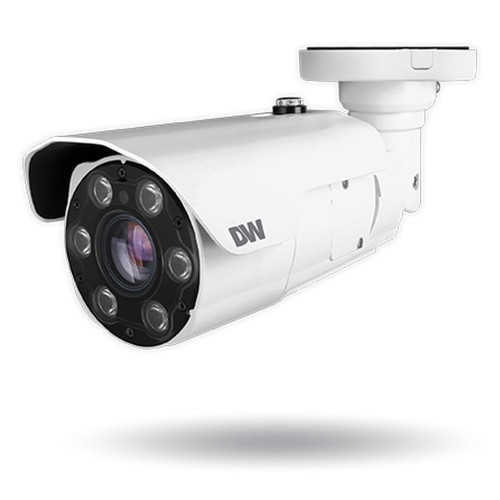
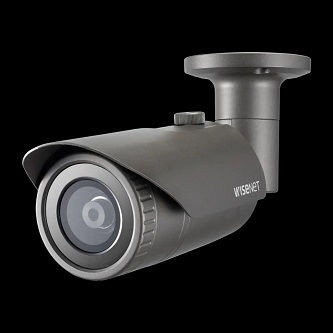
Both the Digital Watchdog DWC-MB95Wi28TW and the Hanwha QNO-8010R are 5MP fixed outdoor bullet cameras aimed at perimeter and general surveillance applications. Each delivers 2592×1944 resolution over a wired PoE connection with onboard H.265 compression, IR night vision, WDR, and IK10 impact resistance. Installers and IT buyers commonly cross-shop these two models when specifying mid-range IP cameras for outdoor environments where resolution, low-light performance, analytics depth, and VMS compatibility are primary decision drivers.
In This Guide
How do the imaging specs compare?
Both cameras use a 5MP sensor at 2592×1944 and both rate WDR at 120dB. The Digital Watchdog DWC-MB95Wi28TW uses a 1/2.7" CMOS sensor, while the Hanwha QNO-8010R uses a slightly larger 1/2.8" CMOS sensor. On minimum illumination, the DWC-MB95Wi28TW reaches 0.02 lux in color mode and 0.0 lux in B/W, whereas the QNO-8010R is rated at 0.15 lux color and 0 lux with IR active — meaning the DW unit's color sensitivity is meaningfully lower at 0.02 lux vs. 0.15 lux. The DWC-MB95Wi28TW offers a 2.8mm lens with an 81.4° HFOV (or 98.5° on the variant), while the QNO-8010R's 2.8mm fixed lens yields a wider 105° horizontal FOV.
IR illumination range diverges significantly: the DWC-MB95Wi28TW specifies 164 feet (50m) with Smart IR, while the QNO-8010R reaches only 20m (65.6 feet) — roughly 2.5× less range. The DW camera also lists Smart DNR 3D Digital Noise Reduction under its own brand name, while Hanwha lists SSNR. Both cameras support auto day/night switching; the QNO-8010R explicitly specifies ICR (infrared cut filter) for mechanical day/night switching, whereas the DW spec does not explicitly state ICR. Both cameras cap at 30fps at full resolution.
What about installation and environment?
The DWC-MB95Wi28TW carries an IP67 rating, providing full dust exclusion and protection against temporary immersion, while the QNO-8010R is rated IP66, which covers dust exclusion and powerful water jets but not immersion. Both carry IK10 vandal resistance. Operating temperature for the DWC-MB95Wi28TW spans -30°C to +60°C (-22°F to +140°F), and the QNO-8010R covers -30°C to +55°C — the DW unit tolerates 5°C more heat, which can matter in rooftop or sun-exposed enclosures.
Power consumption differs: the DWC-MB95Wi28TW draws a maximum of 9.0W via PoE, while the QNO-8010R draws a maximum of 7.5W (typical 6.1W) and is explicitly rated PoE IEEE 802.3af Class 3. The DW spec lists PoE and DC12V as power options; the QNO-8010R spec does not list a DC12V alternative. The DWC-MB95Wi28TW weighs 1.52 lbs (0.69 kg) and measures 8.69" × 3.16" × 2.77"; the QNO-8010R weighs 1.50 lbs (680g) and measures ø70.0 × 246.0mm (ø4.33" × 9.69"). Hanwha specifies a compatible backbox (SBO-100B1); DW notes mounting accessories are sold separately without a model number in the provided spec.
Which fits your VMS and analytics better?
Both cameras support ONVIF, enabling broad VMS compatibility. The QNO-8010R extends this with ONVIF Profile S, G, and T compliance, plus Hanwha's proprietary SUNAPI (HTTP API) and the Wisenet open platform — offering deeper native integration with Hanwha Wisenet VMS and third-party platforms that support SUNAPI. The DWC-MB95Wi28TW lists ONVIF conformance without specifying profiles. The QNO-8010R also adds WiseStream II smart codec for adaptive bitrate efficiency, while the DW camera does not list an equivalent technology in its spec.
On analytics, the DWC-MB95Wi28TW specifies object classification (humans vs. objects), line crossing, perimeter intrusion, and video tampering detection (scene change, video blur, abnormal color detection). The QNO-8010R covers motion detection (4 polygonal zones), tampering, defocus detection, virtual area intrusion/enter/exit, and virtual line crossing/direction — but does not list object classification by class in the provided spec. For audio, the DWC-MB95Wi28TW includes a line-level audio input with G.711A/U compression; the QNO-8010R spec does not list any audio input or output. The QNO-8010R provides alarm I/O (1 input, 1 output) and specifies NAS recording as an edge storage option alongside SD card; the DWC-MB95Wi28TW lists only microSD (up to 1TB) with no NAS mention. The QNO-8010R's SD slot is specified up to 128GB in the provided spec. Security hardening is more explicitly documented on the QNO-8010R: AES encryption, SDcard partition encryption, brute-force attack prevention, device certificate with Hanwha Private Root CA, and audit logging — the DW spec lists digest authentication, IP filtering, and MAC filtering only.
Which should you choose: the DWC-MB95Wi28TW or the QNO-8010R?
Our take: The DWC-MB95Wi28TW is the stronger choice when long-range IR illumination and lower-lux color sensitivity are the primary requirements: its 164-foot (50m) IR range is approximately 2.5× the QNO-8010R's 20m (65.6ft), its color minimum illumination of 0.02 lux beats the QNO-8010R's 0.15 lux by nearly an order of magnitude, and it adds a line-level audio input absent from the QNO-8010R's spec. It also carries IP67 vs. IP66 and tolerates 5°C more operating heat. The QNO-8010R is the stronger choice for security-hardened, Wisenet-integrated deployments: it documents AES encryption, SDcard partition encryption, brute-force prevention, and a device certificate chain not described in the DW spec, supports ONVIF Profile S/G/T with SUNAPI, includes hardware alarm I/O (1 in/1 out), NAS recording, and a wider 105° FOV from its 2.8mm lens. The DW camera carries a 5-year warranty vs. Hanwha's 3-year. Favor the DWC-MB95Wi28TW for open-air perimeter runs needing maximum IR reach; favor the QNO-8010R for Wisenet VMS environments requiring documented cybersecurity compliance and alarm I/O.
Side-by-Side Comparison
Spec-for-spec, from manufacturer data.
| Specification | Digital Watchdog DWC-MB95Wi28TW | Hanwha QNO-8010R |
|---|---|---|
| Resolution | 5MP (2592×1944) | 5MP (2592×1944) |
| Image Sensor | 1/2.7" CMOS | 1/2.8" CMOS |
| Lens / Focal Length | 2.8mm fixed (98.5° HFOV); 3.6mm variant | 2.8mm fixed (105° H / 77° V / 136° D) |
| Min. Illumination (Color) | 0.02 lux | 0.15 lux |
| Min. Illumination (B/W) | 0.0 lux | 0 lux (IR on) |
| IR Range | 164 ft (50m) Smart IR | 20m (65.6 ft) |
| WDR | True WDR 120dB | 120dB |
| Max Frame Rate | 30fps at all resolutions | 30fps @ 5MP |
| Video Compression | H.265, H.264, MJPEG | H.265, H.264, MJPEG |
| IP Rating | IP67 | IP66 |
| IK / Impact Rating | IK10 | IK10 |
| Operating Temperature | -30°C to +60°C (-22°F to +140°F) | -30°C to +55°C |
| Power Input / PoE Class | PoE or DC12V; max 9.0W | PoE IEEE 802.3af Class 3; max 7.5W |
| Edge Storage | MicroSD/SDHC/SDXC up to 1TB | MicroSD/SDHC/SDXC up to 128GB; NAS |
| Alarm I/O | — | 1 input / 1 output |
| Audio | 1 audio input (line level); G.711A/U | — |
| Dimensions | 8.69" x 3.16" x 2.77" (220.8x80.5x70.6mm) | ø70.0 x 246.0mm (ø4.33" x 9.69") |
| Weight | 1.52 lbs (0.69 kg) | 1.50 lbs (680g) |
| Warranty | 5 years | 3 years |
Frequently Asked Questions
Which should you choose: the DWC-MB95Wi28TW or the QNO-8010R?
The DWC-MB95Wi28TW is the stronger choice when long-range IR illumination and lower-lux color sensitivity are the primary requirements: its 164-foot (50m) IR range is approximately 2.5× the QNO-8010R's 20m (65.6ft), its color minimum illumination of 0.02 lux beats the QNO-8010R's 0.15 lux by nearly an order of magnitude, and it adds a line-level audio input absent from the QNO-8010R's spec. It also carries IP67 vs. IP66 and tolerates 5°C more operating heat. The QNO-8010R is the stronger choice for security-hardened, Wisenet-integrated deployments: it documents AES encryption, SDcard partition encryption, brute-force prevention, and a device certificate chain not described in the DW spec, supports ONVIF Profile S/G/T with SUNAPI, includes hardware alarm I/O (1 in/1 out), NAS recording, and a wider 105° FOV from its 2.8mm lens. The DW camera carries a 5-year warranty vs. Hanwha's 3-year. Favor the DWC-MB95Wi28TW for open-air perimeter runs needing maximum IR reach; favor the QNO-8010R for Wisenet VMS environments requiring documented cybersecurity compliance and alarm I/O.
Is the DWC-MB95Wi28TW or QNO-8010R better for low-light performance?
Based on the provided specs, the DWC-MB95Wi28TW has a lower minimum color illumination (0.02 lux vs. 0.15 lux for the QNO-8010R) and a significantly longer IR range (164 feet / 50m vs. 20m / 65.6 feet). For scenes where the camera must cover long distances in darkness or detect color detail in near-dark conditions, the DWC-MB95Wi28TW holds a spec advantage on both measures.
Which camera has better cybersecurity features?
The QNO-8010R's provided specifications detail AES data encryption, SDcard partition encryption, brute-force attack prevention, a Hanwha Private Root CA device certificate, SRTP and WSS secure communication, and full audit logging. The DWC-MB95Wi28TW spec lists digest authentication, IP filtering, and MAC filtering. On documented cybersecurity depth, the QNO-8010R is more fully specified in the provided data.
Do both cameras work with third-party VMS platforms?
Both cameras support ONVIF, so either will work with any ONVIF-conformant VMS. The QNO-8010R additionally specifies ONVIF Profile S, G, and T and Hanwha's SUNAPI HTTP API, which enables deeper integration with Hanwha Wisenet VMS and any platform that supports SUNAPI. The DWC-MB95Wi28TW lists generic ONVIF conformance without specifying profiles in the provided spec.
Get a Second Opinion on Your Camera Choice
Share your site layout, coverage goals, and budget. Our team will validate the camera selection, flag anything we would change, and recommend products that match the use case.