
Digital Watchdog D4583WTIR vs Digital Watchdog DWC-MV95WiATW: Specification Comparison
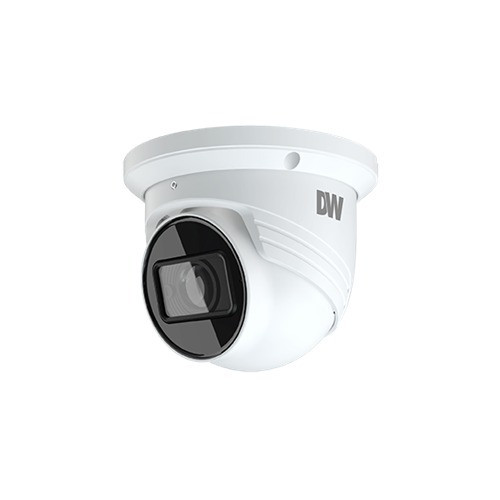
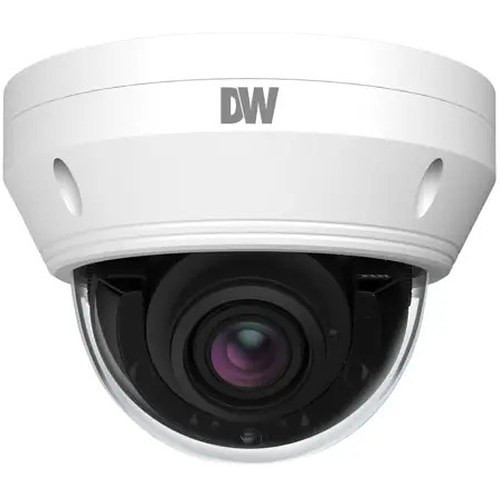
Both the Digital Watchdog DWC-D4583WTIR and DWC-MV95WiATW are 5MP varifocal vandal dome IP cameras from the same manufacturer, targeting installers who need motorized zoom and IR night vision in a dome form factor. The D4583WTIR is positioned as an indoor analog-hybrid coax camera, while the MV95WiATW is a pure IP network camera rated for outdoor use. A buyer choosing between them is typically deciding between a coax-upgrade path versus a full IP deployment with edge analytics and longer IR throw.
In This Guide
How do the imaging specs compare?
Both cameras use a 5MP CMOS sensor with nearly identical resolution: the D4583WTIR delivers 2608×1960 pixels on a 1/2.8" sensor, while the MV95WiATW provides 2592×1944 pixels on a slightly larger 1/2.7" sensor. Low-light performance differs noticeably: the MV95WiATW reaches 0.01 lux in color mode versus 0.08 lux for the D4583WTIR, a meaningful advantage for twilight or artificially lit color imaging, though both reach 0.0 lux in black-and-white mode. Both cameras feature True WDR at 120dB. The D4583WTIR's varifocal lens spans 2.7–13.5mm (85°–32° HFOV), while the MV95WiATW covers 2.8–12mm (95.1°–30° HFOV), giving the MV95WiATW a slightly wider maximum field of view.
IR performance is a significant differentiator: the MV95WiATW provides 164-foot Smart IR range compared to 70 feet on the D4583WTIR—more than double the throw, making the MV95WiATW substantially better suited for large open areas, parking lots, or long corridors. The D4583WTIR lists a maximum frame rate of 20fps at 5MP; the MV95WiATW is rated for up to 30fps at all supported resolutions including 5MP, 4MP, 2K, 1080P, and others. The D4583WTIR includes Star-Light sense-up (x2–x32 gain boost), which is not listed for the MV95WiATW. The D4583WTIR also includes a P-iris lens control, which is absent from the MV95WiATW spec sheet. Shutter speed range is wider on the MV95WiATW (1/30–1/100000) versus the D4583WTIR (1/30–1/30000).
What about installation and environment?
The D4583WTIR carries an IP66 rating (dust-tight, protected against powerful water jets), while the MV95WiATW is rated IP67 (dust-tight, protected against temporary immersion) and additionally carries an IK10 vandal impact rating. The MV95WiATW's aluminum die-cast housing offers more physical durability than the D4583WTIR's plastic Snapit housing, which has no listed IK rating. For outdoor deployments subject to direct rain, debris, or deliberate tampering, the MV95WiATW is the more hardened choice.
Operating temperature also favors the MV95WiATW: it is rated from -22°F to 140°F (-30°C to 60°C), versus -4°F to 122°F (-20°C to 50°C) for the D4583WTIR—important for unheated enclosures in cold climates or sun-exposed rooftop mounts. The D4583WTIR lists 24V AC as its primary power requirement with 12VDC also noted; PoE is referenced in supplemental fields but not specified in the main power spec. The MV95WiATW explicitly lists PoE Class 3 as its power source (max 6.0W), with no adapter included. Both cameras note mounting accessories are optional and sold separately. The D4583WTIR is the smaller and lighter unit at 4.24"×3.9" and 0.55 lbs versus the MV95WiATW at 5.43"×3.93" and 1.98 lbs.
Which fits your VMS and analytics better?
The MV95WiATW is a full IP network camera with explicitly listed ONVIF compatibility, H.264/H.265/MJPEG compression, dual-stream CBR/VBR, IPv4/IPv6 support, and a comprehensive protocol stack (802.1x, DDNS, DHCP, FTP, HTTP, HTTPS, ICMP, IGMP, NTP, PPPoE, QoS, RTCP, RTP, RTSP, SMTP, SNMP, UDP, UPnP). It also includes on-board edge storage via microSD/SDHC/SDXC up to 1TB, operational notifications via email and FTP, and IP/MAC filtering with digest authentication. The D4583WTIR's primary signal outputs are analog coax formats (CVBS, HD-CVI, HD-TVI, HD over Coax, 960H); it does not list ONVIF, H.264/H.265, or any IP network stack in its specifications, making it unsuitable for pure IP VMS integration.
On analytics, the MV95WiATW includes factory-listed edge analytics: Object Classification (humans vs. objects), Line Crossing, Perimeter Intrusion, and Video Tampering Detection (scene change, blur, abnormal color). The D4583WTIR lists motion detection and 24 programmable privacy zones but no advanced video analytics. For audio, both cameras include a built-in microphone; the MV95WiATW additionally specifies one audio input and one audio output with G.711A/U compression, while the D4583WTIR lists a built-in microphone only with no audio output. Camera control on the D4583WTIR is via Pelco C and UTC protocols, consistent with its analog/coax heritage.
Which should you choose: the D4583WTIR or the DWC-MV95WiATW?
Our take: The DWC-MV95WiATW is the stronger choice when deploying a new or fully IP-based system in an outdoor environment that demands long IR coverage, edge analytics, and rugged housing. Its IR range of 164 feet versus the D4583WTIR's 70 feet is more than double, its IP67/IK10 rating outclasses the D4583WTIR's IP66/no-IK rating, and its operating temperature floor of -30°C versus -20°C provides a meaningful buffer in cold climates. The D4583WTIR is the appropriate selection when the installation infrastructure is coax-based—HD-CVI, HD-TVI, or HD over Coax—and a full IP migration is not feasible or budgeted, as it supports multi-format analog signal outputs that the MV95WiATW does not. The D4583WTIR also offers a wider focal range (2.7–13.5mm vs. 2.8–12mm) and P-iris control. Installers running an NVR/VMS with ONVIF should select the MV95WiATW; those connecting to existing analog DVR infrastructure should select the D4583WTIR.
Side-by-Side Comparison
Spec-for-spec, from manufacturer data.
| Specification | Digital Watchdog D4583WTIR | Digital Watchdog DWC-MV95WiATW |
|---|---|---|
| Resolution | 5MP / 2608×1960 | 5MP / 2592×1944 |
| Image Sensor | 1/2.8" CMOS | 1/2.7" CMOS |
| Lens / Focal Length | 2.7–13.5mm varifocal, motorized, auto-focus, P-iris | 2.8–12mm varifocal, motorized, auto-focus |
| Horizontal FOV | 85°–32° | 95.1°–30° |
| Min. Illumination (Color) | 0.08 lux | 0.01 lux |
| Min. Illumination (B/W) | 0.0 lux | 0.0 lux |
| IR Range | 70 ft (Smart IR) | 164 ft (Smart IR) |
| WDR | True WDR 120dB | True WDR 120dB |
| Max Frame Rate | 20fps at 5MP | 30fps at all resolutions |
| Video Compression | — | H.264, H.265, MJPEG |
| Signal Output | CVBS, 960H, HD-CVI, HD-TVI, HD over Coax | IP (ONVIF, RTSP, RTP, RTCP, HTTP/S, SMTP, FTP, SNMP, NTP, PPPoE, UPnP, DHCP, DDNS, 802.1x, QoS) |
| IP Rating | IP66 | IP67 |
| IK / Impact Rating | — | IK10 |
| Operating Temperature | -4°F to 122°F (-20°C to 50°C) | -22°F to 140°F (-30°C to 60°C) |
| Power Input | 24V AC / 12VDC | PoE (Class 3, max 6.0W) |
| Edge Storage | — | microSD/SDHC/SDXC up to 1TB |
| Audio | Built-in mic (1 in); no audio out listed | Built-in mic, 1 audio in, 1 audio out; G.711A/U |
| Edge Analytics | Motion detection, 24 privacy zones | Object Classification, Line Crossing, Perimeter Intrusion, Video Tampering Detection |
| Housing Material | Plastic (Snapit) | Aluminum die-casting |
| Environment Rating | Indoor | Outdoor |
| Dimensions | 4.24" × 3.9" (107.8 × 99.1 mm) | 5.43" × 3.93" (138 × 100 mm) |
| Weight | 0.55 lbs (0.25 kg) | 1.98 lbs (0.9 kg) |
| Warranty | 5 Year | 5 Year |
Frequently Asked Questions
Which should you choose: the D4583WTIR or the DWC-MV95WiATW?
The DWC-MV95WiATW is the stronger choice when deploying a new or fully IP-based system in an outdoor environment that demands long IR coverage, edge analytics, and rugged housing. Its IR range of 164 feet versus the D4583WTIR's 70 feet is more than double, its IP67/IK10 rating outclasses the D4583WTIR's IP66/no-IK rating, and its operating temperature floor of -30°C versus -20°C provides a meaningful buffer in cold climates. The D4583WTIR is the appropriate selection when the installation infrastructure is coax-based—HD-CVI, HD-TVI, or HD over Coax—and a full IP migration is not feasible or budgeted, as it supports multi-format analog signal outputs that the MV95WiATW does not. The D4583WTIR also offers a wider focal range (2.7–13.5mm vs. 2.8–12mm) and P-iris control. Installers running an NVR/VMS with ONVIF should select the MV95WiATW; those connecting to existing analog DVR infrastructure should select the D4583WTIR.
Is the DWC-D4583WTIR or DWC-MV95WiATW better for low-light color imaging?
The DWC-MV95WiATW has a lower minimum color illumination at 0.01 lux versus 0.08 lux for the D4583WTIR, meaning it can maintain color imaging in dimmer conditions. Both cameras reach 0.0 lux in black-and-white mode with IR active. The D4583WTIR includes a Star-Light sense-up gain feature (x2–x32), which is not listed on the MV95WiATW spec sheet.
Can I connect the DWC-D4583WTIR to my IP NVR or VMS over a network?
Based on the provided specifications, the D4583WTIR's listed signal outputs are analog coax formats—CVBS, HD-CVI, HD-TVI, HD over Coax, and 960H. No ONVIF compliance, IP network stack, or H.264/H.265 streaming is listed for this model. The DWC-MV95WiATW is explicitly ONVIF-compatible with a full IP protocol stack and is the appropriate choice for NVR/VMS integration.
Which camera is better suited for outdoor installation in harsh weather?
The DWC-MV95WiATW is better suited for harsh outdoor use. It carries an IP67 rating (temporary immersion protection) and an IK10 vandal impact rating, with an aluminum die-cast housing and an operating temperature range of -22°F to 140°F (-30°C to 60°C). The D4583WTIR is rated IP66 (no immersion protection), has no listed IK impact rating, uses a plastic housing, and is specified for indoor use with a narrower temperature range of -4°F to 122°F (-20°C to 50°C).
Get a Second Opinion on Your Camera Choice
Share your site layout, coverage goals, and budget. Our team will validate the camera selection, flag anything we would change, and recommend products that match the use case.