
Digital Watchdog D4583WTIR vs Digital Watchdog DWC-MV95Wi28TW: Specification Comparison
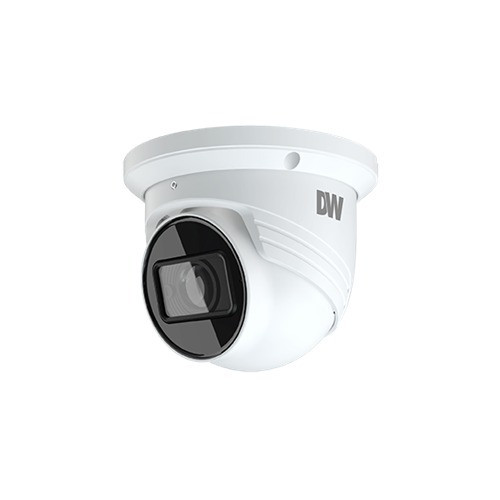
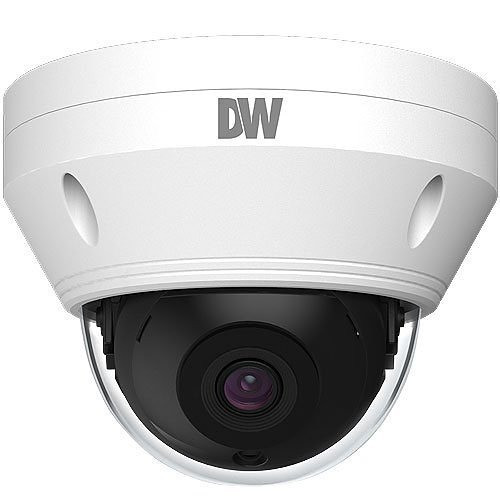
Both the Digital Watchdog DWC-D4583WTIR and DWC-MV95Wi28TW are 5MP IP dome cameras from the same manufacturer, making them a legitimate cross-shop pairing for installers evaluating indoor versus outdoor deployments. The D4583WTIR is an indoor vandal dome with a motorized varifocal lens and analog-over-coax signal compatibility, while the MV95Wi28TW is a network-only outdoor vandal dome with fixed lenses, edge analytics, and onboard storage. Both carry 5-year warranties and True WDR 120dB, but differ substantially in lens flexibility, environmental rating, analytics depth, and network integration.
In This Guide
How do the imaging specs compare?
Both cameras use 5MP CMOS sensors, but with minor differences in pixel array and sensor size. The D4583WTIR uses a 1/2.8" sensor at 2608×1960 active pixels, while the MV95Wi28TW uses a 1/2.7" sensor at 2592×1944 total pixels. Low-light performance favors the MV95Wi28TW meaningfully in color mode: it reaches 0.02 lux in color versus 0.08 lux for the D4583WTIR, a 4× advantage in color sensitivity. Both reach 0.0 lux in B/W mode with IR active. Both deliver True WDR at 120dB. The D4583WTIR specifies a maximum frame rate of 20fps at full 5MP/1944p resolution; the MV95Wi28TW supports up to 30fps at all resolutions including 5MP.
Lens architecture is a significant differentiator. The D4583WTIR offers a motorized 2.7–13.5mm varifocal lens with auto-focus and P-iris control, providing an 85°–32° HFOV range that allows post-installation zoom adjustment without physical lens changes. The MV95Wi28TW uses a fixed lens available in either 2.8mm (98.5° HFOV) or 3.6mm (81.4° HFOV) — the buyer must select the focal length at purchase and cannot adjust field of view afterward. IR range favors the MV95Wi28TW at 100 feet versus 70 feet for the D4583WTIR, both using Smart IR technology. The D4583WTIR also includes Star-Light sense-up amplification (Off, ×2–×32) as a discrete specification; the MV95Wi28TW does not list an equivalent sense-up multiplier.
What about installation and environment?
Environmental ratings differ in both ingress protection and impact resistance. The D4583WTIR is rated IP66 (dust-tight, protected against powerful water jets) and is positioned as an indoor dome with a plastic Snapit housing in ivory. It carries no listed IK impact rating. The MV95Wi28TW is rated IP67 (dust-tight, protected against temporary immersion) and IK10 (rated to withstand 20-joule impacts), with an aluminum die-cast housing in white — making it the only candidate here specified for outdoor installation and mechanical abuse. Operating temperature range also favors the MV95Wi28TW: -22°F to 140°F (-30°C to 60°C) versus -4°F to 122°F (-20°C to 50°C) for the D4583WTIR, a meaningful advantage in cold climates.
Both cameras support PoE as a primary power input. The D4583WTIR additionally lists 24V AC and 12VDC as power options, which aids integration with legacy analog infrastructure. The MV95Wi28TW lists PoE and DC12V at a maximum of 6.0W on both inputs. The D4583WTIR's maximum draw is 6.5W. The D4583WTIR weighs 0.55 lbs (0.25 kg) in a plastic housing measuring 4.24"×3.9"; the MV95Wi28TW weighs 1.43 lbs (0.65 kg) in aluminum at 4.59"×3.54". Mounting accessories are sold separately for both. The D4583WTIR's operating humidity range is 10–90% non-condensing; the MV95Wi28TW tolerates 0–95% RH non-condensing.
Which fits your VMS and analytics better?
The MV95Wi28TW is a full IP network camera with H.264, H.265, and MJPEG compression, dual-stream output up to 30fps, and explicit ONVIF compatibility. It lists VMS support for DW Spectrum, ExacqVision, and Milestone by name. Protocol support is comprehensive: DDNS, DHCP, FTP, HTTP/HTTPS, IGMP, NTP, ONVIF, PPPoE, QoS, RTCP, RTP, RTSP, SMTP, SNMP, UDP, and UPnP. It also supports 802.1x port-based network access control. The MV95Wi28TW includes edge analytics: object classification (humans vs. objects), line crossing, perimeter intrusion, video tampering detection (scene change, blur, abnormal color), and the product page lists LPR. The D4583WTIR's specs describe signal outputs including CVBS, 960H, HD-Analog, HD-CVI, HD-TVI, and HD over Coax — suggesting it is primarily a hybrid analog/IP camera; no VMS compatibility list, video compression format, or streaming protocol details are provided in the supplied specifications.
For audio, the MV95Wi28TW provides 1 audio input, 1 audio output, a built-in microphone, and G.711A/U compression, plus email and FTP event notifications. The D4583WTIR includes a built-in microphone and 1 alarm output but lists no audio output and no specified audio compression codec. The MV95Wi28TW includes a Micro SD/SDHC/SDXC card slot supporting up to 1TB for local edge recording — a specification absent from the D4583WTIR. Privacy zone count is another differentiator: the D4583WTIR offers 24 programmable privacy zones versus 4 on the MV95Wi28TW. Both include 3D Smart DNR, auto day/night, de-fog, mirror/flip, motion detection, and auto shutter.
Which should you choose: the D4583WTIR or the DWC-MV95Wi28TW?
Our take: The MV95Wi28TW is the stronger choice when the deployment requires outdoor installation, greater impact resistance, longer IR range, or full IP network analytics. Its IK10 aluminum housing, IP67 rating, and -30°C cold-weather tolerance make it the only viable option for exterior or harsh-environment mounting. It extends IR coverage to 100 feet versus 70 feet, achieves 0.02 lux color sensitivity versus 0.08 lux, and supports up to 30fps at 5MP versus 20fps. Built-in edge analytics — object classification, line crossing, perimeter intrusion — and 1TB edge storage add value the D4583WTIR does not match. The D4583WTIR is the stronger choice when the installation is indoors and requires lens flexibility or hybrid coax signal compatibility. Its motorized 2.7–13.5mm varifocal with auto-focus and P-iris allows post-mount field-of-view adjustment, and its CVBS/HD-CVI/HD-TVI/HD-TVI coax outputs can feed legacy analog infrastructure. Choose the D4583WTIR for mixed analog/IP indoor retrofits; choose the MV95Wi28TW for IP-native outdoor perimeter work.
Side-by-Side Comparison
Spec-for-spec, from manufacturer data.
| Specification | Digital Watchdog D4583WTIR | Digital Watchdog DWC-MV95Wi28TW |
|---|---|---|
| Resolution | 5MP (2608 × 1960) | 5MP (2592 × 1944) |
| Image Sensor | 1/2.8" CMOS | 1/2.7" CMOS |
| Lens / Focal Length | Motorized varifocal 2.7–13.5mm | Fixed 2.8mm or 3.6mm |
| HFOV | 85°–32° (varifocal range) | 98.5° (2.8mm) / 81.4° (3.6mm) |
| Min. Illumination (Color) | 0.08 lux | 0.02 lux |
| Min. Illumination (B/W) | 0.0 lux | 0.0 lux |
| IR Range | 70 ft (Smart IR) | 100 ft (Smart IR) |
| WDR | True WDR 120dB | True WDR 120dB |
| Max Frame Rate | 20fps @ 5MP | 30fps at all resolutions |
| Video Compression | — | H.264, H.265, MJPEG |
| IP Rating | IP66 | IP67 |
| IK / Impact Rating | — | IK10 |
| Operating Temperature | -4°F to 122°F (-20°C to 50°C) | -22°F to 140°F (-30°C to 60°C) |
| Power Input | 24V AC / 12VDC / PoE | DC12V / PoE (max 6.0W) |
| Edge Storage | — | Micro SD/SDHC/SDXC up to 1TB |
| Audio | Built-in mic, 1 alarm output | Built-in mic, 1 audio in, 1 audio out, G.711A/U |
| Analytics | — | Object Classification, Line Crossing, Perimeter Intrusion, Tampering Detection |
| ONVIF / VMS Support | — | ONVIF; DW Spectrum, ExacqVision, Milestone |
| Privacy Zones | 24 programmable | 4 programmable |
| Housing Material | Plastic (Snapit) | Aluminum die-casting |
| Environment Rating | Indoor | Outdoor |
| Dimensions (H × W) | 4.24" × 3.90" (107.8 × 99.1 mm) | 4.59" × 3.54" (116.6 × 90 mm) |
| Weight | 0.55 lbs (0.25 kg) | 1.43 lbs (0.65 kg) |
| Warranty | 5 Year | 5 Year |
Frequently Asked Questions
Which should you choose: the D4583WTIR or the DWC-MV95Wi28TW?
The MV95Wi28TW is the stronger choice when the deployment requires outdoor installation, greater impact resistance, longer IR range, or full IP network analytics. Its IK10 aluminum housing, IP67 rating, and -30°C cold-weather tolerance make it the only viable option for exterior or harsh-environment mounting. It extends IR coverage to 100 feet versus 70 feet, achieves 0.02 lux color sensitivity versus 0.08 lux, and supports up to 30fps at 5MP versus 20fps. Built-in edge analytics — object classification, line crossing, perimeter intrusion — and 1TB edge storage add value the D4583WTIR does not match. The D4583WTIR is the stronger choice when the installation is indoors and requires lens flexibility or hybrid coax signal compatibility. Its motorized 2.7–13.5mm varifocal with auto-focus and P-iris allows post-mount field-of-view adjustment, and its CVBS/HD-CVI/HD-TVI/HD-TVI coax outputs can feed legacy analog infrastructure. Choose the D4583WTIR for mixed analog/IP indoor retrofits; choose the MV95Wi28TW for IP-native outdoor perimeter work.
Is the DWC-D4583WTIR or DWC-MV95Wi28TW better for low-light color imaging?
The DWC-MV95Wi28TW has a lower minimum color illumination spec at 0.02 lux versus 0.08 lux for the DWC-D4583WTIR — a 4× advantage in color sensitivity before IR activates. Both cameras reach 0.0 lux in black-and-white mode with IR on. If color retention at low light is a priority, the MV95Wi28TW has the edge per the published specifications.
Can I use either of these cameras outdoors?
Only the DWC-MV95Wi28TW is specified for outdoor use. It carries an IP67 rating (temporary immersion) and IK10 impact resistance in an aluminum die-cast housing, with an operating temperature range of -22°F to 140°F (-30°C to 60°C). The DWC-D4583WTIR is rated IP66 and is described as an indoor dome in a plastic Snapit housing; it has no IK impact rating and a narrower temperature range of -4°F to 122°F (-20°C to 50°C).
Which camera works with my existing Milestone or ExacqVision VMS?
The DWC-MV95Wi28TW explicitly lists compatibility with DW Spectrum, ExacqVision, and Milestone, and is specified as ONVIF compliant with H.264/H.265 compression and full RTSP/RTCP/RTP streaming. The DWC-D4583WTIR's supplied specifications do not include video compression format, streaming protocol support, ONVIF compliance, or a VMS compatibility list — its signal outputs suggest a hybrid coax-focused design rather than a pure IP streaming camera.
Get a Second Opinion on Your Camera Choice
Share your site layout, coverage goals, and budget. Our team will validate the camera selection, flag anything we would change, and recommend products that match the use case.