
Digital Watchdog D4283WTIR vs Digital Watchdog V4283WD: Specification Comparison
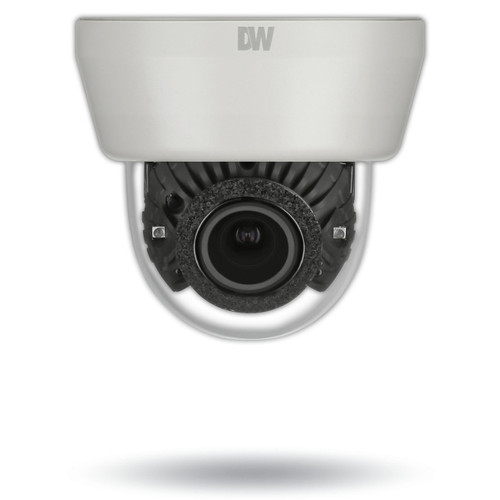
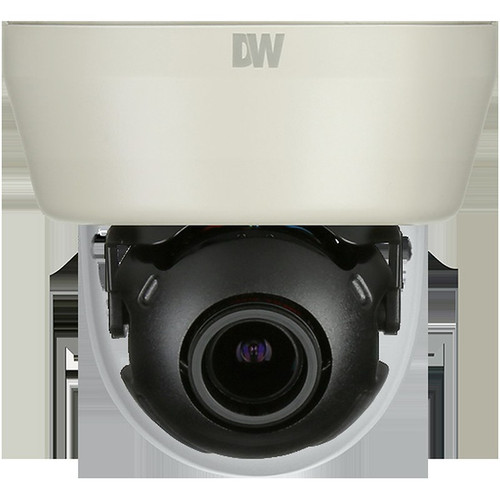
Both the Digital Watchdog DWC-D4283WTIR and DWC-V4283WD are 2.1MP 1080p analog HD dome cameras sharing the same 1/3" CMOS sensor, motorized vari-focal 2.8–12mm lens, and HD-over-Coax multi-format signal support. A buyer choosing between them is weighing an indoor-oriented dome with built-in audio and longer IR range against a hardened vandal-resistant outdoor dome with a higher ingress protection rating and IK10 impact resistance. Neither is a PTZ or IP network camera; both operate over coax infrastructure.
In This Guide
How do the imaging specs compare?
Both cameras share an identical imaging foundation: a 2.1MP/1080p 1/3" CMOS progressive-scan sensor, 1944 × 1092 active pixels, a motorized vari-focal 2.8–12mm lens with auto-focus and P-iris control, and a horizontal field of view spanning 91° to 28°. WDR performance is identical at True WDR 100dB on both models, and both include Smart DNR 3D digital noise reduction, DRC, and Star-Light Sense-Up from x2 to x32.
The primary imaging differentiator is low-light sensitivity and IR range. The D4283WTIR specifies 0.0 lux in B&W mode and 0.03 lux in color, and its Smart IR system reaches 100 feet. The V4283WD specifies only 0.03 lux in color; a B&W floor is not listed in the provided specs. Its IR range is stated as up to 10 meters (approximately 33 feet) — notably shorter than the D4283WTIR's 100-foot range. Both share the same shutter speed range of 1/30 to 1/30000 and gamma range of 0.45–0.75.
What about installation and environment?
The D4283WTIR carries an IP66 rating (dust-tight, protected against powerful water jets) and is listed as an indoor dome in its housing classification, though IP66 permits some outdoor deployment. Its plastic Snapit housing measures 4.24" × 3.9" (107.8 × 99.1 mm) and weighs 0.53 lbs (0.24 kg). The V4283WD is rated IP68 (dust-tight, continuous immersion) and IK10 (highest standardized impact resistance), uses aluminum die-casting construction, and is explicitly classified as an outdoor/vandal dome. Its housing is larger at 5.47" × 4.79" (139 × 121.8 mm) and heavier at 2.05 lbs (0.93 kg). Both operate across -40°F to 122°F (-40°C to 50°C) and share a maximum power draw of 2.3W with 24V AC power requirements. Both support PoE (802.3af) per the provided specs. Mounting accessories are sold separately for both.
Which fits your VMS and analytics better?
Both cameras output CVBS, 960H, HD-Analog, HD-CVI, and HD-TVI signals over coax and are listed as ONVIF-compatible. Both support H.264 and MJPEG compression, motion detection, 16 programmable privacy masks, Pelco C and Pelco D PTZ control protocols with UTP built-in, BLC, de-fog, mirror/flip, and sharpness adjustment. The D4283WTIR includes a built-in microphone (1 audio input, frequency response 50Hz–10KHz, sensitivity -38dB ± 2dB) and 1 alarm output, and supports microSD edge storage (up to 32GB SDHC per specs). The V4283WD lists 1 alarm output but audio input is not specified in the provided specs; ONVIF is confirmed. MicroSD storage is listed for the V4283WD as well. Neither model lists advanced edge analytics such as line crossing or object classification in the provided specifications.
Which should you choose: the D4283WTIR or the V4283WD?
Our take: The D4283WTIR is the stronger choice when IR range, B&W low-light floor, and built-in audio are priorities; the V4283WD is the correct selection when physical hardening for outdoor or high-tamper environments is required. Concretely: the D4283WTIR delivers a 100-foot Smart IR range versus approximately 33 feet (10 m) on the V4283WD, adds a 0.0 lux B&W minimum illumination figure not listed for the V4283WD, and includes a built-in microphone with documented audio specs absent from the V4283WD's provided data. The V4283WD counters with IP68 versus IP66 ingress protection and IK10 impact resistance backed by aluminum die-casting, versus the D4283WTIR's plastic housing — making it the defensible choice for perimeter, parking, or any installation where vandalism or water immersion exposure is a realistic risk. Both carry a 5-year warranty and identical sensor/lens/WDR cores.
Side-by-Side Comparison
Spec-for-spec, from manufacturer data.
| Specification | Digital Watchdog D4283WTIR | Digital Watchdog V4283WD |
|---|---|---|
| SKU | DWC-D4283WTIR | DWC-V4283WD |
| Max Resolution | 2.1MP / 1080p | 2.1MP / 1080p |
| Image Sensor | 1/3" CMOS, 1944 × 1092 | 1/3" CMOS, 1944 × 1092 |
| Lens / Focal Length | Motorized vari-focal 2.8–12mm, auto-focus, P-iris | Motorized vari-focal 2.8–12mm, auto-focus, P-iris |
| Horizontal FOV | 91° – 28° | 91° – 28° |
| Min Illumination (Color) | 0.03 lux | 0.03 lux |
| Min Illumination (B&W) | 0.0 lux | — |
| IR Range | 100 ft (Smart IR) | ~33 ft / 10 m |
| Wide Dynamic Range | True WDR 100dB | True WDR 100dB |
| Signal Technology | CVBS, 960H, HD-Analog, HD-CVI, HD-TVI, HD-over-Coax | CVBS, 960H, HD-Analog, HD-CVI, HD-TVI, HD-Coax |
| Video Compression | H.264, MJPEG | H.264, MJPEG |
| IP Rating | IP66 | IP68 |
| IK / Impact Rating | — | IK10 |
| Housing Material | Plastic (Snapit) | Aluminum die-casting (Snapit) |
| Housing Classification | Indoor Dome | Vandal Dome (Outdoor) |
| Operating Temperature | -40°F to 122°F (-40°C to 50°C) | -40°F to 122°F (-40°C to 50°C) |
| Power Input | 24V AC / PoE (802.3af) | 24V AC / PoE (802.3af) |
| Max Power Draw | 2.3W | 2.3W |
| Audio | Built-in mic; 50Hz–10KHz; -38dB ±2dB | — |
| Alarm Output | 1 | 1 |
| Edge Storage | microSD up to 32GB (SDHC) | microSD |
| ONVIF | Yes | Yes |
| Privacy Zones | 16 programmable masks | 16 programmable masks |
| Dimensions (H × W) | 4.24" × 3.9" (107.8 × 99.1 mm) | 5.47" × 4.79" (139 × 121.8 mm) |
| Weight | 0.53 lbs (0.24 kg) | 2.05 lbs (0.93 kg) |
| Warranty | 5 Year | 5 Year |
Frequently Asked Questions
Which should you choose: the D4283WTIR or the V4283WD?
The D4283WTIR is the stronger choice when IR range, B&W low-light floor, and built-in audio are priorities; the V4283WD is the correct selection when physical hardening for outdoor or high-tamper environments is required. Concretely: the D4283WTIR delivers a 100-foot Smart IR range versus approximately 33 feet (10 m) on the V4283WD, adds a 0.0 lux B&W minimum illumination figure not listed for the V4283WD, and includes a built-in microphone with documented audio specs absent from the V4283WD's provided data. The V4283WD counters with IP68 versus IP66 ingress protection and IK10 impact resistance backed by aluminum die-casting, versus the D4283WTIR's plastic housing — making it the defensible choice for perimeter, parking, or any installation where vandalism or water immersion exposure is a realistic risk. Both carry a 5-year warranty and identical sensor/lens/WDR cores.
Is the D4283WTIR or V4283WD better for low-light performance?
Based on the provided specs, the D4283WTIR has a documented edge: it specifies 0.0 lux in B&W mode and 0.03 lux in color, whereas the V4283WD only lists 0.03 lux in color and does not provide a B&W floor. Both include Star-Light Sense-Up (x2–x32) and share the same sensor. The D4283WTIR also has a significantly longer IR range — 100 feet versus approximately 33 feet (10 m) for the V4283WD.
Can the V4283WD be used outdoors while the D4283WTIR cannot?
The V4283WD is explicitly rated for outdoor use with IP68 ingress protection and IK10 impact resistance in an aluminum die-cast housing, making it appropriate for exposed perimeter and high-tamper locations. The D4283WTIR is classified as an indoor dome with IP66 rating; IP66 does resist water jets and dust but is not rated for immersion, and its plastic housing carries no IK impact rating per the provided specs. For applications involving potential vandalism or standing water exposure, the V4283WD is the specified choice.
Does the V4283WD include built-in audio like the D4283WTIR?
The D4283WTIR specifies a built-in microphone with a documented frequency response of 50Hz–10KHz and sensitivity of -38dB ± 2dB. The V4283WD's provided specifications do not list an audio input or built-in microphone. If on-camera audio capture is required, the D4283WTIR is the only model with confirmed audio specs from the data provided.
Get a Second Opinion on Your Camera Choice
Share your site layout, coverage goals, and budget. Our team will validate the camera selection, flag anything we would change, and recommend products that match the use case.