
Digital Watchdog D4283WD vs Digital Watchdog D4283WTIR: Specification Comparison
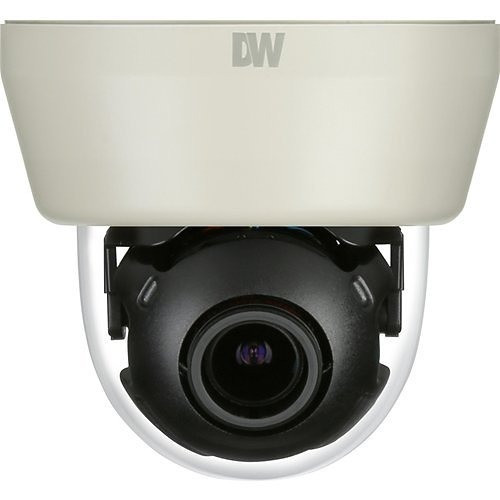
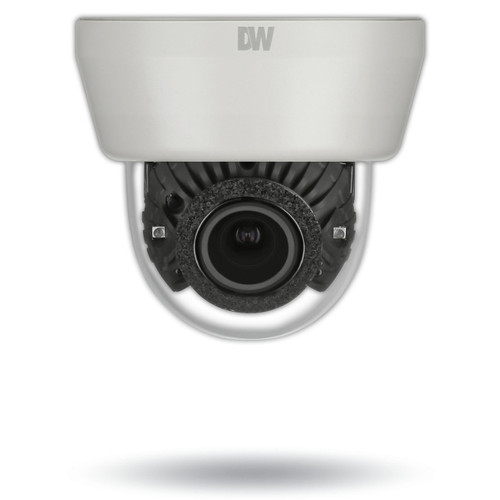
Both the DWC-D4283WD and DWC-D4283WTIR are Digital Watchdog 2MP (1944×1092) analog HD dome cameras sharing the same 1/3" CMOS sensor, motorized 2.8–12mm vari-focal lens, and multi-format coax signal support (HD-TVI, HD-CVI, HD-CVI, CVBS/960H). This comparison is aimed at installers and IT buyers evaluating which model better suits their specific deployment—primarily distinguished by the presence of a rated IR illuminator on the WTIR, video compression format disclosure, and ONVIF compliance—while sharing the majority of their core imaging and environmental specifications.
In This Guide
How do the imaging specs compare?
Both cameras share an identical imaging foundation: a 2.1MP/1080p 1/3" progressive-scan CMOS sensor with 1944×1092 active pixels, a motorized 2.8–12mm vari-focal lens with auto-focus and P-iris, a horizontal field of view ranging from 91° to 28°, and true 100dB Wide Dynamic Range. Color minimum scene illumination is 0.03 lux on both models, and both offer Star-Light sense-up from off through x2–x32. Both also implement Smart DNR 3D digital noise reduction, backlight compensation, de-fog, DRC, and a 1/30–1/30000 shutter speed range.
The key imaging differentiator is the IR illuminator. The D4283WTIR spec explicitly lists a 100-foot Smart IR range and a 0.0 lux B/W minimum illumination—meaning it can image in total darkness using its onboard IR LEDs. The D4283WD spec lists IR as a night-vision feature but does not state an IR distance or a 0.0 lux B/W figure. Buyers should verify with Digital Watchdog whether the WD variant includes a physically smaller or absent IR array, as the spec omission is a meaningful gap for dark-environment deployments.
What about installation and environment?
Both cameras share identical physical and environmental credentials: a Snapit™ plastic housing measuring 4.24" × 3.9" (107.8 × 99.1 mm), a weight of 0.53 lbs (0.24 kg), ivory indoor dome form factor, IP66 ingress protection, and an operating temperature range of −40°F to 122°F (−40°C to 50°C) at 10–90% non-condensing humidity. Neither spec sheet lists an IK impact rating. Mounting accessories are optional and sold separately for both models. Both carry a 5-year warranty.
On power, both units draw a maximum of 2.3W and list 24V AC as a power requirement. The D4283WTIR spec explicitly identifies PoE 802.3af (Class not stated in the WTIR spec; the D4283WD spec lists PoE Class 2). The D4283WD spec also lists 12VDC as a power type. Installers should confirm with the datasheet which DC input voltages are accepted on each model before selecting a power supply or PoE injector. Both support coax signal formats (HD-TVI, HD-CVI, HD-Analog, CVBS/960H) and include Pelco C/D and UTP built-in camera control.
Which fits your VMS and analytics better?
The D4283WTIR spec explicitly declares ONVIF compliance, which is important for VMS-agnostic integration on IP-capable recorders. The D4283WD spec does not list ONVIF compliance—this does not confirm its absence, but it is not stated and cannot be assumed. The D4283WTIR spec also explicitly lists H.264 and MJPEG video compression codecs, which are relevant when configuring bandwidth and storage on an NVR or hybrid DVR. The D4283WD spec does not list compression formats.
Both cameras include a built-in microphone (1 audio input, 50Hz–10kHz, −38dB ±2dB sensitivity) and 1 alarm output. Both support microSD/SDHC edge storage (the D4283WTIR spec notes up to 32GB). Analytics on both include motion detection and 16 programmable privacy masks. Neither spec lists advanced video analytics (line crossing, intrusion detection, etc.) beyond these basics. Both models list Windows as a compatible operating system context, presumably for the Digital Watchdog client software.
Which should you choose: the D4283WD or the D4283WTIR?
Our take: The D4283WTIR is the stronger choice when IR illumination range, ONVIF compliance, and explicit compression codec support are required. The WTIR specifies a 100-foot Smart IR range and 0.0 lux B/W capability that the D4283WD does not state, making it the confirmed option for low-light or zero-ambient-light environments. The D4283WTIR explicitly declares ONVIF compliance and H.264/MJPEG compression, both absent from the D4283WD spec—critical for IP-hybrid VMS integrations where codec negotiation matters. The D4283WD spec uniquely notes PoE Class 2 and 12VDC power input, which may offer flexibility in legacy analog power infrastructure. Where the two models are deployed on a pure analog coax system (HD-TVI/CVI/Analog/CVBS) without an IP VMS requirement and lighting conditions are controlled, both units share identical core imaging, housing, lens, WDR, and environmental specs. Confirm IR array presence and ONVIF support directly with Digital Watchdog before specifying the D4283WD in dark or ONVIF-mandatory installations.
Side-by-Side Comparison
Spec-for-spec, from manufacturer data.
| Specification | Digital Watchdog D4283WD | Digital Watchdog D4283WTIR |
|---|---|---|
| Resolution | 2.1MP / 1080p (1944×1092) | 2.1MP / 1080p (1944×1092) |
| Image Sensor | 1/3" CMOS, progressive scan | 1/3" CMOS, progressive scan |
| Lens / Focal Length | 2.8–12mm motorized vari-focal, auto-focus, P-iris | 2.8–12mm motorized vari-focal, auto-focus, P-iris |
| HFOV / VFOV | 91°–28° / 46.8°–19.6° | 91°–28° / 46.8°–19.6° |
| Min. Illumination (Color) | 0.03 lux | 0.03 lux |
| Min. Illumination (B/W) | — | 0.0 lux |
| IR Range | Not stated | 100 ft (Smart IR™) |
| WDR | True WDR 100dB | True WDR 100dB |
| Star-Light Sense-Up | Off, ×2–×32 | Off, ×2–×32 |
| Video Compression | — | H.264, MJPEG |
| Signal Output | CVBS/960H, HD-Analog, HD-CVI, HD-TVI | CVBS, 960H, HD-Analog, HD-CVI, HD-TVI |
| ONVIF | — | Yes |
| IP Rating | IP66 | IP66 |
| Operating Temperature | -40°F to 122°F (-40°C to 50°C) | -40°F to 122°F (-40°C to 50°C) |
| Power Input | 24V AC; 12VDC; PoE Class 2; 2.3W max | 24V AC; PoE 802.3af; 2.3W max |
| Audio | Built-in mic (1 in); 1 alarm output | Built-in mic (1 in); 1 alarm output |
| Edge Storage | microSD | microSD / SDHC up to 32GB |
| Dimensions (H×W) | 4.24" × 3.9" (107.8 × 99.1 mm) | 4.24" × 3.9" (107.8 × 99.1 mm) |
| Weight | 0.53 lbs (0.24 kg) | 0.53 lbs (0.24 kg) |
| Warranty | 5 years | 5 years |
Frequently Asked Questions
Which should you choose: the D4283WD or the D4283WTIR?
The D4283WTIR is the stronger choice when IR illumination range, ONVIF compliance, and explicit compression codec support are required. The WTIR specifies a 100-foot Smart IR range and 0.0 lux B/W capability that the D4283WD does not state, making it the confirmed option for low-light or zero-ambient-light environments. The D4283WTIR explicitly declares ONVIF compliance and H.264/MJPEG compression, both absent from the D4283WD spec—critical for IP-hybrid VMS integrations where codec negotiation matters. The D4283WD spec uniquely notes PoE Class 2 and 12VDC power input, which may offer flexibility in legacy analog power infrastructure. Where the two models are deployed on a pure analog coax system (HD-TVI/CVI/Analog/CVBS) without an IP VMS requirement and lighting conditions are controlled, both units share identical core imaging, housing, lens, WDR, and environmental specs. Confirm IR array presence and ONVIF support directly with Digital Watchdog before specifying the D4283WD in dark or ONVIF-mandatory installations.
Is the D4283WD or D4283WTIR better for low-light or total darkness?
Based on available specs, the D4283WTIR is the confirmed choice for low-light and zero-light environments. Its spec lists a 100-foot Smart IR range and 0.0 lux B/W minimum illumination, meaning it can image in complete darkness using its onboard IR LEDs. The D4283WD lists Night Vision/IR as a feature and 0.03 lux color illumination but does not state an IR distance or a 0.0 lux B/W figure—verify with Digital Watchdog whether its IR array is equivalent before deploying it in unlit areas.
Can either camera integrate with a third-party VMS over IP?
The D4283WTIR spec explicitly lists ONVIF compliance, making it the confirmed option for VMS-agnostic IP integration. The D4283WD spec does not mention ONVIF. Both cameras output analog HD signals (HD-TVI, HD-CVI, HD-Analog, CVBS/960H), so either can connect to compatible analog or hybrid DVRs without ONVIF. If your recorder requires ONVIF for configuration or streaming, specify the D4283WTIR and confirm the specific ONVIF profile version with Digital Watchdog.
Are these cameras the same physical size, and can they share mounting hardware?
Yes—both the D4283WD and D4283WTIR share identical dimensions (4.24" × 3.9" / 107.8 × 99.1 mm), weight (0.53 lbs / 0.24 kg), housing type (Snapit™ indoor ivory dome), and IP66 ingress rating. Mounting accessories are sold separately for both. Because the form factor is identical, compatible mounts and junction boxes should be interchangeable, but confirm with Digital Watchdog that specific accessory part numbers apply to both SKUs before ordering.
Get a Second Opinion on Your Camera Choice
Share your site layout, coverage goals, and budget. Our team will validate the camera selection, flag anything we would change, and recommend products that match the use case.