
Digital Watchdog C223W vs Hanwha XNB-6003: Specification Comparison
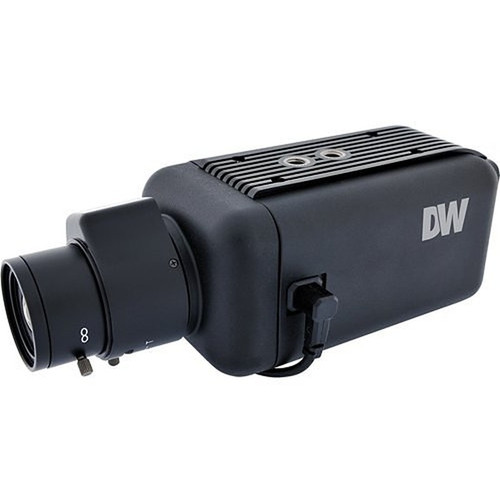
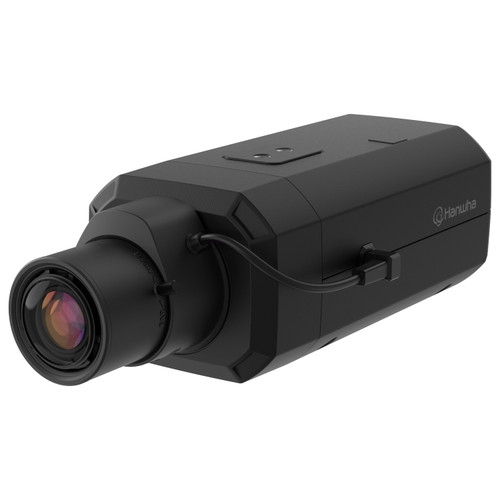
Both the Digital Watchdog DWC-C223W and the Hanwha XNB-6003 are wired, 2MP (1080p) indoor/outdoor box-type IP cameras designed for fixed surveillance deployments where the installer supplies and mounts a separate lens via C/CS mount. Buyers cross-shopping these models are typically evaluating sensor performance, low-light capability, AI analytics depth, network integration, and environmental suitability for a specific install context. The comparison below is drawn strictly from the published specifications for each model.
In This Guide
How do the imaging specs compare?
The DWC-C223W uses a 1/3" 2.1MP CMOS progressive-scan sensor delivering 1944×1092 active pixels, with a minimum scene illumination of 0.20 lux in color mode. It achieves low-light performance through Star-Light technology with sense-up multipliers (×2–×32) and supports True WDR rated at 100dB. Shutter speed spans 1/30 to 1/30,000 sec with anti-flicker and manual modes. No maximum frame rate figure is stated in the specifications beyond 'variable,' and no IR range is listed as the camera relies on an external IR source.
The XNB-6003 uses a larger 1/2.8" progressive CMOS sensor at 1920×1080 resolution, with a minimum illumination of 0.007 lux in color and 0.0007 lux in B/W — roughly 28× more sensitive than the C223W at the color threshold. It supports up to 120 fps, electronic shutter from 2 to 1/12,000 sec, and extremeWDR rated at 150dB, 50dB higher than the C223W's 100dB. AI-based WiseNR II noise reduction and a built-in gyro sensor for digital image stabilization are present in the XNB-6003; neither feature is cited in the C223W specifications.
What about installation and environment?
The DWC-C223W is rated IP66 for dust-tight and water-jet resistance, and its operating temperature range is -4°F to 122°F (-20°C to 50°C) at 10–90% non-condensing humidity. It accepts 12VDC or 24VAC and draws a maximum of 2.4W, making it compatible with legacy analog-infrastructure power supplies. The aluminum die-cast housing weighs 0.70 lbs and measures 4.71" × 2.31" × 2.44". No IK impact rating is stated in the specifications. Camera control is via Pelco C/Pelco D RS-485 protocols, and it carries a 5-year warranty.
The XNB-6003 carries no IP or IK rating in its published specifications and is categorized as an indoor camera, making direct environmental comparison with the IP66-rated C223W impractical for outdoor or wet-location use. Its operating range is -14°F to 131°F (-10°C to 55°C) at 0–95% RH non-condensing — a wider temperature window on both ends versus the C223W. Power is PoE IEEE 802.3af Class 3 or 12VDC, with a maximum draw of 12.95W. The aluminum body weighs 1.94 lbs and measures 3.19" × 2.64" × 6.48". The XNB-6003 carries a 3-year warranty.
Which fits your VMS and analytics better?
The DWC-C223W specifications do not cite ONVIF compliance, H.265 compression, edge storage, or on-board audio. Compression format and streaming protocol details are absent from the published data. Analytics are limited to motion detection and 16 programmable privacy masks. Camera control relies on Pelco C/Pelco D, which suits analog-hybrid or legacy DVR/NVR infrastructure but limits compatibility with modern IP VMS platforms where ONVIF is a baseline requirement.
The XNB-6003 is ONVIF Profile S/G/T/M compliant and supports SUNAPI and Wisenet SDK integrations. It encodes in H.265, H.264 (Main/Baseline/High), and MJPEG with CBR/VBR control, streams up to 10 profiles simultaneously, and supports up to 20 unicast users. Edge storage spans two Micro SD/SDHC/SDXC slots with a combined maximum of 1TB. Built-in microphone input, line-out audio, and a full alarm I/O matrix (2 configurable ports, MQTT, FTP, SMTP, HTTP/HTTPS handover) are included. AI analytics cover person, face, vehicle (car/bus/truck/motorcycle/bicycle), and license plate detection, plus business intelligence functions including people counting, queue management, and heatmap — none of which appear in the C223W specifications. Security hardening includes TPM 2.0 (FIPS 140-2 Level 2), 802.1X (EAP-TLS/LEAP/PEAP), and device certificates.
Which should you choose: the C223W or the XNB-6003?
Our take: The XNB-6003 is the stronger choice when imaging sensitivity, analytics depth, and modern IP integration are the primary requirements. Its 1/2.8" sensor reaches 0.007 lux color versus the C223W's 0.20 lux — a 28× sensitivity advantage — and its extremeWDR is rated 150dB versus the C223W's 100dB True WDR. Frame rate tops out at 120 fps on the XNB-6003; the C223W's maximum frame rate is not specified. For VMS integration, the XNB-6003 offers ONVIF Profile S/G/T/M, H.265, dual SD card slots up to 1TB, and full AI analytics, none of which appear in the C223W specifications. The C223W is the more appropriate selection when the existing infrastructure runs on 24VAC power, requires IP66-rated outdoor weatherproofing, uses Pelco D/C control, or is served by a 5-year warranty requirement — the XNB-6003 carries only a 3-year warranty and no stated IP rating.
Side-by-Side Comparison
Spec-for-spec, from manufacturer data.
| Specification | Digital Watchdog C223W | Hanwha XNB-6003 |
|---|---|---|
| Resolution | 2.1MP / 1944×1092 | 2MP / 1920×1080 |
| Image Sensor | 1/3" CMOS progressive scan | 1/2.8" CMOS progressive scan |
| Lens / Mount | C/CS mount (lens not included) | C mount / CS mount (DC auto iris, P-iris, Manual, I-CS) |
| Min. Illumination (Color) | 0.20 lux | 0.007 lux |
| Min. Illumination (B/W) | — | 0.0007 lux |
| Wide Dynamic Range | True WDR 100dB | extremeWDR 150dB |
| Max Frame Rate | Not specified (variable) | 120 fps |
| Video Compression | Not specified in published specs | H.265 / H.264 / MJPEG |
| IP Rating | IP66 | Not specified (indoor rated) |
| Operating Temperature | -4°F to 122°F (-20°C to 50°C) | -14°F to 131°F (-10°C to 55°C) |
| Power Input | 12VDC or 24VAC | PoE IEEE 802.3af Class 3 or 12VDC |
| Max Power Draw | 2.4W | 12.95W |
| Edge Storage | — | 2× Micro SD/SDHC/SDXC, max 1TB |
| Audio | — | Mic in / line in (built-in mic) + line out |
| AI / Analytics | Motion detection, 16 privacy masks | AI: person, face, vehicle, LPD; people counting, heatmap, queue mgmt |
| ONVIF | — | Profile S / G / T / M |
| Alarm I/O | 1 output | 2 configurable I/O ports |
| Dimensions (W×H×D) | 4.71" × 2.31" × 2.44" | 3.19" × 2.64" × 6.48" |
| Weight | 0.70 lbs (0.32 kg) | 1.94 lbs (0.88 kg) |
| Warranty | 5 years | 3 years |
Frequently Asked Questions
Which should you choose: the C223W or the XNB-6003?
The XNB-6003 is the stronger choice when imaging sensitivity, analytics depth, and modern IP integration are the primary requirements. Its 1/2.8" sensor reaches 0.007 lux color versus the C223W's 0.20 lux — a 28× sensitivity advantage — and its extremeWDR is rated 150dB versus the C223W's 100dB True WDR. Frame rate tops out at 120 fps on the XNB-6003; the C223W's maximum frame rate is not specified. For VMS integration, the XNB-6003 offers ONVIF Profile S/G/T/M, H.265, dual SD card slots up to 1TB, and full AI analytics, none of which appear in the C223W specifications. The C223W is the more appropriate selection when the existing infrastructure runs on 24VAC power, requires IP66-rated outdoor weatherproofing, uses Pelco D/C control, or is served by a 5-year warranty requirement — the XNB-6003 carries only a 3-year warranty and no stated IP rating.
Is the DWC-C223W or XNB-6003 better for low-light color imaging?
The XNB-6003 is substantially better by spec: its minimum color illumination is 0.007 lux versus 0.20 lux for the C223W — approximately 28 times more sensitive. The XNB-6003 also adds AI-based WiseNR II noise reduction and digital image stabilization, neither of which is cited in the C223W specifications.
Can I use the DWC-C223W outdoors and the XNB-6003 indoors only?
Based on published specifications, the C223W is rated IP66 and operates from -4°F to 122°F, making it suitable for outdoor and wet-location installations. The XNB-6003 carries no stated IP rating and is categorized as an indoor camera in its specifications; outdoor use would require a separate weatherproof housing.
Which camera works with modern ONVIF-based VMS platforms?
The XNB-6003 explicitly supports ONVIF Profile S/G/T/M. The C223W specifications do not mention ONVIF compliance; its listed control interface is Pelco C and Pelco D via RS-485, which is more commonly associated with analog or hybrid DVR systems. Buyers requiring ONVIF interoperability should verify C223W compatibility with their specific VMS vendor before purchase.
Get a Second Opinion on Your Camera Choice
Share your site layout, coverage goals, and budget. Our team will validate the camera selection, flag anything we would change, and recommend products that match the use case.