
Digital Watchdog B6263WTIR650W vs Digital Watchdog B6263WTIRW: Specification Comparison
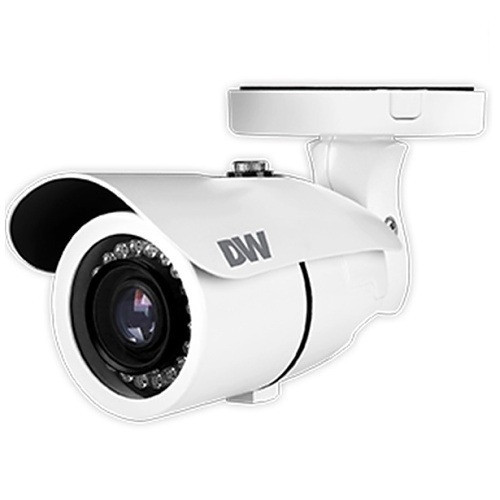
Both the DWC-B6263WTIR650W and the DWC-B6263WTIRW are Digital Watchdog 2MP Star-Light IR outdoor bullet cameras sharing the same 1/3" CMOS sensor, aluminum die-cast IP66 housing, and HD-over-coax signal technology suite. The key differentiators are lens range and IR throw: the 650W carries a long-range 6–50mm varifocal with 150-foot Smart IR, while the WTIRW uses a short-range 2.8–12mm varifocal with 100-foot Smart IR. Both target analog/hybrid DVR installations and compete directly in the 2MP HD-Coax bullet segment.
In This Guide
How do the imaging specs compare?
Both cameras share the same 2.1MP 1/3" CMOS sensor at 1944×1092 active pixels, progressive scan, True WDR at 100dB, Smart DNR 3D digital noise reduction, and Star-Light sense-up (Off, ×2–×32). The primary imaging divergence is minimum color illumination: the B6263WTIR650W specifies 0.039 lux in color, while the B6263WTIRW specifies 0.03 lux in color—a marginal but measurable low-light advantage for the WTIRW. Both achieve 0.0 lux in B/W mode via IR.
Lens and IR range differ substantially. The B6263WTIR650W uses a 6–50mm P-iris varifocal covering 45.3°–5.7° HFOV and 28.1°–3.7° VFOV, with 150-foot Smart IR throw. The B6263WTIRW uses a 2.8–12mm P-iris varifocal covering 91°–28° HFOV and 47.8°–18.7° VFOV, with 100-foot Smart IR. The 650W is engineered for long-distance, narrow-angle coverage; the WTIRW suits wider, shorter-range scenes. Shutter speed range (1/30–1/30,000), gamma (0.45–0.75), BLC, de-fog, DRC, and 16 programmable privacy masks are identical across both models.
What about installation and environment?
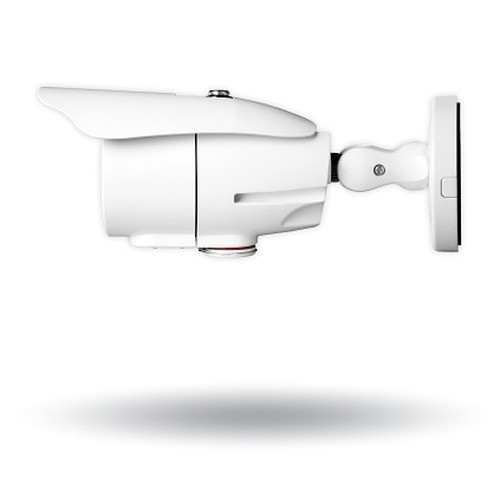
Both cameras are rated IP66, aluminum die-cast, white bullet housings operating from -4°F to 122°F (-20°C to 50°C) with 10–90% non-condensing humidity tolerance. No IK impact rating is listed for either model. Mounting accessories are optional and sold separately for both; the B6263WTIR650W spec lists wall/ceiling/rack mount types, while the B6263WTIRW lists pole/rack mount types—installers should verify bracket compatibility with Digital Watchdog's accessory catalog.
Power requirements diverge meaningfully. The B6263WTIR650W draws up to 5.5W and accepts 12V DC or 24V AC; no PoE class is listed in its specs, though the enriched data notes PoE capability. The B6263WTIRW draws up to 4.3W, accepts 12V DC or 24V AC, and is explicitly rated PoE Class 2—a lower power budget that eases mid-span injector and switch port planning. Both use AWG #18 cable type. The WTIRW's smaller body (8.83" length vs. 9.92") and lower weight (1.65 lbs vs. 1.83 lbs) may be relevant in constrained bracket or conduit situations.
Which fits your VMS and analytics better?
Both cameras share an identical control protocol suite: Pelco C, Pelco D, and UTP built-in, targeting analog/hybrid HD-Coax DVR environments (CVBS, 960H, HD-Analog, HD-CVI, HD-TVI). Neither model's provided specifications list ONVIF compliance, IP/network streaming, RTSP, or on-board SD card edge storage—consistent with their HD-Coax signal architecture. Neither spec sheet lists audio input or output. The B6263WTIRW spec notes H.264 compression; no compression standard is listed for the B6263WTIR650W in the provided specifications.
On-camera analytics are equivalent: both include motion detection and 16 programmable privacy masks. No additional edge analytics (line crossing, intrusion detection, face detection) are specified for either model. Buyers requiring IP/ONVIF integration or edge storage should confirm with Digital Watchdog whether a hybrid or IP variant of either model exists, as the provided specs describe HD-Coax outputs only.
Which should you choose: the B6263WTIR650W or the B6263WTIRW?
Our take: The B6263WTIR650W is the stronger choice when the installation demands long-range, narrow-field coverage—its 6–50mm lens reaching 5.7° HFOV and 150-foot Smart IR throw outclass the WTIRW's 2.8–12mm / 100-foot capability by a significant margin for perimeter or corridor surveillance at distance. Conversely, the B6263WTIRW holds three concrete advantages for typical short-to-medium range deployments: a wider field of view (91° vs. 45.3° at max wide), a slightly lower minimum color illumination (0.03 lux vs. 0.039 lux), and a lower confirmed power draw (4.3W, PoE Class 2 vs. 5.5W with no stated PoE class). Both cameras are specification peers on sensor, WDR, weather protection, and control protocols. Choose the B6263WTIR650W for long-throw narrow-angle scenes on HD-Coax DVRs; choose the B6263WTIRW for wide-angle, power-constrained, or PoE-dependent analog hybrid installations.
Side-by-Side Comparison
Spec-for-spec, from manufacturer data.
| Specification | Digital Watchdog B6263WTIR650W | Digital Watchdog B6263WTIRW |
|---|---|---|
| Max Resolution | 2.1MP / 1080p (1944×1092) | 2.1MP / 1080p (1944×1092) |
| Image Sensor | 1/3" CMOS, progressive scan | 1/3" CMOS, progressive scan |
| Focal Length | 6–50mm varifocal | 2.8–12mm varifocal |
| Horizontal FOV | 45.3°–5.7° | 91°–28° |
| Vertical FOV | 28.1°–3.7° | 47.8°–18.7° |
| Lens Control | P-iris | P-iris |
| Min Illumination (Color) | 0.039 lux | 0.03 lux |
| Min Illumination (B/W) | 0.0 lux | 0.0 lux |
| IR Range | 150 ft Smart IR | 100 ft Smart IR |
| Wide Dynamic Range | True WDR 100dB | True WDR 100dB |
| Star-Light Sense-Up | Off, ×2–×32 | Off, ×2–×32 |
| Signal Technology | CVBS/960H, HD-Analog, HD-CVI, HD-TVI, HD-Coax | CVBS, 960H, HD-Analog, HD-CVI, HD-TVI, HD over Coax |
| Power Input | 12V DC, 24V AC | 12V DC, 24V AC |
| Max Power Draw | 5.5W | 4.3W |
| PoE Class | — | Class 2 |
| IP Rating | IP66 | IP66 |
| Operating Temperature | -4°F to 122°F (-20°C to 50°C) | -4°F to 122°F (-20°C to 50°C) |
| Dimensions (L×W) | 9.92" × 3.8" | 8.83" × 3.8" |
| Weight | 1.83 lbs (0.83 kg) | 1.65 lbs (0.75 kg) |
| Privacy Masks | 16 programmable | 16 programmable |
| Video Compression | — | H.264 |
| Warranty | 5 Year | 5 Year |
Frequently Asked Questions
Which should you choose: the B6263WTIR650W or the B6263WTIRW?
The B6263WTIR650W is the stronger choice when the installation demands long-range, narrow-field coverage—its 6–50mm lens reaching 5.7° HFOV and 150-foot Smart IR throw outclass the WTIRW's 2.8–12mm / 100-foot capability by a significant margin for perimeter or corridor surveillance at distance. Conversely, the B6263WTIRW holds three concrete advantages for typical short-to-medium range deployments: a wider field of view (91° vs. 45.3° at max wide), a slightly lower minimum color illumination (0.03 lux vs. 0.039 lux), and a lower confirmed power draw (4.3W, PoE Class 2 vs. 5.5W with no stated PoE class). Both cameras are specification peers on sensor, WDR, weather protection, and control protocols. Choose the B6263WTIR650W for long-throw narrow-angle scenes on HD-Coax DVRs; choose the B6263WTIRW for wide-angle, power-constrained, or PoE-dependent analog hybrid installations.
Is the B6263WTIR650W or B6263WTIRW better for low light?
Both use the same 2.1MP Star-Light CMOS sensor and achieve 0.0 lux in B/W IR mode. In color mode, the B6263WTIRW specifies 0.03 lux versus 0.039 lux for the B6263WTIR650W—a marginal advantage for the WTIRW. However, the B6263WTIR650W's 150-foot Smart IR throw means it illuminates subjects at greater distances in darkness compared to the WTIRW's 100-foot range.
Can I use either camera on a PoE switch instead of a 12V DC power supply?
The B6263WTIRW is explicitly rated PoE Class 2 (max 4.3W) in its specifications, confirming PoE switch compatibility. The B6263WTIR650W lists 12V DC and 24V AC as power inputs and draws up to 5.5W, but no PoE class is stated in the provided specifications—buyers should confirm PoE support directly with Digital Watchdog before deploying it on a PoE switch port.
Which camera is better for covering a parking lot entrance versus a long driveway or corridor?
For a parking lot entrance requiring a wide field of view, the B6263WTIRW's 2.8–12mm lens covering up to 91° HFOV is the appropriate choice. For a long driveway or corridor where narrow-angle, long-distance identification is needed, the B6263WTIR650W's 6–50mm lens at 5.7° minimum HFOV and 150-foot IR range is purpose-built for that scenario.
Get a Second Opinion on Your Camera Choice
Share your site layout, coverage goals, and budget. Our team will validate the camera selection, flag anything we would change, and recommend products that match the use case.