
CyberPower CP1200AVR vs APC by Schneider Electric BVK1200M2: Specification Comparison
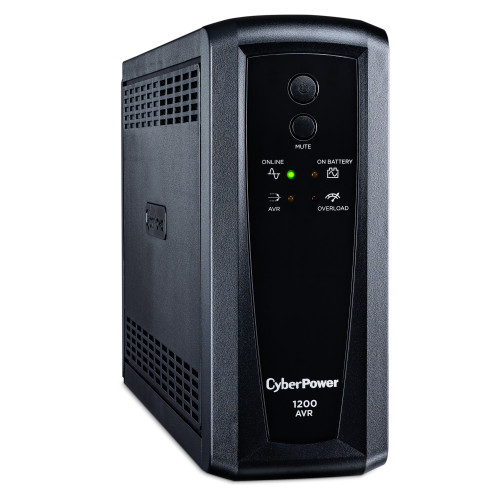
Both the CyberPower CP1200AVR and the APC BVK1200M2 are 1200VA line-interactive UPS units in tower form factors designed for desktop workstations, small network equipment, and security appliances running on 120V North American circuits. They compete directly in the sub-$200 home-office and small-business UPS segment, offering automatic voltage regulation, battery backup, and surge protection from a NEMA 5-15P input. This comparison evaluates power capacity and runtime, outlet configuration and protection features, and management and integration capabilities based solely on provided specifications.
In This Guide
- Which UPS delivers more usable power and how long will it run your equipment?
- How many outlets does each unit protect, and what data-line and surge protection is included?
- What management interfaces and software does each unit support for monitoring and graceful shutdown?
- Which should you choose: the CP1200AVR or the BVK1200M2?
- Side-by-Side Specs
- FAQ
Which UPS delivers more usable power and how long will it run your equipment?
The CP1200AVR carries a 720W real-power rating versus the BVK1200M2's 650W — a 70W advantage that translates to meaningful headroom when powering loads near the rated ceiling. At half load (360W), CyberPower specifies 12 minutes of runtime; APC does not publish a runtime figure at any load level in the provided specifications, making a direct runtime comparison impossible from the available data.
The CP1200AVR's AVR operating window spans 88–144VAC, while the BVK1200M2 operates between 108V and 150V. CyberPower's wider low-end tolerance (88V vs 108V) means the unit will regulate and stay on battery less frequently during browndown events common in older commercial buildings or areas with weak utility feeds, preserving battery cycles.
How many outlets does each unit protect, and what data-line and surge protection is included?
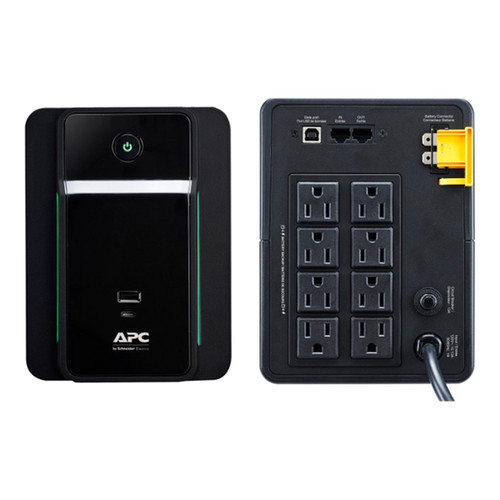
The CP1200AVR provides 10 total NEMA 5-15R outlets: 5 with full battery backup plus surge protection and 5 with surge protection only. The BVK1200M2 offers 8 total NEMA 5-15R outlets; the split between battery-backed and surge-only outlets is not specified in the provided data. For installations requiring more than 8 receptacles or a guaranteed battery-backed count of 5, the CP1200AVR has a documented edge.
CyberPower includes dedicated data-line surge protection for three interface types: RJ45 Ethernet (10/100/1000), RG6 coaxial, and RJ11 telephone. APC specifies a 350J surge energy rating for AC lines but does not list data-line protection ports in the provided specifications. For security installations that also route IP camera cabling or NVR network connections through the UPS, the CP1200AVR's multi-port data protection is a material differentiator. APC does specify an Emergency Power Off (EPO) function; CyberPower does not list EPO in its provided specs.
What management interfaces and software does each unit support for monitoring and graceful shutdown?
The CP1200AVR connects via USB HID-compliant interface and is supported by CyberPower's PowerPanel Personal software on Windows, macOS, and Linux. This enables scheduled shutdowns, UPS status monitoring, and event logging across all three major desktop operating systems. A 6-foot USB A-to-B cable is included in the box.
The BVK1200M2 also provides a USB port for management. However, the provided specifications do not identify compatible software, supported operating systems, or whether a USB cable is included. For installers who need to verify cross-platform software support before deployment — particularly Linux-based NVR appliances — the CP1200AVR's documented three-OS PowerPanel coverage is a concrete, verifiable advantage. Neither unit lists an SNMP or network management card in the provided specs.
The CP1200AVR lists a transfer time of less than 10ms typical, which is within the tolerance of most active PFC power supplies and IT loads. APC does not specify a transfer time in the provided data, leaving that critical parameter unverifiable for the BVK1200M2.
Which should you choose: the CP1200AVR or the BVK1200M2?
Our take: The CP1200AVR is the stronger choice when documented runtime, outlet count, data-line protection, and cross-platform software support are decision criteria. It delivers 720W versus the BVK1200M2's 650W — a 10.8% real-power advantage — and provides 10 outlets (5 battery-backed) against 8 outlets with an unspecified battery/surge split. CyberPower also documents a sub-10ms transfer time and RJ45/RG6/RJ11 data-line protection that APC does not list in provided specs. The BVK1200M2's 350J surge energy rating and EPO function are published where CyberPower omits those figures, making APC potentially preferable in facilities requiring EPO for code compliance. Buyers who need confirmed Linux compatibility and multi-port data-line surge protection should specify the CP1200AVR. Facilities with EPO requirements should verify CyberPower's EPO support independently before ruling out the BVK1200M2.
Side-by-Side Comparison
Spec-for-spec, from manufacturer data.
| Specification | CyberPower CP1200AVR | APC by Schneider Electric BVK1200M2 |
|---|---|---|
| Topology | Line Interactive | Line Interactive |
| Capacity (VA) | 1200 VA | 1200 VA |
| Capacity (Watts) | 720 W | 650 W |
| Input Voltage Range | 88–144 VAC | 108–150 VAC |
| Output Voltage | 120 VAC ± 5% | 120 VAC |
| Output Waveform (Battery) | Simulated Sine Wave | Sine (mode not specified) |
| AVR | Yes (88–144 VAC) | Yes |
| Total Outlets | 10 x NEMA 5-15R | 8 x NEMA 5-15R |
| Battery-Backed Outlets | 5 x NEMA 5-15R | — |
| Surge-Only Outlets | 5 x NEMA 5-15R | — |
| Surge Energy Rating (AC) | — | 350 J |
| Data-Line Protection | RJ45, RG6, RJ11 | — |
| Transfer Time | < 10 ms typical | — |
| Runtime at Half Load | 12 min at 360 W | — |
| Management Interface | USB HID | USB |
| Software | PowerPanel Personal (Win/macOS/Linux) | — |
| Emergency Power Off (EPO) | — | Yes |
| Battery Type | 2 × 12V/7Ah Sealed Lead-Acid | — |
| User-Replaceable Battery | Yes (RB1270X2A) | — |
| Form Factor | Mini-Tower | Tower |
| Certifications | UL1778, ENERGY STAR, RoHS, FCC Class B | — |
| Connected Equipment Guarantee | $300,000 | — |
Frequently Asked Questions
Which should you choose: the CP1200AVR or the BVK1200M2?
The CP1200AVR is the stronger choice when documented runtime, outlet count, data-line protection, and cross-platform software support are decision criteria. It delivers 720W versus the BVK1200M2's 650W — a 10.8% real-power advantage — and provides 10 outlets (5 battery-backed) against 8 outlets with an unspecified battery/surge split. CyberPower also documents a sub-10ms transfer time and RJ45/RG6/RJ11 data-line protection that APC does not list in provided specs. The BVK1200M2's 350J surge energy rating and EPO function are published where CyberPower omits those figures, making APC potentially preferable in facilities requiring EPO for code compliance. Buyers who need confirmed Linux compatibility and multi-port data-line surge protection should specify the CP1200AVR. Facilities with EPO requirements should verify CyberPower's EPO support independently before ruling out the BVK1200M2.
Is the CP1200AVR or BVK1200M2 a better fit for powering an NVR with attached IP cameras?
Based on provided specifications, the CP1200AVR is better documented for that use case. It provides 5 confirmed battery-backed outlets, dedicated RJ45 Ethernet and RG6 coaxial data-line surge protection relevant to camera cabling, a 720W capacity versus 650W, and PowerPanel Personal software with Linux support — useful for Linux-based NVR appliances. The BVK1200M2 does not list data-line protection ports or Linux software support in its provided specifications.
Can I replace the battery myself on either of these units?
The CP1200AVR specifies user-replaceable batteries (2 × 12V/7Ah, replacement part RB1270X2A). The BVK1200M2's provided specifications do not address battery replaceability or list a replacement part number. Verify directly with APC before assuming field-replaceability for the BVK1200M2.
Which unit is better suited for a facility that requires Emergency Power Off capability?
The BVK1200M2 explicitly lists Emergency Power Off (EPO) support in its provided specifications. The CP1200AVR's provided specifications do not mention EPO. If EPO is required by facility code or a physical security system integration, the BVK1200M2 has a documented advantage on that specific feature — though buyers should confirm EPO connector type and wiring requirements with APC directly.
Get a Second Opinion on Your Camera Choice
Share your site layout, coverage goals, and budget. Our team will validate the camera selection, flag anything we would change, and recommend products that match the use case.