
Comelit 909020116 vs HID 20NKS-00-000000: Specification Comparison
Both the Comelit 909020116 GS3-LF and the HID 20NKS-00-000000 Signo 20 are wired, contactless proximity card readers used at access-controlled entry points. Buyers evaluating perimeter door hardware will cross-shop these for credential compatibility, physical installation requirements, power delivery method, and environmental durability. The Comelit unit centers on PoE+ power with IP67 outdoor weatherproofing, while the HID unit targets standard Wiegand panel integration with EM 32-bit credentials. Neither is an IP video or intrusion device.
In This Guide
- Which reader supports the credential formats and panel interface already deployed on site?
- How does each reader handle power delivery and environmental exposure?
- What does each reader offer for user feedback and physical installation flexibility?
- Which should you choose: the 909020116 or the 20NKS-00-000000?
- Side-by-Side Specs
- FAQ
Which reader supports the credential formats and panel interface already deployed on site?
The HID 20NKS-00-000000 declares its interface explicitly: Wiegand 32-bit MSB output with support for EM 32-bit and ASP10022 card formats. Wiegand is the de-facto legacy protocol on the vast majority of installed access control panels, meaning this reader connects directly to virtually any controller without a protocol converter or middleware.
The Comelit 909020116 specifies Ethernet (PoE+) as its connectivity method and lists 'secure' under Compatible With — the credential protocol and card format supported are not stated in the provided specifications. Buyers must verify directly with Comelit or the datasheet whether the unit outputs Wiegand, OSDP, or a proprietary protocol before assuming panel compatibility.
How does each reader handle power delivery and environmental exposure?
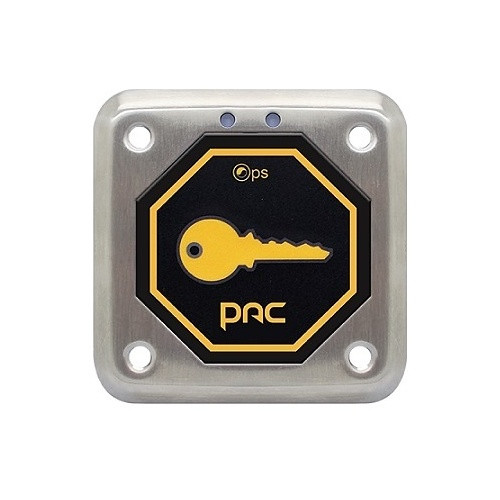
The Comelit 909020116 draws power exclusively over PoE+ (IEEE 802.3at) at 15.4 W via a single Cat6 Ethernet run. No separate power cable is required. The housing is Grade 304 stainless steel, rated IP67, and described as vandal resistant — suitable for exposed outdoor locations, wet environments, and high-abuse surfaces. Dimensions are 100 × 100 × 16 mm.
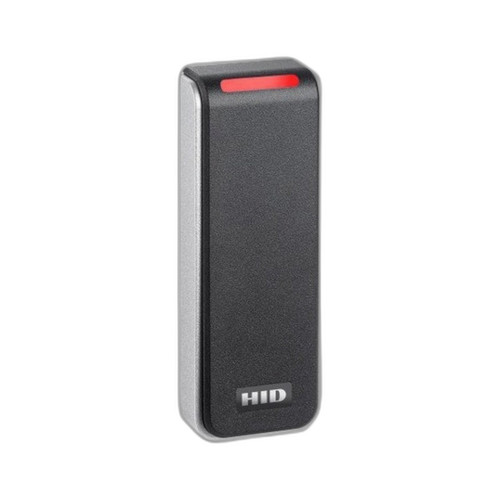
The HID 20NKS-00-000000 is listed as suitable for Indoor/Outdoor use, but neither an IP ingress rating nor a vandal-resistance rating is present in the provided specifications. Power method is not specified; the reader uses pigtail or flush-mount terminal block wiring, consistent with conventional low-voltage power from the panel's reader port. Dimensions as provided — 45 × 121.5 × 19.5 inches — appear to be a data error and should be verified against the product datasheet.
What does each reader offer for user feedback and physical installation flexibility?
Both readers provide dual-color LED indication and an audible sounder. The Comelit 909020116 specifies red/green LEDs plus an audible sounder. The HID 20NKS-00-000000 specifies red LED in standby, green flash on a successful read, and an audible buzzer — providing granular state indication at high-traffic lanes.
For mounting, the HID unit offers both flush-mount terminal block and pigtail wiring options with surface-mount installation. The Comelit 909020116 is described as an enclosure form factor; mounting details beyond physical dimensions are not provided in the supplied specifications. The Comelit unit's 100 × 100 mm square footprint fits standard single-gang backboxes common in European installations.
Which should you choose: the 909020116 or the 20NKS-00-000000?
Our take: The 909020116 is the stronger choice when the installation demands outdoor weatherproofing, vandal resistance, and cable-simplified PoE+ power delivery. Its IP67 Grade-304 stainless steel housing and IEEE 802.3at power over a single Cat6 run make it well-suited for exposed perimeter doors where conduit separation is costly. By contrast, the HID 20NKS-00-000000 is the stronger choice when the panel ecosystem is Wiegand-based and credential format is already standardized on EM 32-bit or ASP10022 cards — its 32-bit MSB Wiegand output connects natively to the majority of legacy and mid-range access panels with no conversion layer. The Comelit unit does not disclose its panel protocol in the provided specs, introducing integration risk on Wiegand-only panels. Buyers on a Comelit or OSDP-capable panel platform benefit from the 909020116's infrastructure advantages; buyers maintaining an existing Wiegand ecosystem should standardize on the HID Signo 20.
Side-by-Side Comparison
Spec-for-spec, from manufacturer data.
| Specification | Comelit 909020116 | HID 20NKS-00-000000 |
|---|---|---|
| Product Class | Proximity Reader | Proximity Reader |
| Model | GS3-LF (909020116) | Signo 20 (20NKS-00-000000) |
| Panel Interface / Protocol | Not specified in provided specs | Wiegand 32-bit MSB |
| Credential / Card Format | Not specified in provided specs | EM 32-bit; ASP10022 |
| Power Method | PoE+ (IEEE 802.3at) | Wired (pigtail / terminal block); source not specified |
| Power Consumption | 15.4 W | Not specified in provided specs |
| Connectivity | Ethernet | Wired |
| IP Rating | IP67 | Not specified in provided specs |
| Vandal Resistance | Yes — stated | Not specified in provided specs |
| Housing Material | Grade 304 stainless steel | Not specified in provided specs |
| Environment | Indoor / Outdoor (weatherproof) | Indoor / Outdoor |
| Dimensions | 100 × 100 × 16 mm | Not verifiable — listed values appear erroneous |
| Weight | 0.442 kg (0.974 lb) | Not specified in provided specs |
| LED Feedback | Red / Green LEDs | Red (standby); green flash (read) |
| Audible Feedback | Audible sounder | Audible buzzer |
| Warranty | 2 years | 2 years |
Frequently Asked Questions
Which should you choose: the 909020116 or the 20NKS-00-000000?
The 909020116 is the stronger choice when the installation demands outdoor weatherproofing, vandal resistance, and cable-simplified PoE+ power delivery. Its IP67 Grade-304 stainless steel housing and IEEE 802.3at power over a single Cat6 run make it well-suited for exposed perimeter doors where conduit separation is costly. By contrast, the HID 20NKS-00-000000 is the stronger choice when the panel ecosystem is Wiegand-based and credential format is already standardized on EM 32-bit or ASP10022 cards — its 32-bit MSB Wiegand output connects natively to the majority of legacy and mid-range access panels with no conversion layer. The Comelit unit does not disclose its panel protocol in the provided specs, introducing integration risk on Wiegand-only panels. Buyers on a Comelit or OSDP-capable panel platform benefit from the 909020116's infrastructure advantages; buyers maintaining an existing Wiegand ecosystem should standardize on the HID Signo 20.
Is the 909020116 or the 20NKS-00-000000 better for an outdoor perimeter installation subject to rain and vandalism?
Based on the provided specifications, the Comelit 909020116 is the more suitable choice for exposed outdoor use. It carries an IP67 weatherproofing rating and a Grade 304 stainless steel vandal-resistant housing. The HID 20NKS-00-000000 is listed as Indoor/Outdoor capable, but no IP ingress rating or vandal-resistance classification appears in the provided specifications, so its suitability for harsh outdoor environments cannot be confirmed from specs alone.
Will the HID 20NKS-00-000000 work with my existing Wiegand access control panel without any additional hardware?
Yes, based on the provided specifications. The HID 20NKS-00-000000 outputs Wiegand 32-bit MSB natively, which is the standard interface supported by the large majority of installed access control panels. No protocol converter or additional hardware should be required for a standard Wiegand panel connection.
Do both readers require the same type of power wiring at the door?
No. The Comelit 909020116 is powered exclusively via PoE+ (IEEE 802.3at) over an Ethernet cable at 15.4 W, eliminating a separate low-voltage power run. The HID 20NKS-00-000000 uses conventional wired connections (pigtail or flush-mount terminal block); its power source is not specified in the provided specifications, but the wiring method is consistent with reader power supplied from the access panel or a local power supply rather than PoE.
More Access Control Reader Comparisons
- HID 5365EGP00 vs Comelit 909020116
- HID 5365EGP00 vs Speco Technologies AP500HA
- HID 5365EGP00 vs Comelit 909020113
- HID 5365EGP00 vs HID 20NKS-00-000000
- HID 5365EGP00 vs HID 40NKS-00-000000
- Comelit 909020116 vs Speco Technologies AP500HA
Access Control Reader Buying Guides
Get a Second Opinion on Your Camera Choice
Share your site layout, coverage goals, and budget. Our team will validate the camera selection, flag anything we would change, and recommend products that match the use case.