
Comelit 909020116 vs Comelit 909020113: Specification Comparison
Both units are Comelit GS3-series IP-based proximity readers designed for access control deployments where PoE-powered, credential-reading hardware is cross-shopped. The 909020116 (GS3-LF) is the vandal-resistant, stainless-steel variant targeting high-abuse or fully exposed outdoor locations, while the 909020113 (GS3-MT) is the standard polycarbonate variant aimed at typical commercial installs. Buyers evaluating these two are choosing between ruggedization tier and PoE power budget within the same reader family, both sharing audible/visual feedback and a 2-year warranty.
In This Guide
- Which reader is better suited for harsh or high-abuse installation environments?
- What are the PoE power requirements and wiring implications for each reader?
- How do these readers differ in controller compatibility and credential protocol support?
- Which should you choose: the 909020116 or the 909020113?
- Side-by-Side Specs
- FAQ
Which reader is better suited for harsh or high-abuse installation environments?
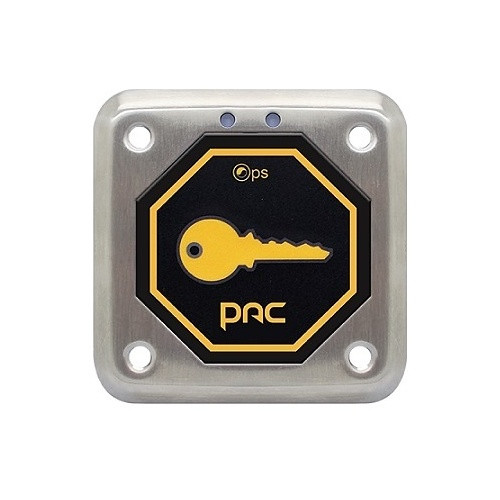
The 909020116 GS3-LF is constructed from Grade 304 stainless steel and carries an IP67 rating, meaning it is protected against temporary immersion in water and is explicitly designated vandal resistant. Its housing is smaller in footprint (100×100×16 mm) but shallower in depth, lending itself to flush or surface mounting in exposed locations such as parking structures, exterior gates, and industrial facilities.
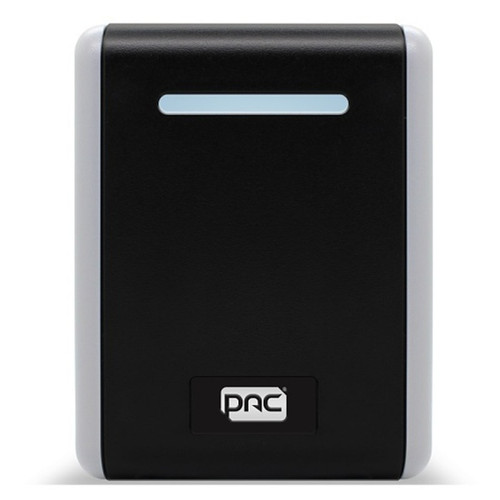
The 909020113 GS3-MT uses UL-rated polycarbonate and achieves IP65, which protects against low-pressure water jets but not immersion. It is not rated vandal resistant per the supplied specifications. Its slightly larger profile (89×115×28 mm) and lighter weight (0.290 kg vs 0.442 kg) suit it to standard commercial interior or sheltered exterior wall mounts where mechanical attack is not a primary concern.
For installations exposed to weather extremes, deliberate tampering, or washdown environments, the IP67 stainless GS3-LF has a materially higher environmental specification than the IP65 polycarbonate GS3-MT.
What are the PoE power requirements and wiring implications for each reader?
The 909020116 GS3-LF specifies PoE+ (IEEE 802.3at) at 15.4 W. This requires a PoE+ capable switch port or injector delivering at least the 802.3at budget. Single Cat6 cable carries both power and data, eliminating a separate power run, but the infrastructure must support the higher draw of 802.3at.
The 909020113 GS3-MT specifies PoE (IEEE 802.3af). The card bullet notes a 13 W minimum per port. Standard 802.3af infrastructure (15.4 W budget, ~12.95 W at device) is compatible, making this reader deployable on a wider range of existing PoE switches without upgrades. No wattage figure is listed in the specs for the GS3-MT beyond the 802.3af designation.
Installers with legacy 802.3af switch infrastructure can deploy the GS3-MT without hardware upgrades. Deploying the GS3-LF requires confirming 802.3at capability on every port. Where both readers are mixed on the same switch, the total PoE budget calculation must account for the GS3-LF's higher draw.
How do these readers differ in controller compatibility and credential protocol support?
The 909020116 GS3-LF's compatibility field lists 'secure' and its type designation is Vandal Resistant Proximity Reader. The specifications do not enumerate specific credential formats, controller pairings, or protocol details beyond the GS3-LF product type.
The 909020113 GS3-MT explicitly states Wiegand protocol compatibility and notes interoperability with PAC OPS™, KeyPAC, and third-party Wiegand-based systems. The package contents field references configurable tamper circuit functionality when paired with PAC 512 controllers. The encryption field references a certification achieved in conjunction with PAC controllers, though the full certification name is truncated in the provided specification.
Based on available spec data, the GS3-MT has documented Wiegand protocol support and named controller pairings, giving integrators clearer integration guidance for multi-vendor environments. The GS3-LF's integration compatibility is not detailed in the provided specifications, which buyers should verify against the datasheet at /content/product-datasheets/909020116.pdf before specifying.
Which should you choose: the 909020116 or the 909020113?
Our take: The 909020116 GS3-LF is the stronger choice when the installation environment demands maximum physical and environmental durability — its Grade 304 stainless steel construction and IP67 rating exceed the GS3-MT's UL polycarbonate and IP65 by one full ingress-protection tier, and it carries an explicit vandal-resistant designation absent from the GS3-MT. However, it requires PoE+ (802.3at) infrastructure at 15.4 W, versus the GS3-MT's compatibility with standard 802.3af switches, which is a real budget and retrofit consideration. The GS3-MT also documents Wiegand protocol support and PAC 512 controller pairings explicitly, whereas the GS3-LF's integration profile is not enumerated in the provided specs. Specify the 909020116 for exposed outdoor, high-abuse, or washdown locations with 802.3at switch infrastructure in place; specify the 909020113 for standard commercial interior or sheltered exterior deployments on existing 802.3af infrastructure where documented Wiegand/PAC compatibility is required.
Side-by-Side Comparison
Spec-for-spec, from manufacturer data.
| Specification | Comelit 909020116 | Comelit 909020113 |
|---|---|---|
| Product Type | GS3-LF Vandal Resistant Proximity Reader | GS3-MT Standard Proximity Reader |
| SKU / MPN | 909020116 | 909020113 |
| Housing Material | Grade 304 stainless steel | UL-rated polycarbonate |
| Vandal Resistant | Yes (per spec) | Not stated in provided specs |
| IP Rating | IP67 | IP65 |
| PoE Standard | PoE+ (802.3at) | PoE (802.3af) |
| Power Draw | 15.4 W | Not specified (802.3af; 13 W min per port per card bullet) |
| Dimensions (mm) | 100(w) × 100(h) × 16(d) | 89(w) × 115(h) × 28(d) |
| Weight | 0.442 kg / 0.974 lb | 0.290 kg / 0.639 lb |
| Audio / Visual Feedback | Audible sounder and Red/Green LEDs | Audible sounder and Red/Green LEDs |
| Connectivity | Ethernet | Not specified in provided specs |
| Protocol Compatibility | Not enumerated in provided specs | Wiegand protocol; PAC OPS™; KeyPAC; third-party Wiegand |
| Controller Pairing | Not specified in provided specs | PAC 512 (tamper circuit configurable) |
| Mount Type | Not specified in provided specs | Wall |
| Warranty | 2-Year | 2-Year |
| Environment | Indoor / Outdoor | Indoor / Outdoor |
Frequently Asked Questions
Which should you choose: the 909020116 or the 909020113?
The 909020116 GS3-LF is the stronger choice when the installation environment demands maximum physical and environmental durability — its Grade 304 stainless steel construction and IP67 rating exceed the GS3-MT's UL polycarbonate and IP65 by one full ingress-protection tier, and it carries an explicit vandal-resistant designation absent from the GS3-MT. However, it requires PoE+ (802.3at) infrastructure at 15.4 W, versus the GS3-MT's compatibility with standard 802.3af switches, which is a real budget and retrofit consideration. The GS3-MT also documents Wiegand protocol support and PAC 512 controller pairings explicitly, whereas the GS3-LF's integration profile is not enumerated in the provided specs. Specify the 909020116 for exposed outdoor, high-abuse, or washdown locations with 802.3at switch infrastructure in place; specify the 909020113 for standard commercial interior or sheltered exterior deployments on existing 802.3af infrastructure where documented Wiegand/PAC compatibility is required.
Can I use the 909020113 GS3-MT on an older PoE switch that does not support PoE+?
Yes, based on the provided specifications. The GS3-MT specifies PoE (802.3af), which is the original standard supported by most installed PoE switches. The GS3-LF specifies PoE+ (802.3at) and requires an 802.3at-capable port. Verify your switch's per-port and total PoE budget before deploying either reader.
Is the 909020116 GS3-LF rated for outdoor use in wet or coastal environments?
The 909020116 carries an IP67 rating per the provided specifications, meaning it is protected against temporary water immersion, and its housing is Grade 304 stainless steel. The GS3-MT is rated IP65, protecting against water jets but not immersion. Neither spec sheet lists a corrosion or salt-spray rating; for coastal or chemical-exposure environments, consult the full datasheet at /content/product-datasheets/909020116.pdf.
Which reader is easier to integrate with third-party access control systems?
Based on the provided specifications, the 909020113 GS3-MT explicitly lists Wiegand protocol compatibility and names PAC OPS™, KeyPAC, and third-party Wiegand systems as supported platforms. The 909020116 GS3-LF's compatibility field contains only the term 'secure' in the provided specs; its integration protocol support is not enumerated. Installers targeting non-Comelit controllers should confirm GS3-LF protocol support via its datasheet at /content/product-datasheets/909020116.pdf before specifying.
More Access Control Reader Comparisons
- HID 5365EGP00 vs Comelit 909020116
- HID 5365EGP00 vs Speco Technologies AP500HA
- HID 5365EGP00 vs Comelit 909020113
- HID 5365EGP00 vs HID 20NKS-00-000000
- HID 5365EGP00 vs HID 40NKS-00-000000
- Comelit 909020116 vs Speco Technologies AP500HA
Access Control Reader Buying Guides
Get a Second Opinion on Your Camera Choice
Share your site layout, coverage goals, and budget. Our team will validate the camera selection, flag anything we would change, and recommend products that match the use case.