
CipherLab ARK25CCCNU101 vs CipherLab ARS35UHFNNUS1: Specification Comparison
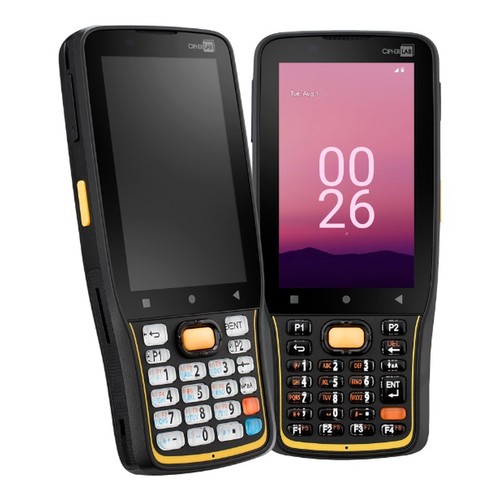
Both the CipherLab ARK25CCCNU101 and ARS35UHFNNUS1 are IP65-rated Android handheld mobile computers targeting warehouse, logistics, and inventory workflows. The ARK25 is a conventional 2D barcode-only unit, while the ARS35 adds an integrated UHF RFID reader alongside its 2D imager. Buyers cross-shopping these two are typically deciding whether their operation requires passive RFID tag reading or whether barcode scanning alone is sufficient, and how processor and display differences factor into daily usability and deployment cost.
In This Guide
- What data-capture capabilities does each device support, and does your workflow need UHF RFID?
- How do processor performance and display specifications compare for shift-length usability?
- How do ruggedness ratings, operating system currency, and storage expansion compare?
- Which should you choose: the ARK25CCCNU101 or the ARS35UHFNNUS1?
- Side-by-Side Specs
- FAQ
What data-capture capabilities does each device support, and does your workflow need UHF RFID?
The ARK25CCCNU101 is a 2D barcode-only device, supporting 1D symbologies (Code 128, Code 39, UPC, EAN) and 2D symbologies (QR Code, Data Matrix, PDF417). No RFID capability is listed in its specifications.
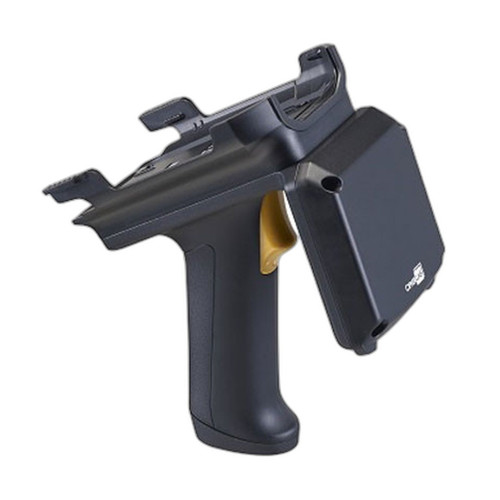
The ARS35UHFNNUS1 carries both the same 2D barcode scan engine (identical symbology set) and an integrated UHF RFID reader, plus Bluetooth connectivity not listed for the ARK25. For operations requiring passive UHF RFID tag reads—bulk inventory counting, asset tracking without line-of-sight—the ARS35 is the only option of the two. If the workflow is exclusively barcode-based, both devices cover the same symbology set.
How do processor performance and display specifications compare for shift-length usability?
The ARK25CCCNU101 runs a quad-core 1.4 GHz Cortex A53 processor with either 2 GB RAM / 16 GB storage or 3 GB RAM / 32 GB storage, and presents data on a 4-inch WVGA (480×800) TN LCD with Corning Gorilla Glass.
The ARS35UHFNNUS1 uses an octa-core 1.8 GHz processor with either 3 GB RAM / 32 GB storage (standard) or 4 GB RAM / 64 GB storage (optional), and features a 5.5-inch HD IPS LCD at 720×1440 resolution. The ARS35 offers meaningfully more processing headroom (8 cores vs. 4, 1.8 GHz vs. 1.4 GHz), higher-resolution display (720×1440 vs. 480×800), and IPS panel technology versus the ARK25's TN panel—relevant for outdoor-lit warehouse aisles or text-dense applications. The ARS35 also adds a rear 13-megapixel autofocus camera with LED flash, which is not specified for the ARK25.
How do ruggedness ratings, operating system currency, and storage expansion compare?
Both units share an IP65 dust-tight and water-resistant rating and a 4000 mAh battery. Drop tolerance differs: the ARK25 is rated at 1.5 m standard / 1.8 m with boot, while the ARS35 specifies 1.8 m drop. The ARS35 also carries an IP67 rating per its specifications, which the ARK25 does not list.
On operating system, the ARK25 ships with Android 7.0, 9.0, or 11.0 with GMS depending on the configuration ordered. The ARS35 ships with Android 10 with GMS and is documented as upgradeable to Android 11. Buyers requiring a current Android baseline should confirm the exact variant shipped for the ARK25.
Storage expansion is broader on the ARS35: its microSD slot supports SDXC up to 2 TB, versus the ARK25's SDHC support up to 32 GB only. Both devices carry a 2-year warranty.
Which should you choose: the ARK25CCCNU101 or the ARS35UHFNNUS1?
Our take: The ARS35UHFNNUS1 is the stronger choice when operations require UHF RFID tag reading alongside 2D barcode scanning, or when display quality, processing headroom, and storage scalability are priorities. Concrete spec deltas: the ARS35's octa-core 1.8 GHz processor outpaces the ARK25's quad-core 1.4 GHz Cortex A53; its 5.5-inch 720×1440 IPS LCD delivers more than four times the pixel count of the ARK25's 4-inch 480×800 TN panel; and its microSD slot scales to 2 TB SDXC versus the ARK25's 32 GB SDHC ceiling. The ARS35 also adds Bluetooth, a 13 MP camera, and an IP67 rating not present in the ARK25 specs. The ARK25CCCNU101 remains relevant for barcode-only deployments where a lighter software footprint, potentially lower unit cost, or Android 11 GMS availability in a compact 4-inch form factor are the governing constraints.
Side-by-Side Comparison
Spec-for-spec, from manufacturer data.
| Specification | CipherLab ARK25CCCNU101 | CipherLab ARS35UHFNNUS1 |
|---|---|---|
| Product Type | Mobile Computer (2D Barcode) | UHF RFID Mobile Computer (2D + RFID) |
| Form Factor | Handheld | Handheld Mobile Computer |
| CPU | Quad-core 1.4 GHz Cortex A53 | Octa-core 1.8 GHz |
| RAM / Storage (Standard) | 2 GB / 16 GB or 3 GB / 32 GB | 3 GB / 32 GB |
| RAM / Storage (Optional) | — | 4 GB / 64 GB |
| Display | 4" WVGA 480x800 TN LCD, Gorilla Glass | 5.5" HD 720x1440 IPS LCD |
| Operating System | Android 7.0, 9.0, or 11.0 with GMS | Android 10 with GMS (upgradeable to Android 11) |
| Scan Engine | 2D imager | 2D imager |
| RFID | — | UHF RFID |
| Connectivity | Wi-Fi | Wi-Fi; Bluetooth; UHF RFID |
| IP Rating | IP65 | IP65 & IP67 |
| Drop Spec | 1.5 m / 1.8 m with boot | 1.8 m |
| Battery | 4000 mAh | 4000 mAh |
| Camera | — | 13 MP rear autofocus with LED flash |
| microSD Expansion | SDHC up to 32 GB | SDHC up to 32 GB; SDXC up to 2 TB |
| Dimensions (mm) | 168 x 73.8 x 26 | 165 x 76.8 x 17.9 |
| Weight | 292 g (with 2D imager and battery) | 288 g (with battery) |
| Warranty | 2-Year | 2-Year |
Frequently Asked Questions
Which should you choose: the ARK25CCCNU101 or the ARS35UHFNNUS1?
The ARS35UHFNNUS1 is the stronger choice when operations require UHF RFID tag reading alongside 2D barcode scanning, or when display quality, processing headroom, and storage scalability are priorities. Concrete spec deltas: the ARS35's octa-core 1.8 GHz processor outpaces the ARK25's quad-core 1.4 GHz Cortex A53; its 5.5-inch 720×1440 IPS LCD delivers more than four times the pixel count of the ARK25's 4-inch 480×800 TN panel; and its microSD slot scales to 2 TB SDXC versus the ARK25's 32 GB SDHC ceiling. The ARS35 also adds Bluetooth, a 13 MP camera, and an IP67 rating not present in the ARK25 specs. The ARK25CCCNU101 remains relevant for barcode-only deployments where a lighter software footprint, potentially lower unit cost, or Android 11 GMS availability in a compact 4-inch form factor are the governing constraints.
Is the ARK25CCCNU101 or ARS35UHFNNUS1 better for bulk warehouse inventory counting without scanning individual barcodes?
The ARS35UHFNNUS1 is the only one of the two with an integrated UHF RFID reader, which enables bulk passive-tag reading without line-of-sight. The ARK25CCCNU101 has no RFID capability listed in its specifications and requires individual barcode scans.
Do both devices support the same Android version?
Not identically. The ARK25CCCNU101 is available with Android 7.0, 9.0, or 11.0 with GMS depending on the variant ordered. The ARS35UHFNNUS1 ships with Android 10 with GMS and is documented as upgradeable to Android 11 with GMS. Buyers should confirm the specific Android version of the ARK25 variant they are purchasing.
Which device is better suited for image capture tasks alongside scanning?
The ARS35UHFNNUS1 specifies a rear autofocus 13-megapixel camera with LED flash. The ARK25CCCNU101 does not list a camera in its specifications. If photo documentation is part of the workflow, the ARS35 is the documented option.
More Mobile Computer Comparisons
- Datalogic 944850001 vs Honeywell CK67-X0N-5EC1C2G
- Datalogic 944850001 vs Honeywell CK67-X1N-58A1B1G
- Datalogic 944850001 vs Honeywell CK67-X1N-58A1A1G
- Datalogic 944850001 vs Honeywell CK67-X1N-58A1C1G
- Datalogic 944850001 vs Datalogic 944950001
- Datalogic 944850001 vs Datalogic 944900004
Mobile Computer Buying Guides
Get a Second Opinion on Your Camera Choice
Share your site layout, coverage goals, and budget. Our team will validate the camera selection, flag anything we would change, and recommend products that match the use case.