
CipherLab A82B0RSL42VU1 vs CipherLab ARK25CCCNU101: Specification Comparison
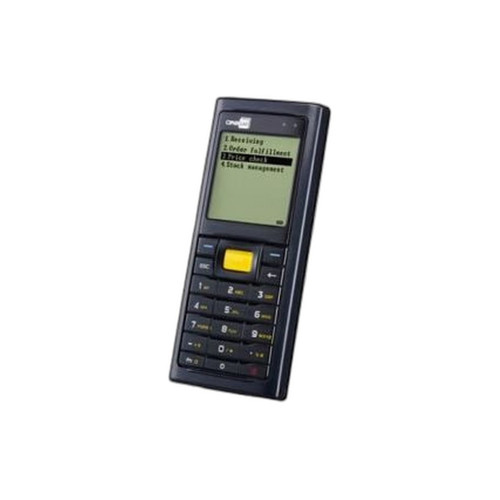
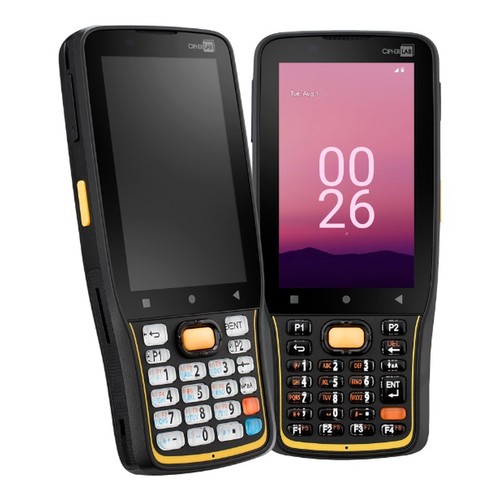
Both the CipherLab A82B0RSL42VU1 and the CipherLab ARK25CCCNU101 are handheld 2D mobile computers aimed at warehouse and logistics barcode-capture workflows. The A82B0RSL42VU1 belongs to the legacy 8200 series running CipherLab's proprietary cOS on a 32-bit processor, while the ARK25CCCNU101 is a modern Android-platform rugged device built on a quad-core ARM Cortex A53. A buyer choosing between them is weighing a compact, purpose-built scanner against a full-featured Android enterprise terminal with a larger display, higher IP rating, and substantially more compute resources.
In This Guide
- Which device offers more processing power, memory, and OS flexibility for current and future applications?
- How do the two devices compare on drop protection, ingress protection, and physical ruggedness for demanding environments?
- Which device delivers better scan performance, display usability, and battery runtime for a full shift?
- Which should you choose: the A82B0RSL42VU1 or the ARK25CCCNU101?
- Side-by-Side Specs
- FAQ
Which device offers more processing power, memory, and OS flexibility for current and future applications?
The ARK25CCCNU101 runs a quad-core 1.4 GHz Cortex A53 processor with 2 GB or 3 GB RAM and 16 GB or 32 GB internal Flash storage, under Android 7.0, 9.0, or 11.0 with GMS. This means the device can run standard Android enterprise apps, MDM agents, and browser-based tools without custom porting. MicroSD expansion supports up to 32 GB of additional storage.
The A82B0RSL42VU1 uses a 32-bit processor with 8 MB Flash and 4 MB or 8 MB SRAM, running CipherLab's proprietary cOS. Storage expansion is via a microSD slot with SDHC support, but no maximum capacity is specified in the provided specs. The cOS environment is purpose-built and stable for dedicated scan tasks, but it does not support Android apps natively, limiting software ecosystem choices. No CPU clock speed is specified for the A82B0RSL42VU1.
How do the two devices compare on drop protection, ingress protection, and physical ruggedness for demanding environments?
The ARK25CCCNU101 carries an IP65 rating, meaning it is fully dust-tight and protected against low-pressure water jets from any direction. Its drop specification is 1.5 m without a boot and 1.8 m with a boot onto concrete, and it is rated to MIL-STD-810G. The display uses Corning Gorilla Glass for added scratch and impact resistance.
The A82B0RSL42VU1 is rated IP54, providing protection against dust ingress (limited) and water splashing from any direction. Its drop specification is 1.2 m onto concrete, tested five times on each side. No MIL-STD certification is listed in the provided specs, and no Gorilla Glass or equivalent screen protection is mentioned. In harsh or wet environments — dock doors, cold storage, outdoor receiving — the ARK25CCCNU101's IP65 and MIL-STD-810G ratings represent a meaningful step up.
Which device delivers better scan performance, display usability, and battery runtime for a full shift?
Both units use a 2D scan engine capturing QR Code, Data Matrix, and standard 1D symbologies. The ARK25CCCNU101 additionally lists PDF417, Code 128, Code 39, UPC, and EAN explicitly in its spec sheet. The A82B0RSL42VU1 specifies a 2D Laser engine (reading 1D and 2D barcodes including QR and Data Matrix); no explicit symbology list beyond that is provided.
Display size differs significantly: the ARK25CCCNU101 offers a 4-inch WVGA (480×800) TN LCD with Gorilla Glass, suitable for reading longer item descriptions, navigating Android UI, or using receipt-style workflows. The A82B0RSL42VU1 has a 2.1-inch monochrome 160×160 pixel display, which covers basic scan-confirm tasks but is not suited for rich visual workflows.
Battery capacity is 4000 mAh on the ARK25CCCNU101 versus 1200 mAh on the A82B0RSL42VU1. The A82B0RSL42VU1 is lighter (150 g vs 292 g with battery), which matters for prolonged hand-held use, but the ARK25CCCNU101's battery is more than three times the capacity — a direct indicator of shift-length runtime, especially running a power-hungry Android OS and wireless radio. Wi-Fi connectivity is specified for the ARK25CCCNU101; no wireless connectivity spec is provided for the A82B0RSL42VU1 in the supplied data.
Which should you choose: the A82B0RSL42VU1 or the ARK25CCCNU101?
Our take: The ARK25CCCNU101 is the stronger choice when the deployment requires Android app compatibility, higher ingress protection, and extended battery runtime for full-shift wireless scanning. The ARK25CCCNU101 exceeds the A82B0RSL42VU1 on every measurable durability axis: IP65 vs IP54, 1.5 m / 1.8 m drop vs 1.2 m drop, and MIL-STD-810G certification not present on the A82B0RSL42VU1. Its 4000 mAh battery dwarfs the A82B0RSL42VU1's 1200 mAh cell, and the quad-core 1.4 GHz Cortex A53 with up to 3 GB RAM and 32 GB Flash vastly outpaces the legacy 32-bit / 8 MB Flash platform. The A82B0RSL42VU1 remains relevant in closed, controlled environments already standardized on cOS where its lighter 150 g form factor and simpler, purpose-built OS reduce training overhead and total cost of ownership for basic scan-and-confirm workflows.
Side-by-Side Comparison
Spec-for-spec, from manufacturer data.
| Specification | CipherLab A82B0RSL42VU1 | CipherLab ARK25CCCNU101 |
|---|---|---|
| Form Factor | Handheld | Handheld |
| OS | CipherLab cOS (proprietary) | Android 7.0 / 9.0 / 11.0 with GMS |
| Processor | 32-bit (speed not specified) | Quad-core 1.4 GHz Cortex A53 |
| RAM | 4 MB or 8 MB SRAM | 2 GB or 3 GB |
| Internal Storage | 8 MB Flash | 16 GB or 32 GB Flash |
| Storage Expansion | microSD (SDHC; max not specified) | microSD SDHC up to 32 GB |
| Scan Engine | 2D Laser (1D & 2D, QR, Data Matrix) | 2D Imager (QR, Data Matrix, PDF417, Code 128, Code 39, UPC, EAN) |
| Display | 2.1" monochrome 160x160 px | 4" WVGA 480x800 TN LCD, Corning Gorilla Glass |
| IP Rating | IP54 | IP65 |
| Drop Spec | 1.2 m onto concrete (5x per side) | 1.5 m / 1.8 m with boot |
| MIL-STD | Not specified | MIL-STD-810G |
| Battery Capacity | 1200 mAh (3.7V Li-ion) | 4000 mAh |
| Weight | 150 g (5.3 oz) | 292 g (with battery) |
| Dimensions | 136 x 58 x 32 mm (2D config) | 168 x 73.8 x 26 mm |
| Wireless Connectivity | Not specified in provided specs | Wi-Fi 802.11 |
| Warranty | 2-Year | 2-Year |
Frequently Asked Questions
Which should you choose: the A82B0RSL42VU1 or the ARK25CCCNU101?
The ARK25CCCNU101 is the stronger choice when the deployment requires Android app compatibility, higher ingress protection, and extended battery runtime for full-shift wireless scanning. The ARK25CCCNU101 exceeds the A82B0RSL42VU1 on every measurable durability axis: IP65 vs IP54, 1.5 m / 1.8 m drop vs 1.2 m drop, and MIL-STD-810G certification not present on the A82B0RSL42VU1. Its 4000 mAh battery dwarfs the A82B0RSL42VU1's 1200 mAh cell, and the quad-core 1.4 GHz Cortex A53 with up to 3 GB RAM and 32 GB Flash vastly outpaces the legacy 32-bit / 8 MB Flash platform. The A82B0RSL42VU1 remains relevant in closed, controlled environments already standardized on cOS where its lighter 150 g form factor and simpler, purpose-built OS reduce training overhead and total cost of ownership for basic scan-and-confirm workflows.
Is the A82B0RSL42VU1 or ARK25CCCNU101 better for wet or dusty warehouse environments?
The ARK25CCCNU101 is the better choice for wet or dusty conditions. It carries an IP65 rating (fully dust-tight and jet-water resistant) versus the A82B0RSL42VU1's IP54 rating (limited dust protection and splash resistance only). The ARK25CCCNU101 also meets MIL-STD-810G; no equivalent certification is listed for the A82B0RSL42VU1.
Can the ARK25CCCNU101 run our existing warehouse management software?
The ARK25CCCNU101 runs Android 7.0, 9.0, or 11.0 with GMS, so it supports standard Android enterprise apps and most modern WMS clients. The A82B0RSL42VU1 runs CipherLab's proprietary cOS, which requires software specifically developed or ported for that platform. If your WMS has an Android client, the ARK25CCCNU101 is the compatible choice without custom development.
Which device is lighter and easier to carry for workers scanning all day?
The A82B0RSL42VU1 is significantly lighter at 150 g (5.3 oz) versus the ARK25CCCNU101 at 292 g with battery. For roles involving continuous hand-held scanning over a full shift, the weight difference may reduce fatigue. However, the ARK25CCCNU101's 4000 mAh battery is more than three times larger, which may reduce the number of battery swaps required during that same shift.
More Mobile Computer Comparisons
- Datalogic 944850001 vs Honeywell CK67-X0N-5EC1C2G
- Datalogic 944850001 vs Honeywell CK67-X1N-58A1B1G
- Datalogic 944850001 vs Honeywell CK67-X1N-58A1A1G
- Datalogic 944850001 vs Honeywell CK67-X1N-58A1C1G
- Datalogic 944850001 vs Datalogic 944950001
- Datalogic 944850001 vs Datalogic 944900004
Mobile Computer Buying Guides
Get a Second Opinion on Your Camera Choice
Share your site layout, coverage goals, and budget. Our team will validate the camera selection, flag anything we would change, and recommend products that match the use case.