
CipherLab A1000ACWU0001 vs Zebra LI2208-SR7U2100AZW: Specification Comparison
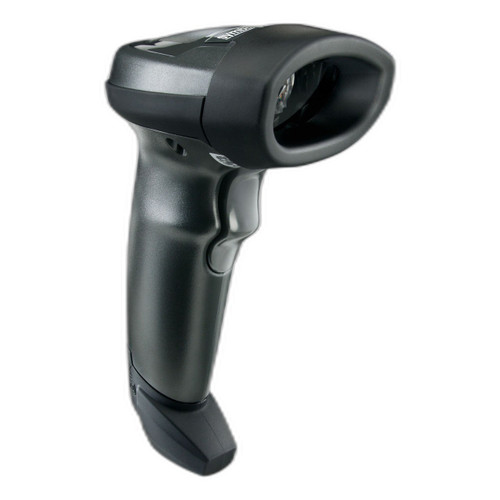
Both the CipherLab A1000ACWU0001 and the Zebra LI2208-SR7U2100AZW are corded USB handheld 1D linear barcode scanners aimed at retail, warehouse, and light-duty scanning environments. Each connects via USB without batteries or wireless pairing, and each reads standard 1D symbologies including Code 39, UPC, and EAN. This comparison examines where the two models diverge across scan performance, physical durability, and symbology breadth—the three dimensions most likely to drive a purchasing decision between them.

In This Guide
- Which scanner delivers faster, more reliable reads at the point of scan?
- Which unit is better protected against drops, dust, and environmental stress?
- Which scanner supports a broader set of barcode formats for current and future inventory needs?
- Which should you choose: the A1000ACWU0001 or the LI2208-SR7U2100AZW?
- Side-by-Side Specs
- FAQ
Which scanner delivers faster, more reliable reads at the point of scan?
The Zebra LI2208-SR7U2100AZW is specified at 547 scans per second with a single-pass scan pattern, a figure Zebra states directly in the product specs. This rate is well-suited to high-throughput retail checkout lanes where operator speed and barcode presentation angle vary continuously.
The CipherLab A1000ACWU0001 lists multiple scan rate figures depending on configuration—200 scans per second and 100 scans per second are both cited—suggesting the higher rate applies to one operating mode and the lower to others. The scan engine is identified as a Red LED at 650 nm, a linear LED imager rather than a laser. Scan angle tolerance is specified as Pitch ±70° and Skew ±40° to ±70° depending on mode.
The Zebra's 547 scans/sec represents a clear throughput advantage over the CipherLab's highest stated rate of 200 scans/sec. Buyers prioritizing checkout lane speed or high-volume scanning will find the Zebra spec more compelling; the CipherLab's lower rate is adequate for lower-cadence desk-mount or warehouse pick applications.
Which unit is better protected against drops, dust, and environmental stress?
The Zebra LI2208-SR7U2100AZW carries an IP42 ingress-protection rating, meaning it is certified against solid objects greater than 1 mm and protected against vertically dripping water. Its drop specification is 1.8 m to concrete, and Zebra's specs also reference 1,000 tumble-test cycles (2,000 drops in a half-meter tumble drum), providing a quantified measure of repeated-impact resilience.
The CipherLab A1000ACWU0001 is rated for 1.0 m drops to concrete. No IP ingress-protection rating is stated in the provided specifications. The spec block references a 2.0 m / 6.6 ft drop figure in the Environment row alongside the 1.0 m primary spec, but this appears to be data from a multi-configuration row rather than a confirmed rating for this specific SKU; the primary drop spec cited is 1.0 m.
On documented durability, the Zebra holds a measurable edge: 1.8 m vs. 1.0 m drop rating, a certified IP42 seal with no equivalent stated for the CipherLab, and explicit tumble-test data. For environments with frequent drops or exposure to dripping liquids—grocery checkout, retail stockroom—the Zebra's published ratings provide more assurance.
Which scanner supports a broader set of barcode formats for current and future inventory needs?
The CipherLab A1000ACWU0001 lists 15 distinct 1D symbologies: Codabar, Code 39, Code 93, Code 128, GS1 DataBar (RSS), Industrial 2 of 5, Interleave 2 of 5, Matrix 2 of 5, MSI, Italian Pharmacode, French Pharmacode, Plessey, Telepen, UPC, and EAN, plus GS1-128. This breadth covers specialty formats used in healthcare (Pharmacode), library systems (Codabar), and logistics (GS1 DataBar, GS1-128).
The Zebra LI2208-SR7U2100AZW's provided specifications list three symbologies: Code 39, UPC, and EAN. No additional 1D formats are documented in the specs supplied. It is possible the physical device supports more symbologies, but only these three are spec-confirmed here and must be treated as the documented capability for this comparison.
On symbology coverage as documented, the CipherLab supports a substantially broader format set—15+ vs. 3 confirmed. Buyers managing mixed inventory including GS1 DataBar, Pharmacode, or Telepen barcodes will find the CipherLab's documented breadth directly relevant; the Zebra's three confirmed symbologies cover mainstream retail but leave specialty formats unverified from available data.
Which should you choose: the A1000ACWU0001 or the LI2208-SR7U2100AZW?
Our take: The A1000ACWU0001 is the stronger choice when symbology breadth and plug-and-play simplicity across diverse inventory formats are the primary requirements. The CipherLab documents 15 distinct 1D symbologies—including GS1 DataBar, Pharmacode variants, Telepen, and MSI—versus only 3 confirmed for the Zebra (Code 39, UPC, EAN), making it the defensible pick for healthcare, library, or mixed-logistics environments. However, the Zebra LI2208-SR7U2100AZW leads on every durability and throughput metric in evidence: its 547 scans/sec outpaces the CipherLab's 200 scans/sec peak, its 1.8 m drop rating exceeds the CipherLab's 1.0 m, and its IP42 seal has no CipherLab equivalent on record. The Zebra also carries an explicit 1,000-cycle tumble-test spec. Choose the CipherLab for format-diverse, lower-cadence applications with a 2-year warranty; choose the Zebra for high-volume retail checkout where scan speed, drop resilience, and ingress protection are non-negotiable.
Side-by-Side Comparison
Spec-for-spec, from manufacturer data.
| Specification | CipherLab A1000ACWU0001 | Zebra LI2208-SR7U2100AZW |
|---|---|---|
| Product Type | Handheld Barcode Scanner | Handheld Barcode Scanner |
| Connectivity | USB Wired | USB Wired |
| Scan Engine | Red LED, 650 nm, 1D Linear | 1D Linear Imager |
| Scan Rate | 200 / 100 scans/sec (mode-dependent) | 547 scans/sec |
| Scan Pattern | N/A (not specified) | Single-pass |
| Symbologies (1D) | 15 formats (Code 39, Code 128, UPC, EAN, GS1 DataBar, Codabar, Pharmacode, Telepen, MSI, others) | 3 formats (Code 39, UPC, EAN) |
| Drop Rating | 1.0 m to concrete | 1.8 m to concrete |
| Tumble Test | — | 1,000 cycles (2,000 drops, 0.5 m drum) |
| IP Rating | — | IP42 |
| Min. Print Contrast | 30% | — |
| Operating Temp. | — | 0 °C to 50 °C (32 °F to 122 °F) |
| Ambient Light Max | — | 108,000 lux |
| Weight | 148 g / 5.2 oz. (without cable) | 140 g / 4.95 oz. |
| Color Options | Ivory or Black | Twilight Black; Nova White |
| Power Source | USB host power | USB host power or external power |
| Warranty | 2 years | 1 year |
Frequently Asked Questions
Which should you choose: the A1000ACWU0001 or the LI2208-SR7U2100AZW?
The A1000ACWU0001 is the stronger choice when symbology breadth and plug-and-play simplicity across diverse inventory formats are the primary requirements. The CipherLab documents 15 distinct 1D symbologies—including GS1 DataBar, Pharmacode variants, Telepen, and MSI—versus only 3 confirmed for the Zebra (Code 39, UPC, EAN), making it the defensible pick for healthcare, library, or mixed-logistics environments. However, the Zebra LI2208-SR7U2100AZW leads on every durability and throughput metric in evidence: its 547 scans/sec outpaces the CipherLab's 200 scans/sec peak, its 1.8 m drop rating exceeds the CipherLab's 1.0 m, and its IP42 seal has no CipherLab equivalent on record. The Zebra also carries an explicit 1,000-cycle tumble-test spec. Choose the CipherLab for format-diverse, lower-cadence applications with a 2-year warranty; choose the Zebra for high-volume retail checkout where scan speed, drop resilience, and ingress protection are non-negotiable.
Is the A1000ACWU0001 or LI2208-SR7U2100AZW better for a busy retail checkout lane?
Based on the provided specifications, the Zebra LI2208-SR7U2100AZW is better suited to a high-volume checkout lane. It is rated at 547 scans per second versus the CipherLab's peak of 200 scans per second, and its 1.8 m drop rating and IP42 ingress protection are better matched to the physical demands of a busy checkout environment. The CipherLab is more appropriate for lower-cadence scanning stations.
Does either scanner support GS1 DataBar or specialty healthcare barcodes like Pharmacode?
Yes—the CipherLab A1000ACWU0001 lists GS1 DataBar (RSS), Italian Pharmacode, French Pharmacode, Codabar, and Telepen among its 15 documented symbologies. The Zebra LI2208-SR7U2100AZW's provided specifications list only Code 39, UPC, and EAN; no specialty formats are confirmed in the available spec data. Buyers scanning Pharmacode or GS1 DataBar should select the CipherLab based on documented capabilities.
Which unit has the longer warranty, and does either carry an IP rating?
The CipherLab A1000ACWU0001 carries a 2-year warranty; the Zebra LI2208-SR7U2100AZW carries a 1-year warranty. On ingress protection, only the Zebra has a documented IP rating—IP42—which certifies protection against solid particles larger than 1 mm and vertically dripping water. No IP rating is stated in the CipherLab's provided specifications.
More Barcode Scanner Comparisons
- Datalogic PM9100-910RB vs CipherLab A1000ACBU0001
- Datalogic PM9100-910RB vs CipherLab A1000ACWU0001
- Datalogic PM9100-910RB vs Zebra LI2208-SR7U2100AZW
- Datalogic PM9100-910RB vs CipherLab A8001RSC00025
- Datalogic PM9100-910RB vs Datalogic PM9100-D910RB
- Datalogic PM9100-910RB vs Datalogic QBT2500-BK
Barcode Scanner Buying Guides
Get a Second Opinion on Your Camera Choice
Share your site layout, coverage goals, and budget. Our team will validate the camera selection, flag anything we would change, and recommend products that match the use case.