
CipherLab A1000ACBU0001 vs Zebra LI2208-SR7U2100AZW: Specification Comparison
Both the CipherLab A1000ACBU0001 and the Zebra LI2208-SR7U2100AZW are corded, USB-powered handheld 1D barcode scanners targeting general-purpose data capture environments. Each uses a linear scan engine, connects via USB, and reads a core set of 1D symbologies without batteries or wireless infrastructure. This comparison evaluates the three dimensions most relevant to buyers choosing between these two units: scan performance and symbology breadth, durability and environmental ratings, and interface and deployment logistics.
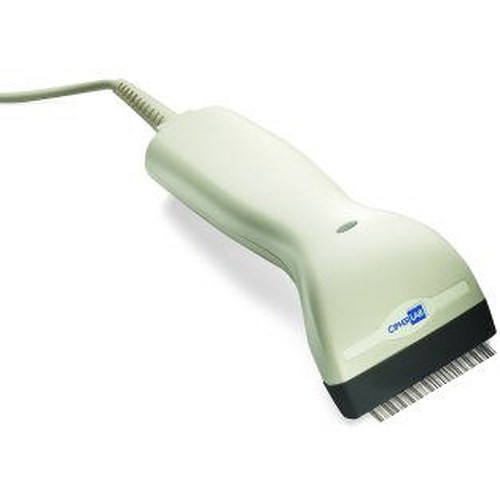
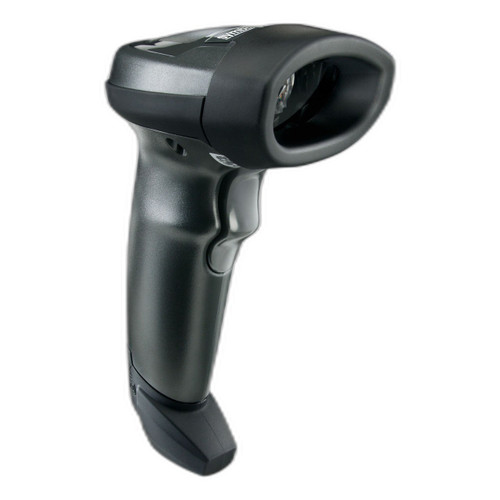
In This Guide
- Which scanner delivers faster throughput and broader symbology coverage?
- Which unit is better rated for physical abuse and environmental conditions?
- How do the two scanners differ in connectivity, power, and deployment logistics?
- Which should you choose: the A1000ACBU0001 or the LI2208-SR7U2100AZW?
- Side-by-Side Specs
- FAQ
Which scanner delivers faster throughput and broader symbology coverage?
The Zebra LI2208-SR7U2100AZW posts a specified scan rate of 547 scans per second. The CipherLab A1000ACBU0001 specifies a primary scan rate of 200 scans per second (with secondary configurations listed at 100 scans per second). For high-volume checkout or rapid sequential scanning, the Zebra's rate is approximately 2.7× higher than the CipherLab's fastest stated rate.
On symbology breadth, the CipherLab A1000ACBU0001 has a materially wider declared list: Codabar, Code 39, Code 93, Code 128, GS1 DataBar (RSS), Industrial 2 of 5, Interleaved 2 of 5, Matrix 2 of 5, MSI, Italian and French Pharmacodes, Plessey, Telepen, and UPC/EAN/GS1-128. The Zebra LI2208 specs list only Code 39, UPC, and EAN. Buyers who must read Code 93, GS1 DataBar, Codabar, MSI, or any 2-of-5 variant should note that the Zebra's declared symbology set does not include these; the CipherLab's does.
The CipherLab scan engine is specified as a Red LED at 650 nm with a fixed single-line pattern. The Zebra is described as a 1D Linear Imager with a single-pass pattern. Minimum print contrast is stated for the CipherLab at 30%; no equivalent figure is provided in the Zebra specs.
Which unit is better rated for physical abuse and environmental conditions?
Drop tolerance differs between the two models. The Zebra LI2208-SR7U2100AZW is rated at 1.8 m to concrete. The CipherLab A1000ACBU0001 is rated at 1.0 m to concrete—a 44% lower drop height. For environments where scanners are frequently dropped or handled roughly, the Zebra's drop rating provides a measurable advantage.
The Zebra LI2208 carries an IP42 ingress protection rating, indicating resistance to solid particles greater than 1 mm and protection against vertically dripping water at a 15-degree tilt. No IP rating is specified in the CipherLab A1000ACBU0001's provided specs. Buyers in environments with dust, light moisture, or liquid splash risk should weigh this gap accordingly.
The Zebra spec sheet references tumble testing of 1,000 cycles (2,000 drops) in a half-meter tumble test, providing additional confidence in repetitive handling. No equivalent tumble test specification appears in the CipherLab documentation. Operating temperature for the Zebra is stated as 32°F to 122°F (0°C to 50°C); no operating temperature range is specified in the provided CipherLab specs.
How do the two scanners differ in connectivity, power, and deployment logistics?
Both scanners connect via USB and are powered by the host USB port, eliminating battery management and charging infrastructure. The CipherLab A1000ACBU0001 specifies USB HID keyboard emulation, making it plug-and-play with any system that accepts keyboard input—no driver installation is required for basic operation. The Zebra LI2208 is specified as USB wired with host power or external power; keyboard emulation mode is not explicitly confirmed in the provided specs.
The Zebra LI2208 package contents are listed as the scanner plus a USB cable. The CipherLab A1000ACBU0001 is noted to include an attached cable. Neither product lists software, stands, or additional accessories as included.
Warranty coverage differs: the CipherLab A1000ACBU0001 carries a 2-year warranty, while the Zebra LI2208-SR7U2100AZW is covered by a 1-year warranty. For buyers managing total cost of ownership over multi-year deployments, the CipherLab's longer warranty term may reduce service exposure. No extended service contract details are available in the provided Zebra specs beyond the base 1-year term.
Which should you choose: the A1000ACBU0001 or the LI2208-SR7U2100AZW?
Our take: The LI2208-SR7U2100AZW is the stronger choice when throughput and physical durability are the primary criteria—its 547 scans/sec rate is approximately 2.7× the CipherLab's 200 scans/sec, its 1.8 m drop rating exceeds the CipherLab's 1.0 m spec by 0.8 m, and its IP42 ingress rating provides a documented environmental baseline the CipherLab's specs do not match. However, the A1000ACBU0001 is the stronger choice where symbology breadth matters: it declares support for Code 93, GS1 DataBar, Codabar, MSI, multiple 2-of-5 variants, Plessey, and Telepen—none of which appear in the Zebra's stated symbology list. It also carries a 2-year warranty versus Zebra's 1-year, and its USB HID keyboard emulation is explicitly confirmed. Buyers in high-volume retail checkout or rugged environments should favor the Zebra; buyers needing broad 1D symbology coverage with a longer warranty should favor the CipherLab.
Side-by-Side Comparison
Spec-for-spec, from manufacturer data.
| Specification | CipherLab A1000ACBU0001 | Zebra LI2208-SR7U2100AZW |
|---|---|---|
| Product Type | Handheld 1D Barcode Scanner | Handheld 1D Barcode Scanner |
| Scan Engine | Red LED, 650 nm, single-line fixed | 1D Linear Imager, single-pass |
| Scan Rate | 200 scans/sec (primary) | 547 scans/sec |
| Drop Rating | 1.0 m to concrete | 1.8 m to concrete |
| IP Rating | — | IP42 |
| Tumble Test | — | 1,000 cycles (2,000 drops), 0.5 m |
| Connectivity | USB HID (keyboard emulation) | USB Wired (host or external power) |
| Power Source | USB-powered, no batteries | USB host power or external power |
| Symbologies 1D | Code 39/93/128, UPC/EAN/GS1-128, DataBar, Codabar, MSI, 2of5 variants, Plessey, Telepen, Pharmacodes | Code 39, UPC, EAN |
| Min Print Contrast | 30% | — |
| Operating Temp | — | 0°C to 50°C (32°F to 122°F) |
| Ambient Light Max | — | 108,000 lux |
| Warranty | 2 years | 1 year |
| Color Options | Ivory or Black | Twilight Black; Nova White |
| Weight (with cable) | 203 g / 7.2 oz. | 140 g / 4.95 oz. |
| Package Contents | Scanner with attached cable | Scanner and USB cable |
Frequently Asked Questions
Which should you choose: the A1000ACBU0001 or the LI2208-SR7U2100AZW?
The LI2208-SR7U2100AZW is the stronger choice when throughput and physical durability are the primary criteria—its 547 scans/sec rate is approximately 2.7× the CipherLab's 200 scans/sec, its 1.8 m drop rating exceeds the CipherLab's 1.0 m spec by 0.8 m, and its IP42 ingress rating provides a documented environmental baseline the CipherLab's specs do not match. However, the A1000ACBU0001 is the stronger choice where symbology breadth matters: it declares support for Code 93, GS1 DataBar, Codabar, MSI, multiple 2-of-5 variants, Plessey, and Telepen—none of which appear in the Zebra's stated symbology list. It also carries a 2-year warranty versus Zebra's 1-year, and its USB HID keyboard emulation is explicitly confirmed. Buyers in high-volume retail checkout or rugged environments should favor the Zebra; buyers needing broad 1D symbology coverage with a longer warranty should favor the CipherLab.
Is the A1000ACBU0001 or LI2208-SR7U2100AZW better for high-speed retail checkout lanes?
Based on the provided specs, the Zebra LI2208-SR7U2100AZW is better suited to high-speed retail checkout. It specifies 547 scans per second versus the CipherLab A1000ACBU0001's 200 scans per second, which is a significant throughput difference in back-to-back scanning scenarios.
Does the Zebra LI2208 read more barcode types than the CipherLab A1000ACBU0001?
No—based on the provided specs, the CipherLab A1000ACBU0001 declares a broader symbology set. The Zebra LI2208 lists only Code 39, UPC, and EAN. The CipherLab additionally specifies Code 93, Code 128, GS1 DataBar, Codabar, MSI, multiple 2-of-5 variants, Plessey, Telepen, and pharmacodes. If your application requires any symbology beyond Code 39, UPC, or EAN, verify Zebra's full compatibility documentation before purchasing.
Which scanner has better warranty and durability coverage for a multi-year warehouse deployment?
The answer depends on which durability dimension matters most. The Zebra LI2208 has a stronger drop rating (1.8 m vs. 1.0 m) and an IP42 environmental rating not specified for the CipherLab. However, the CipherLab A1000ACBU0001 carries a 2-year warranty versus the Zebra's 1-year warranty. For a warehouse where scanners are dropped frequently, the Zebra's physical ratings are superior; for minimizing warranty service calls over two years, the CipherLab's longer coverage term is an advantage.
More Barcode Scanner Comparisons
- Datalogic PM9100-910RB vs CipherLab A1000ACBU0001
- Datalogic PM9100-910RB vs CipherLab A1000ACWU0001
- Datalogic PM9100-910RB vs Zebra LI2208-SR7U2100AZW
- Datalogic PM9100-910RB vs CipherLab A8001RSC00025
- Datalogic PM9100-910RB vs Datalogic PM9100-D910RB
- Datalogic PM9100-910RB vs Datalogic QBT2500-BK
Barcode Scanner Buying Guides
Get a Second Opinion on Your Camera Choice
Share your site layout, coverage goals, and budget. Our team will validate the camera selection, flag anything we would change, and recommend products that match the use case.