
Axis Q6225-LE vs Axis Q8752-E: Specification Comparison
Both the Axis Q6225-LE and the Axis Q8752-E MkII are outdoor PTZ cameras delivering 1080p (2MP) visual resolution, making them genuine cross-shop candidates for wide-area perimeter and long-range surveillance deployments. The Q6225-LE is a dedicated visible-light PTZ with extended IR and a 31x zoom, while the Q8752-E MkII is a dual-sensor bispectral unit pairing a 32x optical visual channel with a thermal 640×480 microbolometer. The comparison covers imaging capability, environmental and installation fit, and VMS/analytics integration.
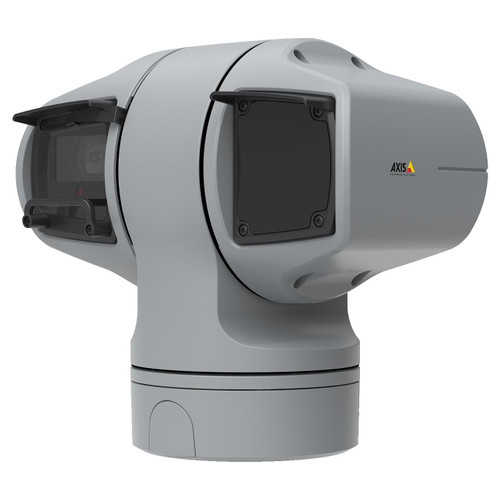
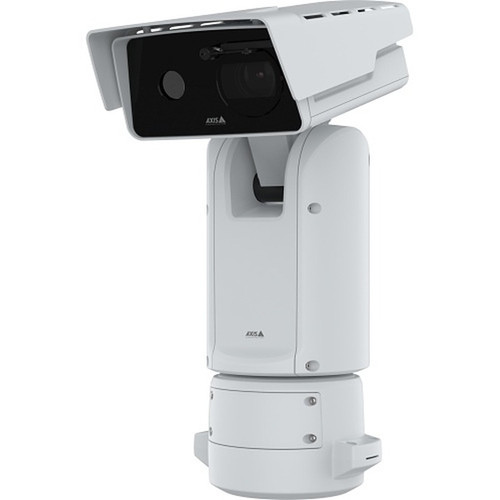
In This Guide
How do the imaging specs compare?
The Q6225-LE uses a 1/2" progressive-scan CMOS sensor and a 6.91–214.64 mm varifocal lens delivering 31x optical zoom with P-iris and autofocus. Its minimum color illumination is 0.06 lux (F1.36) dropping to 0.008 lux monochrome, and the built-in OptimizedIR 850 nm illuminator extends the usable range into total darkness. Lightfinder 2.0 and Forensic WDR are both present. Maximum frame rate is 50/60 fps at 1920×1080, and electronic image stabilization is included. The Q8752-E MkII visual channel uses a 1/2.8" sensor with a 4.3–137.6 mm varifocal lens for 32x optical zoom; minimum color illumination is specified at 0.06 lux (F1.4), and a built-in IR illuminator reaches 31 m. Maximum frame rate on the visual channel is listed at 30 fps (one variant is noted at 8.3 fps). Forensic WDR is present on the Q8752-E MkII as well.
The Q8752-E MkII adds a second sensor entirely absent from the Q6225-LE: a 640×480 thermal microbolometer with a 17 µm pixel pitch and either a 35 mm fixed (F1.2) or 35–105 mm athermalized (F1.6) lens providing 3x thermal zoom. This means the Q8752-E MkII can detect heat signatures in complete darkness and through obscurants without any illuminator, while the Q6225-LE relies solely on its IR illuminator for no-light operation. The Q6225-LE's higher frame rate ceiling (50/60 fps vs. 30 fps on the visual channel of the Q8752-E MkII) and larger 1/2" sensor versus 1/2.8" give it an edge for fast-motion capture and low-light visible imaging.
What about installation and environment?
Both cameras carry an IP66 rating for dust-tight and jet-water resistance. The Q6225-LE additionally holds an IK10 vandal-resistance rating, MIL-STD-810G, and NEMA TS 2 certifications; the Q8752-E MkII is rated NEMA 4X per the product data but no IK impact rating is specified in the provided specs. Operating temperature favors the Q8752-E MkII: it is rated −40°C to +65°C versus −50°C to +55°C for the Q6225-LE—meaning the Q8752-E MkII tolerates 10°C more heat while the Q6225-LE survives 10°C colder.
Power delivery differs in PoE class. The Q6225-LE requires PoE++ (802.3bt, Class 8), which demands a higher-wattage PoE switch or injector. The Q8752-E MkII also specifies PoE++ but its exact class number is not provided in the available specs. The Q6225-LE ships in a pendant/PTZ-mount form factor; the Q8752-E MkII supports wall, pole, corner, and rack mounting per its specs, offering more flexibility. The Q6225-LE's dimensions are 210×330×313 mm; equivalent dimensions for the Q8752-E MkII are not provided in the supplied specs.
Which fits your VMS and analytics better?
Both cameras support ONVIF Profile G, M, and S; the Q6225-LE additionally specifies ONVIF Profile T. The Q6225-LE lists compatibility with AXIS Camera Station Edge, Pro, and 5 as well as axis.com VMS partner systems. The Q8752-E MkII lists AXIS Camera Station and third-party ONVIF platforms. Both carry AXIS Object Analytics (the Q6225-LE explicitly; the Q8752-E MkII lists Perimeter Defender and VMD with a Deep Learning Processing Unit). The Q8752-E MkII's DLPU enables on-camera deep-learning inference, which is not explicitly listed for the Q6225-LE.
For audio, the Q6225-LE provides audio detection and audio clip playback; the Q8752-E MkII lists audio input only—no audio detection or playback is specified. Edge storage differs: the Q6225-LE's local storage field is listed as 'PoE' in multiple spec fields (inconsistent data; a definitive microSD slot spec is not confirmed in the provided data), while the Q8752-E MkII explicitly states microSD support alongside 512 MB flash and 2 GB RAM. Both cameras support Zipstream for bandwidth reduction and H.264/H.265 compression. The Q6225-LE adds Autotracking 2 and a preset-position guard tour; no autotracking specification is provided for the Q8752-E MkII.
Which should you choose: the Q6225-LE or the Q8752-E?
Our take: The Q6225-LE is the stronger choice when the deployment demands active target tracking, high-frame-rate capture, and extreme cold-weather operation in a single visible-light PTZ. Its Autotracking 2, 50/60 fps ceiling versus the Q8752-E MkII's 30 fps, and −50°C lower operating limit versus −40°C give it a measurable edge for fast-moving subjects and arctic climates. The Q8752-E MkII is the correct selection when thermal detection is a hard requirement—its 640×480 microbolometer adds heat-signature detection through smoke, fog, and complete darkness that the Q6225-LE's IR illuminator cannot replicate. The Q8752-E MkII also tolerates a higher upper operating temperature (65°C vs. 55°C), suits hot industrial environments, and offers broader physical mounting options. Buyers on platforms requiring ONVIF Profile T or the widest AXIS Camera Station feature set should note that the Q6225-LE explicitly lists Profile T and full ACS compatibility, while the Q8752-E MkII's AXIS Camera Station compatibility level is not fully detailed in the provided specs.
Side-by-Side Comparison
Spec-for-spec, from manufacturer data.
| Specification | Axis Q6225-LE | Axis Q8752-E |
|---|---|---|
| Resolution (Visual) | 1920×1080 (2MP) | 1920×1080 (2MP) visual; 640×480 thermal |
| Image Sensor | 1/2" progressive scan CMOS | 1/2.8" (visual); 640×480 microbolometer 17 µm (thermal) |
| Lens / Focal Length | 6.91–214.64 mm; 31x optical; P-iris; autofocus | Visual: 4.3–137.6 mm; 32x optical; Thermal: 35 mm fixed or 35–105 mm athermalized |
| Optical Zoom | 31x | 32x visual; 3x thermal |
| Min Illumination | Color: 0.06 lux (F1.36); B/W: 0.008 lux; 0 lux with IR | 0.06 lux @ 50 IRE (F1.4); thermal: 0 lux |
| IR Illuminator | Yes — OptimizedIR 850 nm, range variable with zoom | Yes — up to 31 m |
| WDR | Forensic WDR | Forensic WDR |
| Max Frame Rate | 50/60 fps @ 1080p | 30 fps (visual); 8.3 fps (variant-dependent) |
| Video Compression | H.265; H.264; Zipstream | H.265; H.264; Zipstream |
| IP Rating | IP66 | IP66 / NEMA 4X |
| IK / Impact Rating | IK10 | Not specified in provided specs |
| Operating Temperature | −50°C to +55°C | −40°C to +65°C |
| Power Input / PoE Class | PoE++ (802.3bt) Class 8 | PoE++ (class not specified in provided specs) |
| Edge Storage | Not confirmed in provided specs | microSD; 512 MB flash; 2 GB RAM |
| Audio | Audio detection; audio clip playback | Audio input only |
| Autotracking | Autotracking 2 | Not specified in provided specs |
| Analytics | AXIS Object Analytics | Perimeter Defender; VMD; DLPU (deep learning) |
| ONVIF Profiles | G, M, S, T | G, M, S |
| Warranty | 5 years | 5 years |
Frequently Asked Questions
Which should you choose: the Q6225-LE or the Q8752-E?
The Q6225-LE is the stronger choice when the deployment demands active target tracking, high-frame-rate capture, and extreme cold-weather operation in a single visible-light PTZ. Its Autotracking 2, 50/60 fps ceiling versus the Q8752-E MkII's 30 fps, and −50°C lower operating limit versus −40°C give it a measurable edge for fast-moving subjects and arctic climates. The Q8752-E MkII is the correct selection when thermal detection is a hard requirement—its 640×480 microbolometer adds heat-signature detection through smoke, fog, and complete darkness that the Q6225-LE's IR illuminator cannot replicate. The Q8752-E MkII also tolerates a higher upper operating temperature (65°C vs. 55°C), suits hot industrial environments, and offers broader physical mounting options. Buyers on platforms requiring ONVIF Profile T or the widest AXIS Camera Station feature set should note that the Q6225-LE explicitly lists Profile T and full ACS compatibility, while the Q8752-E MkII's AXIS Camera Station compatibility level is not fully detailed in the provided specs.
Is the Q6225-LE or Q8752-E better for low-light and nighttime surveillance?
For pure visible-light low-light performance, the Q6225-LE edges ahead with a 1/2" sensor (versus 1/2.8" on the Q8752-E MkII) and Lightfinder 2.0 achieving 0.006 lux monochrome with IR. However, if nighttime detection in total darkness or through obscurants (smoke, fog) is the requirement, the Q8752-E MkII's thermal microbolometer sensor detects heat signatures without any light source—a capability the Q6225-LE does not have.
Which camera handles the wider temperature range, and does it matter for my site?
The Q6225-LE operates from −50°C to +55°C; the Q8752-E MkII from −40°C to +65°C. The Q6225-LE survives colder extremes (arctic or unheated outdoor enclosures in northern climates), while the Q8752-E MkII handles hotter environments (rooftop or industrial sites with high ambient heat). Choose based on which end of the temperature envelope your site reaches.
Do both cameras support autotracking, and how does that affect which one I choose?
Only the Q6225-LE specifies Autotracking 2 in its provided specs; no autotracking feature is listed for the Q8752-E MkII. If autonomous target following across a large pan/tilt range is operationally required—reducing operator workload on a single wide-area camera—the Q6225-LE is the specified choice. The Q8752-E MkII's Perimeter Defender analytics can trigger alarms on intrusion but its PTZ auto-follow capability is not confirmed in the available spec data.
Get a Second Opinion on Your Camera Choice
Share your site layout, coverage goals, and budget. Our team will validate the camera selection, flag anything we would change, and recommend products that match the use case.