
Hanwha QNP-6250H vs Hanwha QNP-6320H: Specification Comparison
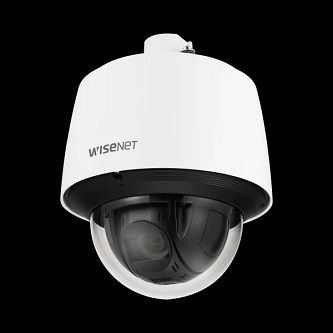
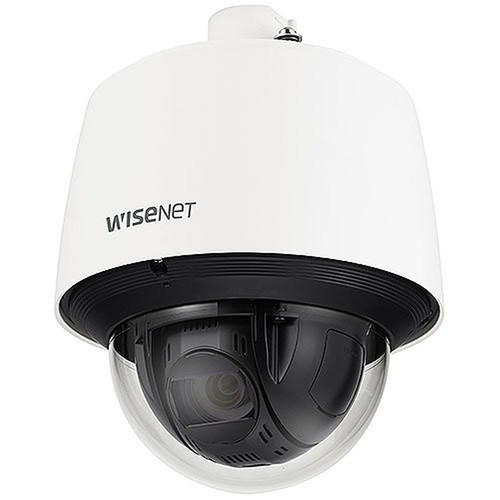
The Hanwha QNP-6250H and QNP-6320H are both 2MP outdoor PTZ dome cameras sharing the same 1/2.8" CMOS sensor, 1920×1080 resolution, and 60fps frame rate — a true cross-shop pair for installers specifying pan-tilt-zoom coverage at perimeter or wide-area sites. The primary differentiator is optical zoom ratio: 25x on the 6250H versus 32x on the 6320H. This comparison evaluates how that lens difference cascades into real-world detection distances, and whether any other specs diverge meaningfully for your project.
In This Guide
How do the imaging specs compare?
Both cameras share the same 1/2.8" CMOS sensor, 1920×1080 resolution at up to 60fps, identical minimum illumination of 0.05 Lux color / 0.005 Lux B/W, 120dB WDR, SSNR V digital noise reduction, Day/Night Auto(ICR), and a built-in gyro-based digital image stabilizer. The wide-end field of view is identical at H: 64.66°, V: 38.08°, and minimum object distance is the same (Wide: 1.5m, Tele: 2m). Backlight compensation features — BLC, HLC, WDR, SSDR — are identical across both models.
The key optical difference is zoom ratio: the QNP-6250H offers a 4.44–111mm / 25x optical lens (digital 32x, total 800x combined), while the QNP-6320H extends to 4.44–142.6mm / 32x optical (digital 32x, total 1024x combined). This directly impacts tele-end DORI distances per the provided specs: at Detect tier, the 6320H reaches 1,921.3m vs 1,471.3m for the 6250H; at Identify tier, 192.1m vs 147.1m. Wide-end DORI figures are identical. Aperture at the tele end differs slightly: F3.9 on the 6250H vs F4.4 on the 6320H, meaning the 6250H admits marginally more light at full zoom. Neither model lists IR illuminators or IR viewable length in the provided specs — both spec sheets indicate IR-related fields as None for built-in illumination hardware.
What about installation and environment?
Both cameras are rated IP66, IK10, and NEMA4X, and carry identical operating temperature ranges of -35°C to +55°C with 0–95% RH non-condensing, and storage temperature of -50°C to +60°C. Power input is PoE+ (IEEE 802.3at, Class 4) on both, with identical power draw: Max 23W, typical 14W. Physical dimensions and weight are identical: ø204.3×265mm and 2700g.
Mounting accessory compatibility is identical across both models: Hanging Mount SBP-156HMW, Wall Mounts SBP-156WMW and SBP-390WMW2, Pole Mount SBP-300PMW2, Parapet Mounts SBP-156LMW and SBP-300LMW, Corner Mounts SBP-156KMW and SBP-300KMW1, and Cabinet SBP-300NBW. The 6250H spec lists a ceiling mount assembly model reference (SBP-156HMW context); the 6320H describes the ceiling option as 'Ceiling mount assembly kit' without a specific part number in the provided spec. Both share RAL9003 white body/aluminum and black polycarbonate head construction.
Which fits your VMS and analytics better?
Both cameras support ONVIF Profile S/G/T, Hanwha SUNAPI (HTTP API), and the Wisenet open platform, ensuring broad VMS compatibility. Network protocol support is identical on both: IPv4/IPv6, RTP, RTSP, HTTPS, SNMPv1/v2c/v3, SRTP (TCP/UDP Unicast), NTCIP1205, and more. Security features are substantially the same — firmware encryption, Digest Authentication, brute-force prevention, 802.1X (EAP-TLS/LEAP/PEAP), HTTPS/SRTP/WSS secure communication, IP address filtering, device certificate (Hanwha Techwin Root CA), and user/system/event audit logs. One noted difference: the QNP-6320H spec lists Data Protect as 'AES Encryption, ZIP Compression,' while the QNP-6250H spec lists 'Authentication & ZIP encryption' — the 6320H explicitly names AES.
Edge analytics are identical on both: directional detection, motion detection (8 zones, 8-point polygonal), Enter/Exit, tampering, virtual line, and audio detection via optional SPM-4210 I/O box. Auto tracking is supported on both. Neither model includes built-in audio input or output per the provided specs. Edge storage is identical: 1× Micro SD/SDHC/SDXC slot, max 256GB. RAM and flash are the same: 1GB RAM, 256MB Flash. Smart codec WiseStream II with 5-area manual mode is present on both. The QNP-6250H spec describes video quality adjustment as 'H.264/H.265/MJPEG bitrate control'; the QNP-6320H describes it as 'Bitrate level control' — functionally equivalent per the specs provided.
Which should you choose: the QNP-6250H or the QNP-6320H?
Our take: The QNP-6320H is the stronger choice when maximum tele-end detection range is the primary requirement. The 32x optical zoom (vs 25x on the 6250H) extends tele Detect range to 1,921.3m vs 1,471.3m — a 450m advantage — and Identify range to 192.1m vs 147.1m, a 45m gain. For sites demanding the longest reach from a single PTZ head (large perimeter, ports, campuses), that lens difference is decisive. The QNP-6250H's tele aperture of F3.9 vs the 6320H's F4.4 gives a marginal low-light edge at full zoom, which matters in poorly lit tele-end scenarios. All other decision-relevant specs — sensor, resolution, frame rate, WDR, DORI wide-end figures, power, environmental ratings, mounting, ONVIF compliance, edge storage, and analytics — are identical between both models per the provided specifications.
Side-by-Side Comparison
Spec-for-spec, from manufacturer data.
| Specification | Hanwha QNP-6250H | Hanwha QNP-6320H |
|---|---|---|
| Resolution | 1920×1080 (2MP) | 1920×1080 (2MP) |
| Image Sensor | 1/2.8" CMOS | 1/2.8" CMOS |
| Optical Zoom / Focal Length | 25x / 4.44–111mm | 32x / 4.44–142.6mm |
| Total Zoom (Optical + Digital) | 800x (25x opt × 32x dig) | 1024x (32x opt × 32x dig) |
| Max Aperture (Wide / Tele) | F1.6 (Wide) / F3.9 (Tele) | F1.6 (Wide) / F4.4 (Tele) |
| Min Illumination | 0.05 Lux color / 0.005 Lux B/W | 0.05 Lux color / 0.005 Lux B/W |
| Wide Dynamic Range | 120dB | 120dB |
| Max Frame Rate | 60fps | 60fps |
| DORI Detect (Tele) | 1,471.3m (4,827.2ft) | 1,921.3m (6,303.4ft) |
| DORI Identify (Tele) | 147.1m (482.7ft) | 192.1m (630.3ft) |
| Video Compression | H.265/H.264 Main/High, MJPEG | H.265/H.264 Main/High, MJPEG |
| IP / Impact Rating | IP66 / IK10 | IP66 / IK10 |
| Environmental Certification | IP66, IK10, NEMA4X | IP66, IK10, NEMA4X |
| Operating Temperature | -35°C to +55°C | -35°C to +55°C |
| Power Input / PoE Class | PoE+ IEEE 802.3at / Class 4 | PoE+ IEEE 802.3at / Class 4 |
| Max Power Draw | 23W (typical 14W) | 23W (typical 14W) |
| Edge Storage | Micro SD/SDHC/SDXC, 1 slot, max 256GB | Micro SD/SDHC/SDXC, 1 slot, max 256GB |
| Audio In / Out | — / — | — / — |
| Dimensions / Weight | ø204.3×265mm / 2700g | ø204.3×265mm / 2700g |
| Warranty | 3-year | Not stated in provided specs |
Frequently Asked Questions
Which should you choose: the QNP-6250H or the QNP-6320H?
The QNP-6320H is the stronger choice when maximum tele-end detection range is the primary requirement. The 32x optical zoom (vs 25x on the 6250H) extends tele Detect range to 1,921.3m vs 1,471.3m — a 450m advantage — and Identify range to 192.1m vs 147.1m, a 45m gain. For sites demanding the longest reach from a single PTZ head (large perimeter, ports, campuses), that lens difference is decisive. The QNP-6250H's tele aperture of F3.9 vs the 6320H's F4.4 gives a marginal low-light edge at full zoom, which matters in poorly lit tele-end scenarios. All other decision-relevant specs — sensor, resolution, frame rate, WDR, DORI wide-end figures, power, environmental ratings, mounting, ONVIF compliance, edge storage, and analytics — are identical between both models per the provided specifications.
Is the QNP-6250H or QNP-6320H better for low light at full zoom?
Based on the provided specs, the QNP-6250H has a marginally wider tele-end aperture of F3.9 compared to F4.4 on the QNP-6320H, meaning it admits slightly more light at maximum optical zoom. Minimum illumination figures (0.05 Lux color / 0.005 Lux B/W) are identical on both models at wide angle. Neither model lists a built-in IR illuminator in the provided specifications.
Do the QNP-6250H and QNP-6320H use the same mounting hardware?
Yes. Both models share an identical set of compatible mounting accessories per the provided specs: Hanging Mount SBP-156HMW, Wall Mounts SBP-156WMW and SBP-390WMW2, Pole Mount SBP-300PMW2, Parapet Mounts SBP-156LMW and SBP-300LMW, Corner Mounts SBP-156KMW and SBP-300KMW1, and Cabinet SBP-300NBW. Physical dimensions and weight are also identical.
Will either camera work with my existing Wisenet or third-party VMS?
Both cameras support ONVIF Profile S/G/T and Hanwha's SUNAPI (HTTP API), making them compatible with Wisenet VMS and any third-party VMS with ONVIF Profile S/G/T support. Network protocol stacks — including RTSP, SRTP, HTTPS, SNMPv1/v2c/v3, and NTCIP1205 — are identical on both models per the provided specifications.
Get a Second Opinion on Your Camera Choice
Share your site layout, coverage goals, and budget. Our team will validate the camera selection, flag anything we would change, and recommend products that match the use case.