
Hanwha QNP-6250H vs i-PRO X66300-Z3LS: Specification Comparison
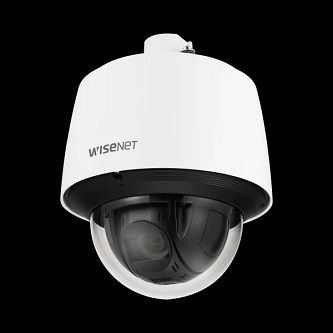
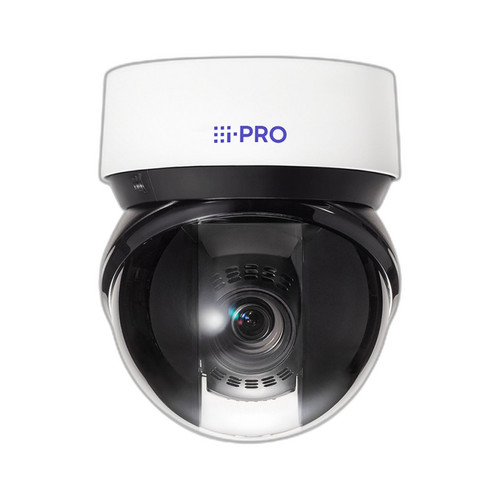
Both the Hanwha QNP-6250H and the i-PRO WV-X66300-Z3LS are 2MP outdoor PTZ dome cameras targeting perimeter and wide-area surveillance where motorized zoom and ruggedized housings are required. The QNP-6250H offers a 25x optical zoom on a PoE+ budget, while the X66300-Z3LS steps up to 32x optical zoom, a dedicated AI SoC, 350m IR range, and PoE++ power. Buyers cross-shopping these units are typically weighing zoom reach, on-camera intelligence, IR performance, and total system cost across compatible VMSs.
In This Guide
How do the imaging specs compare?
Both cameras share a 1/2.8" CMOS sensor at 1920×1080 resolution and 60fps, with auto ICR day/night switching. On low-light performance the i-PRO edges ahead: its specified minimum illumination is 0.006 lux (B&W, 50IRE, F1.6, 1/30s), versus 0.05 lux color / 0.005 lux B&W for the Hanwha — the Hanwha's B&W floor is nominally comparable but applies under different measurement conditions and no IRE or shutter reference is stated, making direct comparison imprecise. The i-PRO's WDR is rated at a maximum 144dB (Super Dynamic On, Level 31); Hanwha specifies 120dB. Both support BLC and HLC.
On zoom, the i-PRO carries a 32x optical zoom (4.25–136mm, F1.6–F4.4) with an extra-zoom mode up to 48x at 720p, while the Hanwha offers 25x optical (4.44–111mm, F1.6–F3.9) plus digital zoom to 32x and combined 800x. In DORI terms at the tele end, the i-PRO detects to 1,833m versus Hanwha's 1,471m. Most critically for after-dark deployments, the i-PRO spec lists an IR range of 350m (30IRE); the Hanwha QNP-6250H specs list IR LED, IR wavelength, IR viewable length, and IR operation all as 'None,' indicating no built-in IR illuminator — the 1.5m IR distance entry appears to be a data artifact. Both support built-in gyro-based image stabilization and electronic defog.
What about installation and environment?
Both cameras carry IP66 and IK10 ratings. The i-PRO adds NEMA 4X and NEMA-TS2 certification and specifies wind resistance up to 40 m/s (~89 mph), making it explicitly rated for coastal and roadside deployments where those certifications matter. The Hanwha carries NEMA 4X as well via its IP66/NEMA4X cert listing but does not publish a wind-resistance figure.
Operating temperature separates the two meaningfully: the i-PRO is rated –50°C to +60°C, the Hanwha –35°C to +55°C — a 15°C advantage at the cold end that matters in northern climates. On power, the Hanwha runs on PoE+ (802.3at, Class 4, max 23W), while the i-PRO requires PoE++ (802.3bt, Class 6, 45.9W) — existing PoE+ infrastructure will not power the i-PRO without a switch upgrade or midspan injector. Form factors differ slightly: the Hanwha measures ø204.3×265mm at 2,700g; the i-PRO is ø167mm×205mm at approximately 3kg. Both support wall, pole, parapet, and corner mount accessories.
Which fits your VMS and analytics better?
Both cameras support ONVIF Profile S, G, T, and M, ensuring broad VMS compatibility. The i-PRO WV-X66300-Z3LS runs on an Ambarella CV25m AI SoC and provides on-camera AI analytics including people, vehicle, face, occupancy, and motion detection, plus AI sound classification (gunshot, yell, vehicle horn, glass break) and Scene Change Detection. The Hanwha QNP-6250H's analytics are limited to directional detection, enter/exit, virtual line, tampering, and motion detection; audio detection requires the optional SPM-4210 I/O box — it is not native. The i-PRO also exposes a built-in 3.5mm audio input and output with G.711/G.726/AAC-LC compression and full-duplex capability; the Hanwha specifies no audio compression and no audio out.
For edge storage, the i-PRO supports up to 512GB microSDXC; the Hanwha is capped at 256GB. The i-PRO supports up to 14 simultaneous streams; the Hanwha supports unicast up to 20 users and up to 10 stream profiles. The Hanwha lists Wisenet SUNAPI and the Wisenet open platform in addition to ONVIF, while the i-PRO lists signed firmware as a specified security feature. Both support 802.1X network authentication, HTTPS, and SNMP.
Which should you choose: the QNP-6250H or the X66300-Z3LS?
Our take: The i-PRO WV-X66300-Z3LS is the stronger choice when IR range, on-camera AI analytics, audio, or extreme cold-temperature operation are primary requirements. Three concrete spec deltas drive this: first, the i-PRO delivers 350m IR (30IRE) versus no built-in IR illuminator on the QNP-6250H, making the Hanwha dependent on external lighting for after-dark PTZ use; second, the i-PRO's WDR reaches 144dB versus 120dB on the Hanwha; third, the i-PRO's operating floor is –50°C versus –35°C. However, the i-PRO requires PoE++ (802.3bt, 45.9W) — a real infrastructure cost if existing switches are PoE+ only — and carries a higher unit price tier. The QNP-6250H is the pragmatic choice for daylight-primary or externally lit sites with PoE+ infrastructure, tight budgets, and Wisenet VMS ecosystems where the 25x zoom range is adequate. The i-PRO fits perimeter, roadway, and critical-infrastructure sites where the AI SoC, IR reach, and audio classification justify the additional power and cost.
Side-by-Side Comparison
Spec-for-spec, from manufacturer data.
| Specification | Hanwha QNP-6250H | i-PRO X66300-Z3LS |
|---|---|---|
| Resolution | 1920×1080 (2MP) | 1920×1080 (2MP) |
| Image Sensor | 1/2.8" CMOS | Approx. 1/2.8" CMOS |
| Optical Zoom / Focal Length | 25x / 4.44–111mm | 32x / 4.25–136mm |
| Max Aperture (Wide / Tele) | F1.6 / F3.9 | F1.6 / F4.4 |
| Min. Illumination | 0.05 lux color / 0.005 lux B&W | 0.006 lux B&W (50IRE, F1.6, 1/30s) |
| Built-in IR / IR Range | None (no IR illuminator) | Yes / 350m (30IRE) |
| Wide Dynamic Range | 120dB | Max. 144dB |
| Max Frame Rate | 60fps | 60fps |
| Video Compression | H.265, H.264, MJPEG | H.265, H.264, JPEG |
| IP Rating | IP66, NEMA 4X | IP66, NEMA 4X |
| Impact Rating | IK10 | IK10 |
| Operating Temperature | -35°C to +55°C | -50°C to +60°C |
| Power Input / PoE Class | PoE+ 802.3at / Class 4 / max 23W | PoE++ 802.3bt / Class 6 / 45.9W |
| Edge Storage | microSD/SDHC/SDXC up to 256GB | microSDXC up to 512GB |
| Audio | None built-in (optional I/O box required) | 3.5mm input & output; G.711/G.726/AAC-LC; full duplex |
| On-Camera AI Analytics | Directional, enter/exit, virtual line, tampering, motion | People, vehicle, face, occupancy, motion + AI sound classification |
| ONVIF Profiles | S, G, T | G, M, S, T |
| Dimensions | ø204.3×265mm | ø167×205mm |
| Weight | 2,700g (5.95 lb) | Approx. 3,000g |
| Warranty | 3-year | 5-year |
Frequently Asked Questions
Which should you choose: the QNP-6250H or the X66300-Z3LS?
The i-PRO WV-X66300-Z3LS is the stronger choice when IR range, on-camera AI analytics, audio, or extreme cold-temperature operation are primary requirements. Three concrete spec deltas drive this: first, the i-PRO delivers 350m IR (30IRE) versus no built-in IR illuminator on the QNP-6250H, making the Hanwha dependent on external lighting for after-dark PTZ use; second, the i-PRO's WDR reaches 144dB versus 120dB on the Hanwha; third, the i-PRO's operating floor is –50°C versus –35°C. However, the i-PRO requires PoE++ (802.3bt, 45.9W) — a real infrastructure cost if existing switches are PoE+ only — and carries a higher unit price tier. The QNP-6250H is the pragmatic choice for daylight-primary or externally lit sites with PoE+ infrastructure, tight budgets, and Wisenet VMS ecosystems where the 25x zoom range is adequate. The i-PRO fits perimeter, roadway, and critical-infrastructure sites where the AI SoC, IR reach, and audio classification justify the additional power and cost.
Is the QNP-6250H or WV-X66300-Z3LS better for low-light or nighttime PTZ coverage?
The i-PRO WV-X66300-Z3LS is the clear choice for nighttime coverage: it includes a built-in IR illuminator rated to 350m (30IRE), which the Hanwha QNP-6250H does not have — the Hanwha's spec sheet lists IR LED, IR wavelength, and IR viewable length all as 'None.' For after-dark PTZ use without external lighting, the i-PRO is the only viable option of the two.
Will either camera work on my existing PoE+ switch?
The Hanwha QNP-6250H runs on PoE+ (IEEE 802.3at, Class 4, max 23W) and will work on any standard PoE+ port. The i-PRO WV-X66300-Z3LS requires PoE++ (IEEE 802.3bt, 45.9W, Class 6) — a standard PoE+ switch cannot power it. You would need a PoE++ switch or a compatible midspan injector before deploying the i-PRO.
Which camera has better built-in analytics — do I still need server-side AI?
The i-PRO WV-X66300-Z3LS runs on an Ambarella CV25m AI SoC and natively classifies people, vehicles, faces, occupancy, motion, and four audio event types (gunshot, yell, vehicle horn, glass break) — reducing dependence on server-side analytics. The Hanwha QNP-6250H offers directional detection, enter/exit, virtual line, tampering, and motion detection on-camera; audio detection requires the optional SPM-4210 I/O box accessory and is not built in. For AI-driven edge detection without a dedicated analytics server, the i-PRO has the more capable native feature set.
Get a Second Opinion on Your Camera Choice
Share your site layout, coverage goals, and budget. Our team will validate the camera selection, flag anything we would change, and recommend products that match the use case.