
Hanwha QNP-6320H vs i-PRO X66300-Z3S: Specification Comparison
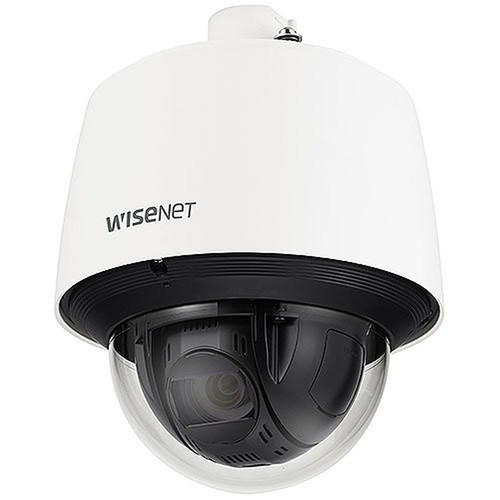
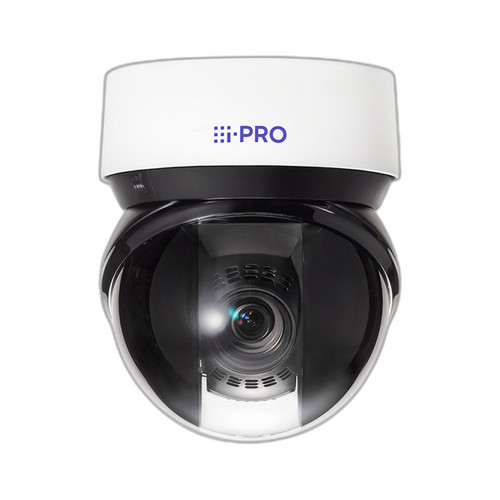
Both the Hanwha QNP-6320H and the i-PRO WV-X66300-Z3S are 2MP outdoor PTZ dome cameras designed for perimeter and wide-area surveillance, making them direct cross-shop candidates for integrators evaluating a 1080p motorized-zoom platform. The comparison covers imaging performance, environmental and power specifications, and VMS/analytics integration — the three pillars that typically drive PTZ camera selection in commercial and critical-infrastructure deployments.
In This Guide
How do the imaging specs compare?
Both cameras use an approximately 1/2.8-inch CMOS sensor delivering 1920×1080 at up to 60 fps. The optical zoom range is nearly identical: the QNP-6320H covers 4.44–142.6 mm (32×) while the X66300-Z3S covers 4.25–136 mm (32×, extendable to 48× at 1280×720). Maximum aperture is the same at F1.6 wide / F4.4 tele on both units. The QNP-6320H specifies minimum illumination at 0.05 lux (color) / 0.005 lux (B/W), whereas the X66300-Z3S specifies 0.006 lux (B/W, 50 IRE, F1.6, 1/30 s) — note the two figures use different measurement conditions, so direct numeric comparison is indicative rather than definitive.
Wide dynamic range differs meaningfully: the QNP-6320H is rated at 120 dB (WDR via SSDR), while the X66300-Z3S achieves a maximum of 144 dB (Super Dynamic, level 31). Both cameras include a built-in gyro sensor for digital image stabilization and both support optical auto-ICR day/night switching. DORI detection distances are comparable at tele: QNP-6320H 1,921 m / X66300-Z3S 1,833 m. The QNP-6320H lists no IR illuminator in its specs; the X66300-Z3S lists a 3.0 m IR range (minimum focus distance) and is tagged 'Built-in IR: Yes,' though no IR viewable distance is specified for either unit.
What about installation and environment?
Both cameras carry IP66 and IK10 ratings and are cleared for outdoor deployment. The QNP-6320H adds NEMA 4X certification; the X66300-Z3S also meets NEMA 4X (per its IP rating tag) and additionally lists NEMA-TS2 compliance relevant to traffic applications. Operating temperature ranges diverge: the QNP-6320H is rated −35 °C to +55 °C, while the X66300-Z3S is rated −50 °C to +60 °C — a meaningful advantage in extreme cold or heat installations. The X66300-Z3S also specifies wind resistance to 40 m/s (~89 mph), a spec absent from the QNP-6320H datasheet.
Power requirements differ significantly. The QNP-6320H draws a maximum of 23 W over PoE+ (IEEE 802.3at, Class 4). The X66300-Z3S requires PoE++ at 37.8 W (Class 6), demanding a switch or injector that supports 802.3bt — an infrastructure cost consideration. The QNP-6320H body is aluminum / polycarbonate at 2,700 g (5.95 lb), measuring ø204.3 × 265 mm. The X66300-Z3S is aluminum die-cast / polycarbonate dome, approximately 3 kg, measuring ø167 mm × 205 mm — a notably more compact footprint. The X66300-Z3S carries a stated 5-year warranty; the QNP-6320H warranty duration is not specified in the provided specs.
Which fits your VMS and analytics better?
Both cameras support ONVIF Profile S, G, T, and M, providing broad VMS compatibility. The QNP-6320H adds Wisenet open platform (SUNAPI / HTTP API) and NTCIP 1205 (traffic protocol). The X66300-Z3S adds MQTT and NTCIP support and is built on an Ambarella CV25m SoC. Analytics depth differs: the QNP-6320H provides directional detection, enter/exit, virtual line, tampering, and motion detection zones. The X66300-Z3S layer adds AI-classified object detection (face, people, vehicle, non-mask, occupancy) and AI sound classification (gunshot, yell, vehicle horn, glass break) — capabilities absent from the QNP-6320H spec sheet.
Audio hardware is present only on the X66300-Z3S, which includes a 3.5 mm stereo audio input and output plus half/full-duplex audio transmission using G.726, G.711, or AAC-LC; the QNP-6320H lists no built-in audio I/O (audio detection requires optional I/O box SPM-4210). Edge storage: the QNP-6320H accepts Micro SD/SDHC/SDXC up to 256 GB (1 slot); the X66300-Z3S accepts 4 GB–512 GB microSDXC/SDHC. Alarm terminals: the X66300-Z3S provides 3× physical alarm I/O terminals; the QNP-6320H lists none in its spec sheet. The QNP-6320H supports up to 20 unicast users across up to 10 streaming profiles; the X66300-Z3S supports up to 14 simultaneous users.
Which should you choose: the QNP-6320H or the X66300-Z3S?
Our take: The X66300-Z3S is the stronger choice when advanced AI analytics, native audio, physical alarm I/O, a wider operating temperature range, and a 5-year warranty are required. Its 144 dB Super Dynamic WDR versus the QNP-6320H's 120 dB, built-in audio I/O (vs. optional add-on accessory), and AI object/sound classification (face, people, vehicle, non-mask, gunshot) represent concrete functional advantages. Its operating range of −50 °C to +60 °C and 40 m/s wind resistance also outperform the QNP-6320H's −35 °C to +55 °C with no stated wind spec. However, the QNP-6320H's PoE+ (Class 4, 23 W max) vs. the X66300-Z3S's PoE++ (Class 6, 37.8 W) makes the Hanwha the easier drop-in on existing infrastructure. Choose the QNP-6320H where PoE++ switching is unavailable, budgets are tighter, or the Wisenet/SUNAPI ecosystem is already deployed.
Side-by-Side Comparison
Spec-for-spec, from manufacturer data.
| Specification | Hanwha QNP-6320H | i-PRO X66300-Z3S |
|---|---|---|
| Resolution | 1920×1080 (2MP) | 1920×1080 (2MP) |
| Image Sensor | 1/2.8" CMOS | Approx. 1/2.8" CMOS |
| Focal Length / Optical Zoom | 4.44–142.6 mm, 32× optical | 4.25–136 mm, 32× optical (up to 48× at 720p) |
| Max. Aperture | F1.6 (wide) – F4.4 (tele) | F1.6 (wide) – F4.4 (tele) |
| Min. Illumination | 0.05 lux color / 0.005 lux B/W | 0.006 lux B/W (50 IRE, F1.6, 1/30 s) |
| Wide Dynamic Range | 120 dB (SSDR) | Max. 144 dB (Super Dynamic, level 31) |
| Max. Frame Rate | 60 fps | 60 fps |
| IR Illumination Range | — | 3.0 m min. focus (built-in IR; no max range specified) |
| Video Compression | H.265, H.264 (Main/High), MJPEG | H.265, H.264, MJPEG |
| IP Rating | IP66, NEMA 4X | IP66, IK10, NEMA 4X, NEMA-TS2 |
| Impact Rating | IK10 | IK10 |
| Operating Temperature | −35 °C to +55 °C | −50 °C to +60 °C |
| Power Input / PoE Class | PoE+ IEEE 802.3at, Class 4, max 23 W | PoE++ 802.3bt, Class 6, 37.8 W |
| Edge Storage | Micro SD/SDHC/SDXC, 1 slot, max 256 GB | microSDHC 4–32 GB / microSDXC 64–512 GB |
| Audio | — (optional via SPM-4210 I/O box) | 3.5 mm stereo in + out; G.726, G.711, AAC-LC; full duplex |
| Alarm I/O Terminals | — | 3× alarm I/O terminals |
| ONVIF Profiles | S, G, T | G, M, S, T |
| AI / Edge Analytics | Directional, enter/exit, virtual line, tampering, motion | AI face, people, vehicle, non-mask, occupancy; AI sound classification |
| Dimensions | ø204.3 × 265 mm (ø8.04 × 10.43 in) | ø167 mm × 205 mm (ø6-9/16 × 8-1/16 in) |
| Weight | 2,700 g (5.95 lb) | Approx. 3,000 g (without attachment) |
| Warranty | — | 5 years |
Frequently Asked Questions
Which should you choose: the QNP-6320H or the X66300-Z3S?
The X66300-Z3S is the stronger choice when advanced AI analytics, native audio, physical alarm I/O, a wider operating temperature range, and a 5-year warranty are required. Its 144 dB Super Dynamic WDR versus the QNP-6320H's 120 dB, built-in audio I/O (vs. optional add-on accessory), and AI object/sound classification (face, people, vehicle, non-mask, gunshot) represent concrete functional advantages. Its operating range of −50 °C to +60 °C and 40 m/s wind resistance also outperform the QNP-6320H's −35 °C to +55 °C with no stated wind spec. However, the QNP-6320H's PoE+ (Class 4, 23 W max) vs. the X66300-Z3S's PoE++ (Class 6, 37.8 W) makes the Hanwha the easier drop-in on existing infrastructure. Choose the QNP-6320H where PoE++ switching is unavailable, budgets are tighter, or the Wisenet/SUNAPI ecosystem is already deployed.
Is the QNP-6320H or X66300-Z3S better for low-light performance?
Based on the provided specifications, the i-PRO X66300-Z3S lists a minimum illumination of 0.006 lux (B/W, 50 IRE, F1.6, 1/30 s). The Hanwha QNP-6320H lists 0.005 lux B/W, which is numerically lower, but the two figures are measured under different conditions (the i-PRO spec notes 50 IRE and a 1/30 s shutter; the Hanwha spec does not state those parameters), so a direct comparison is not reliable. Neither camera specifies a usable IR illuminator range, though the X66300-Z3S is tagged as having built-in IR with a 3.0 m minimum focus distance.
Can I power both cameras from my existing PoE switch?
Not necessarily. The Hanwha QNP-6320H requires PoE+ (IEEE 802.3at, Class 4, max 23 W), which is supported by most modern managed PoE switches. The i-PRO X66300-Z3S requires PoE++ (802.3bt, Class 6, 37.8 W), which demands a switch or midspan injector rated for 802.3bt. If your existing infrastructure only supports 802.3at, you would need to upgrade power sourcing equipment to deploy the X66300-Z3S.
Which camera offers better built-in analytics for detecting people and vehicles?
The i-PRO X66300-Z3S specifies AI-based detection for faces, people, vehicles, non-mask compliance, and occupancy, plus AI sound classification (gunshot, yell, vehicle horn, glass break) — all processed on the onboard Ambarella CV25m SoC. The Hanwha QNP-6320H's analytics cover directional detection, enter/exit, virtual line, tampering, and motion detection zones, but do not include object-class AI (face, person, vehicle) per the provided specifications. For deployments requiring AI-classified object detection without a separate server, the X66300-Z3S has the documented edge analytics advantage.
Get a Second Opinion on Your Camera Choice
Share your site layout, coverage goals, and budget. Our team will validate the camera selection, flag anything we would change, and recommend products that match the use case.