
Hanwha QNP-6320H vs i-PRO S66300-Z3: Specification Comparison
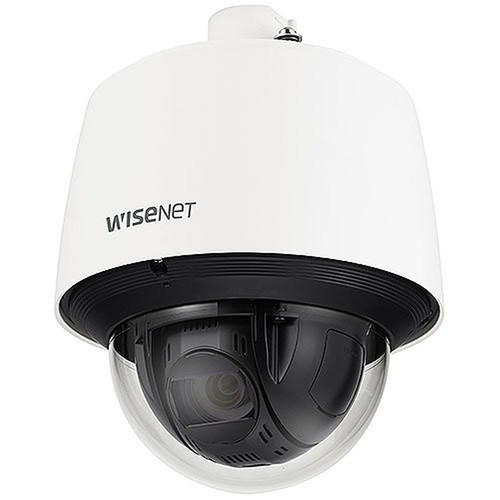
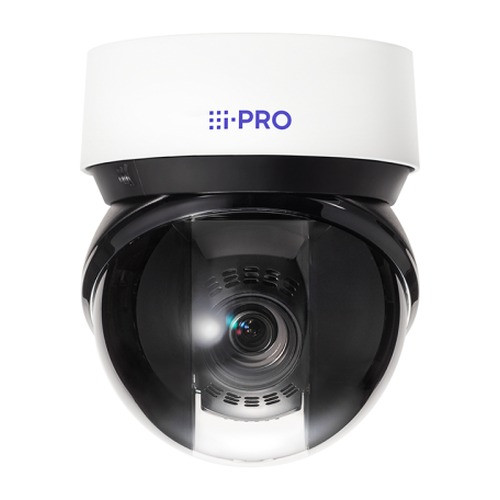
Both the Hanwha QNP-6320H and i-PRO WV-S66300-Z3 are 2MP outdoor PTZ dome cameras with 32x optical zoom, 60 fps capability, and IP66/IK10-rated enclosures designed for demanding outdoor surveillance. A buyer evaluating either unit is likely seeking a high-speed PTZ with long-range identification capability and network integration. This comparison examines how each camera's published specifications address imaging performance, installation requirements, and VMS/analytics integration — without declaring a universal winner.
In This Guide
How do the imaging specs compare?
Both cameras share a 1/2.8-inch CMOS sensor and 32x optical zoom, but their lenses and WDR figures diverge. The QNP-6320H covers a focal range of 4.44–142.6 mm with a 64.66°×38.08° field of view at wide end and a minimum illumination of 0.05 lux color / 0.005 lux B/W. The WV-S66300-Z3 uses a 4.25–136 mm lens with 65°×39° horizontal/vertical FOV, a minimum illumination of 0.006 lux (color figure per spec, compared to Hanwha's 0.05 lux color), and extends to a 48x extra zoom at 1280×720 resolution. The i-PRO unit specifies 144 dB WDR (Super Dynamic on, level 31), while the QNP-6320H specifies 120 dB WDR — a 24 dB advantage on paper for the i-PRO in high-contrast scenes.
For DORI performance at the tele end, the two cameras are close but not identical. The QNP-6320H identifies at 192.1 m tele versus the WV-S66300-Z3's 183.3 m tele — a slight edge to Hanwha at maximum zoom. At wide angle, detection ranges are essentially equivalent (60.7 m vs 60.3 m). Both feature built-in gyro-based image stabilization. The QNP-6320H specifies pan speeds up to 700°/s preset and 200°/s manual; the WV-S66300-Z3 specifies 700°/s preset but only 150°/s manual. Tilt preset speed is 300°/s (Hanwha) versus 500°/s (i-PRO), giving the i-PRO faster auto-positioning on the tilt axis.
What about installation and environment?
Both cameras carry IP66 and IK10 ratings. The QNP-6320H additionally holds NEMA 4X certification; the WV-S66300-Z3 specifies Type 4X (functionally equivalent) and adds a NEMA-TS2 certification relevant to traffic and transportation deployments. Operating temperature ranges differ meaningfully: the QNP-6320H is rated –35°C to +55°C, while the WV-S66300-Z3 is rated –50°C to +60°C — a broader range at both extremes. The i-PRO unit also specifies wind resistance up to 40 m/s (~89 mph), a spec absent from the Hanwha data sheet.
Power requirements differ significantly. The QNP-6320H draws PoE+ (IEEE 802.3at, Class 4), with a maximum of 23 W typical 14 W — compatible with most standard PoE+ switches. The WV-S66300-Z3 requires PoE++ (Class 6) at 37.8 W, meaning existing infrastructure must support 802.3bt to power it without a mid-span injector. The QNP-6320H is larger (ø204.3×265 mm, 2,700 g) compared to the WV-S66300-Z3 (ø167×205 mm, ~3,000 g). Hanwha publishes an extensive mounting accessory line (SBP-156HMW, SBP-156WMW, SBP-300PMW2, SBP-156LMW, SBP-156KMW, SBP-300NBW); i-PRO mounting accessories are not enumerated in the provided spec.
Which fits your VMS and analytics better?
Both cameras support ONVIF Profile S/G/T. The WV-S66300-Z3 adds ONVIF Profile M, which is specifically defined for metadata including AI analytics output — relevant if your VMS consumes standardized AI event streams. The i-PRO unit specifies a Ambarella CV25m SoC and includes AI analytics: AI Video Motion Detection, AI Face Detection, AI People Detection, AI Vehicle Detection, AI Non-Mask Detection, AI Occupancy Detection, and AI Scene Change Detection, plus AI Sound Classification (gunshot, yell, vehicle horn, glass break). The QNP-6320H provides directional detection, enter/exit, virtual line, and tampering analytics; audio detection is noted as available only via optional I/O box (SPM-4210) — not built-in.
Audio is built into the WV-S66300-Z3 with 4× audio inputs (3.5 mm stereo jack), 1 audio output, and support for G.726, G.711, and AAC-LC compression; alarm I/O includes 3 inputs and 1 output. The QNP-6320H lists no built-in audio input or output and no alarm I/O terminals in the provided specs — those functions require the optional SPM-4210 accessory. Edge storage is microSDXC on both cameras (up to 256 GB stated for the QNP-6320H; card type unspecified for the WV-S66300-Z3). Security posture differs: the WV-S66300-Z3 specifies FIPS 140-2 Level 3 compliance; the QNP-6320H specifies AES encryption, 802.1X, and digest authentication but does not cite FIPS 140-2. The i-PRO unit carries a stated 5-year warranty; no warranty term is specified in the Hanwha data provided.
Which should you choose: the QNP-6320H or the S66300-Z3?
Our take: The WV-S66300-Z3 is the stronger choice when the deployment demands broader AI analytics, native audio I/O, and a wider environmental operating range. Concretely: it delivers 144 dB WDR versus the QNP-6320H's 120 dB — a 24 dB advantage in high-contrast lighting; it operates down to –50°C versus –35°C, making it the only candidate for arctic or high-altitude sites; and it includes built-in 4-channel audio plus 3 alarm inputs and 1 output without any optional accessory, while the QNP-6320H requires the SPM-4210 add-on for audio and I/O. The QNP-6320H holds a meaningful infrastructure advantage: its PoE+ Class 4 (23 W max) runs on any 802.3at switch, whereas the WV-S66300-Z3 requires PoE++ Class 6 (37.8 W), which may necessitate infrastructure upgrades. Choose the QNP-6320H where existing PoE+ switching must be preserved and AI sound classification is not required.
Side-by-Side Comparison
Spec-for-spec, from manufacturer data.
| Specification | Hanwha QNP-6320H | i-PRO S66300-Z3 |
|---|---|---|
| Resolution | 1920×1080 (2MP) | 1920×1080 (2MP) |
| Image Sensor | 1/2.8" CMOS | Approx. 1/2.8" CMOS |
| Optical Zoom / Focal Length | 32x / 4.44–142.6 mm | 32x (48x extra zoom) / 4.25–136 mm |
| Min. Illumination (Color) | 0.05 lux | 0.006 lux |
| Min. Illumination (B/W) | 0.005 lux | Not specified |
| Wide Dynamic Range | 120 dB | 144 dB (Super Dynamic on, level 31) |
| Max Frame Rate | 60 fps | 60 fps |
| Pan Speed (Preset / Manual) | 700°/s preset / 200°/s manual | 700°/s preset / 150°/s manual |
| Tilt Speed (Preset / Manual) | 300°/s preset / 200°/s manual | 500°/s preset / 150°/s manual |
| IP Rating | IP66 / NEMA 4X | IP66 / Type 4X / NEMA-TS2 |
| Vandal / Impact Rating | IK10 | IK10 |
| Operating Temperature | –35°C to +55°C | –50°C to +60°C |
| Power Input / PoE Class | PoE+ / 802.3at Class 4 / 23 W max | PoE++ / 802.3bt Class 6 / 37.8 W |
| Audio (Built-in) | — | 4× audio in, 1× audio out |
| Alarm I/O (Built-in) | — | 3 inputs, 1 output |
| AI Analytics | Directional, Enter/Exit, Virtual Line, Tampering | AI Motion, Face, People, Vehicle, Non-Mask, Occupancy, SCD; AI Sound Classification |
| ONVIF Profiles | S / G / T | G / M / S / T |
| Edge Storage | microSD/SDHC/SDXC up to 256 GB | microSDXC (capacity not specified in provided data) |
| Dimensions (H×D) | ø204.3×265 mm / 2,700 g | ø167×205 mm / ~3,000 g |
| Warranty | Not specified | 5 years |
Frequently Asked Questions
Which should you choose: the QNP-6320H or the S66300-Z3?
The WV-S66300-Z3 is the stronger choice when the deployment demands broader AI analytics, native audio I/O, and a wider environmental operating range. Concretely: it delivers 144 dB WDR versus the QNP-6320H's 120 dB — a 24 dB advantage in high-contrast lighting; it operates down to –50°C versus –35°C, making it the only candidate for arctic or high-altitude sites; and it includes built-in 4-channel audio plus 3 alarm inputs and 1 output without any optional accessory, while the QNP-6320H requires the SPM-4210 add-on for audio and I/O. The QNP-6320H holds a meaningful infrastructure advantage: its PoE+ Class 4 (23 W max) runs on any 802.3at switch, whereas the WV-S66300-Z3 requires PoE++ Class 6 (37.8 W), which may necessitate infrastructure upgrades. Choose the QNP-6320H where existing PoE+ switching must be preserved and AI sound classification is not required.
Is the QNP-6320H or WV-S66300-Z3 better for low-light performance?
Based on published specs, the WV-S66300-Z3 specifies a minimum illumination of 0.006 lux (color) and 144 dB WDR (Super Dynamic on, level 31). The QNP-6320H specifies 0.05 lux color / 0.005 lux B/W and 120 dB WDR. The i-PRO unit has a measurable advantage in color low-light sensitivity and dynamic range on paper; the Hanwha unit's B/W sensitivity of 0.005 lux is comparable, but direct B/W specs are not published for the WV-S66300-Z3 in the provided data.
Can I power either camera from a standard PoE+ switch?
Only the QNP-6320H supports standard PoE+ (IEEE 802.3at, Class 4, max 23 W) and will run on any compliant PoE+ switch. The WV-S66300-Z3 requires PoE++ (802.3bt, Class 6, 37.8 W). If your existing switches deliver only PoE+, you would need a PoE++ mid-span injector or switch upgrade to deploy the i-PRO unit.
Which camera includes built-in audio and alarm I/O without extra accessories?
The WV-S66300-Z3 includes 4 audio inputs, 1 audio output, and 4 alarm terminals (3 in, 1 out) as standard. The QNP-6320H does not list built-in audio input/output or alarm I/O terminals in its published specs — audio detection and alarm output are noted as requiring the optional SPM-4210 I/O box.
Get a Second Opinion on Your Camera Choice
Share your site layout, coverage goals, and budget. Our team will validate the camera selection, flag anything we would change, and recommend products that match the use case.