
Hanwha QNP-6320H vs Hanwha XNV-6083R: Specification Comparison
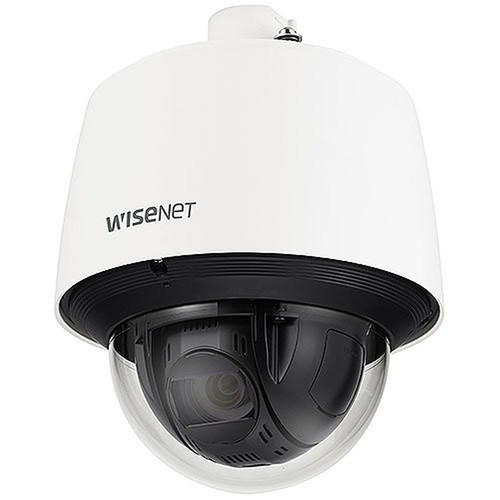
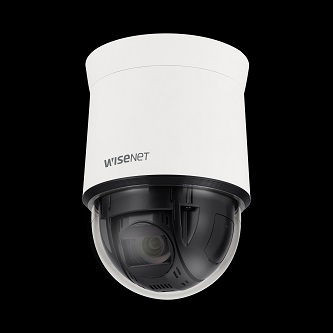
Both the Hanwha QNP-6320H and XNV-6083R are 2MP outdoor PTZ dome cameras sharing the same 1/2.8" CMOS sensor, 32× optical zoom lens, and PoE+ power delivery. This comparison addresses the substantive differences a systems integrator should weigh: environmental protection, power budget, built-in audio and I/O, operating temperature range, physical construction, and mounting ecosystem—areas where the two models diverge despite their near-identical optical and streaming specifications.
In This Guide
How do the imaging specs compare?
Both cameras share an identical optical foundation: 1/2.8" CMOS sensor, 1920×1080 resolution at up to 60fps, a 4.44–142.6mm (32×) optical zoom lens with F1.6 (Wide) / F4.4 (Tele) aperture, and matching angular field of view (H: 64.66°, V: 38.08°). Minimum illumination is identical at 0.05 Lux color and 0.005 Lux B/W, and both deliver 120dB Wide Dynamic Range with BLC, HLC, WDR, and SSDR backlight compensation modes. DNR (SSNR V), Defog, digital image stabilization via built-in gyro, and Auto(ICR) Day/Night switching are present on both units.
PTZ performance specs—preset pan speed of 700°/sec, manual pan 0.024°–200°/sec, preset tilt speed 300°/sec, ±0.2° preset accuracy, and 360° endless pan—are identical. The QNP-6320H specifies its tilt range as 0°–105°; the XNV-6083R specifies 90°–(−15°), which represents the same 105° arc described from a different reference frame. DORI detection distances are identical across both models at all four density levels (Wide detect: 60.7m; Tele detect: 1921.3m). Neither product lists a dedicated IR illuminator distance in the provided specifications for the QNP-6320H; the XNV-6083R spec sheet lists IR Distance as 1.5m—an unusually short figure that may reflect a supplemental illuminator spec rather than a primary IR range. Installers should verify IR capability directly with Hanwha documentation before deployment in low-light environments.
What about installation and environment?
The QNP-6320H carries IP66, IK10, and NEMA 4X ratings with an aluminum body, making it suitable for environments requiring impact resistance and wash-down protection. Its operating temperature spans −35°C to +55°C, giving it a meaningful cold-climate advantage. The XNV-6083R is rated IP67 (submersion-rated) with IK rating not explicitly stated in the provided specs, and its plastic body has a narrower operating range of −10°C to +55°C. Storage temperature also differs: QNP-6320H is rated to −50°C storage; XNV-6083R to −30°C. For installations in freezing climates or high-impact environments, these distinctions are material.
Both cameras are powered by PoE+ (IEEE 802.3at, Class 4). However, maximum power draw differs significantly: the QNP-6320H draws up to 23W (typical 14W), while the XNV-6083R draws up to 14.5W (typical 12W)—a nearly 60% higher peak demand on the QNP-6320H that must be factored into switch port budgeting. Dimensions and weight also differ: the QNP-6320H is ø204.3×265mm at 2,700g (5.95 lb) versus the XNV-6083R at ø152×218mm at 1,700g (3.75 lb). The QNP-6320H Ethernet connector is specified as a metal-shielded RJ-45; the XNV-6083R uses a standard RJ-45. Mounting accessories overlap partially (both support SBP-300PMW2, SBP-300KMW1, SBP-300LMW, SBP-300NBW) but differ in other brackets, so installation planning must use model-specific mount lists.
Which fits your VMS and analytics better?
Both cameras support ONVIF Profile S/G/T, SUNAPI (HTTP API), and Wisenet open platform, and both implement identical security features: Digest Authentication, brute-force prevention, 802.1X (EAP-TLS/LEAP/PEAP MSCHAPv2), HTTPS/SRTP/WSS, IP address filtering, AES encryption, ZIP compression, audit logging, and a pre-installed Hanwha Techwin Device Certificate. Streaming is identical: Unicast (20 users), Multicast, up to 10 profiles, H.265/H.264 (Main/High) and MJPEG, CBR/VBR bitrate control, WiseStream II smart codec, and the same protocol stack including NTCIP1205. Edge storage is 1-slot Micro SD/SDHC/SDXC up to 256GB on both. RAM and flash (1GB / 256MB) are also identical.
The most significant integration differentiator is audio and alarm I/O. The XNV-6083R includes a built-in audio input (selectable mic/line-in, 2.5VDC supply, 2K Ohm impedance) and audio output (line out, max 1Vrms), with G.711 µ-law, G.726 (ADPCM) 8KHz audio compression. It also has 4 alarm inputs and 2 alarm outputs on-board. The QNP-6320H lists no audio input, no audio output, and no alarm I/O in its provided specifications; the spec notes that audio detection requires an optional external I/O box (SPM-4210), and alarm output is listed as conditional on that accessory. For deployments requiring on-board audio, intercom integration, or direct relay triggering, the XNV-6083R eliminates the need for additional hardware.
Which should you choose: the QNP-6320H or the XNV-6083R?
Our take: The QNP-6320H is the stronger choice when the deployment demands low-temperature operation, high-impact resistance, or industrial-grade enclosure standards. It operates down to −35°C versus the XNV-6083R's −10°C lower limit—a 25°C gap that is decisive in cold-climate or unheated outdoor installations. Its aluminum body with IK10 and NEMA 4X ratings also exceeds the XNV-6083R's plastic housing where vandal or wash-down exposure is severe. Conversely, the XNV-6083R is the stronger choice when on-board audio and alarm I/O are required without additional hardware: it includes 4 alarm inputs, 2 alarm outputs, and full bidirectional audio natively, while the QNP-6320H requires an optional SPM-4210 I/O box for equivalent functionality. The XNV-6083R also draws up to 14.5W peak versus 23W for the QNP-6320H, easing PoE switch budget constraints in high-camera-count deployments. Both cameras are appropriate for ONVIF-compliant VMS platforms; the choice ultimately hinges on installation environment and I/O requirements.
Side-by-Side Comparison
Spec-for-spec, from manufacturer data.
| Specification | Hanwha QNP-6320H | Hanwha XNV-6083R |
|---|---|---|
| Resolution | 1920×1080 (2MP) | 1920×1080 (2MP) |
| Image Sensor | 1/2.8" CMOS | 1/2.8" CMOS |
| Focal Length / Zoom | 4.44–142.6mm, 32× optical, 32× digital (1024× total) | 4.44–142.6mm, 32× optical, 32× digital (1024× total) |
| Min. Illumination | 0.05 Lux color / 0.005 Lux B/W | 0.05 Lux color / 0.005 Lux B/W |
| Wide Dynamic Range | 120dB | 120dB |
| Max Frame Rate | 60fps | 60fps |
| Video Compression | H.265 / H.264 (Main/High) / MJPEG | H.265 / H.264 (Main/High) / MJPEG |
| IP Rating | IP66 | IP67 |
| IK / Impact Rating | IK10 | Not stated in provided specs |
| Additional Enclosure Rating | NEMA 4X | — |
| Body Material | Aluminum (body) / Polycarbonate (head) | Plastic |
| Operating Temperature | −35°C to +55°C | −10°C to +55°C |
| Power Input / PoE Class | PoE+ (802.3at), Class 4; max 23W, typical 14W | PoE+ (802.3at), Class 4; max 14.5W, typical 12W |
| Audio | None (requires optional SPM-4210 I/O box) | Mic/line-in + line out; G.711/G.726 compression |
| Alarm I/O | None listed (requires optional I/O box) | 4 inputs / 2 outputs |
| Edge Storage | Micro SD/SDHC/SDXC, 1 slot, max 256GB | Micro SD/SDHC/SDXC, 1 slot, max 256GB |
| Dimensions / Weight | ø204.3×265mm / 2,700g (5.95 lb) | ø152×218mm / 1,700g (3.75 lb) |
| Warranty | Not stated in provided specs | 3 years |
Frequently Asked Questions
Which should you choose: the QNP-6320H or the XNV-6083R?
The QNP-6320H is the stronger choice when the deployment demands low-temperature operation, high-impact resistance, or industrial-grade enclosure standards. It operates down to −35°C versus the XNV-6083R's −10°C lower limit—a 25°C gap that is decisive in cold-climate or unheated outdoor installations. Its aluminum body with IK10 and NEMA 4X ratings also exceeds the XNV-6083R's plastic housing where vandal or wash-down exposure is severe. Conversely, the XNV-6083R is the stronger choice when on-board audio and alarm I/O are required without additional hardware: it includes 4 alarm inputs, 2 alarm outputs, and full bidirectional audio natively, while the QNP-6320H requires an optional SPM-4210 I/O box for equivalent functionality. The XNV-6083R also draws up to 14.5W peak versus 23W for the QNP-6320H, easing PoE switch budget constraints in high-camera-count deployments. Both cameras are appropriate for ONVIF-compliant VMS platforms; the choice ultimately hinges on installation environment and I/O requirements.
Is the QNP-6320H or XNV-6083R better for cold-weather outdoor installations?
The QNP-6320H is rated to operate from −35°C to +55°C, compared to the XNV-6083R's −10°C to +55°C range. For installations in cold climates—parking structures, loading docks, or northern outdoor sites—the QNP-6320H's 25°C lower operating threshold is a concrete advantage based on the provided specifications.
Which camera includes built-in audio and alarm I/O without extra accessories?
The XNV-6083R includes native audio input (selectable mic/line-in), audio output (line out, 1Vrms max), 4 alarm inputs, and 2 alarm outputs on-board. The QNP-6320H does not list audio input, audio output, or alarm I/O in its provided specifications; audio detection on that model requires the optional SPM-4210 I/O box accessory.
Do both cameras require the same PoE switch port capacity?
No. Both use PoE+ (802.3at, Class 4), but their maximum draw differs. The QNP-6320H draws up to 23W peak (typical 14W), while the XNV-6083R draws up to 14.5W peak (typical 12W). In deployments with many cameras on a single switch, the QNP-6320H's higher peak draw must be factored into per-port and total switch power budgets.
Get a Second Opinion on Your Camera Choice
Share your site layout, coverage goals, and budget. Our team will validate the camera selection, flag anything we would change, and recommend products that match the use case.