
Axis Q1972-E vs Hanwha C3050T: Specification Comparison
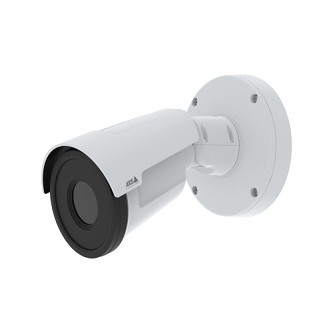
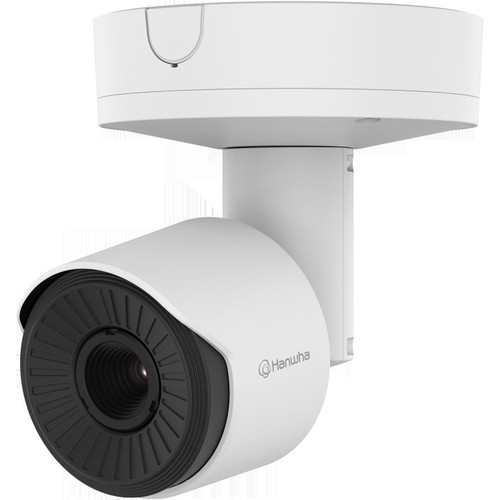
Both the Axis Q1972-E (SKU 03029-001) and the Hanwha TNO-C3050T are fixed-lens, uncooled microbolometer thermal bullet cameras operating in the VGA resolution class, making them legitimate cross-shop candidates for perimeter security and heat-based intrusion detection. This comparison evaluates their imaging specifications, installation and environmental ratings, and platform integration capabilities based solely on the published specifications for each model.
In This Guide
How do the imaging specs compare?
The Axis Q1972-E is specified at a fixed 640×480 (VGA) thermal resolution using an uncooled microbolometer sensitive in the 8–14 μm spectrum, with a thermal sensitivity of less than 20 mK at 25°C. Its fixed athermalized 19mm F1.0 lens delivers a 31° horizontal × 24° vertical field of view, and the camera supports dual frame-rate modes of 30 fps and 8.3 fps. An integrated IR illuminator is listed at 2.8m range, and image stabilization is specified. The Q1972-E also lists Day/Night capability and built-in night vision.
The Hanwha TNO-C3050T is specified as supporting both VGA and QVGA thermal resolutions via an uncooled microbolometer sensor, offering operational flexibility to drop to QVGA when bandwidth or storage is constrained. However, the provided specifications do not disclose lens focal length, field of view, thermal sensitivity (NETD), frame rate, IR illuminator range, or image stabilization status for the TNO-C3050T. These omissions prevent a direct numerical comparison on several key imaging parameters.
What about installation and environment?
The Axis Q1972-E carries an IP66 weatherproof rating and an IK10 impact resistance rating, is specified as outdoor-ready, and is powered via PoE+ (IEEE 802.3at, PoE Class 3). Mounting options include wall, ceiling, and pendant configurations. No operating temperature range is listed in the provided specifications for the Q1972-E.
The Hanwha TNO-C3050T carries dual IP66/IP67 ratings, offering slightly broader ingress protection than the Q1972-E's single IP66 rating. Power options include both PoE 802.3af and 12V DC, providing more flexibility on job sites where PoE+ infrastructure may not be available. The TNO-C3050T specifies an operating temperature range of -40°C to +55°C (-40°F to +131°F), a figure absent from the Q1972-E's provided specs. IK impact rating and specific mounting configurations are not listed for the TNO-C3050T.
Which fits your VMS and analytics better?
The Axis Q1972-E specifies ONVIF compatibility, H.265 and H.264 video compression with MJPEG also listed, edge analytics including VMD (Video Motion Detection) and Axis Perimeter Defender, microSD on-board storage, audio input, signed firmware, secure boot, and HTTPS encryption. Up to 20 simultaneous streams are specified.
The Hanwha TNO-C3050T specifies ONVIF Profile S/G/T compliance, H.265/H.264 compression plus Hanwha's proprietary WiseStream II bandwidth-reduction codec, and edge video analytics including long-range object detection and fire detection. VMS integration is explicitly listed for Wisenet WAVE and SSM platforms. The Wisenet 5 SoC chipset is identified. On-board storage, audio support, cybersecurity features (signed firmware, secure boot), and stream count are not specified in the provided data. The camera is listed as NDAA compliant.
Which should you choose: the Q1972-E or the C3050T?
Our take: The Q1972-E is the stronger choice when precise thermal imaging performance, cybersecurity posture, and Axis ecosystem integration are the primary requirements. Specifically: the Q1972-E publishes a thermal sensitivity of <20 mK at 25°C while the TNO-C3050T discloses no NETD figure; the Q1972-E lists IK10 impact resistance while IK rating is absent for the TNO-C3050T; and the Q1972-E includes microSD edge storage and audio input while neither is confirmed for the TNO-C3050T. Conversely, the TNO-C3050T holds an advantage on power flexibility (PoE 802.3af or 12V DC vs. PoE+ only), publishes a verified operating temperature range (-40°C to +55°C), carries IP66/IP67 dual ingress ratings, adds fire detection analytics, and is NDAA compliant — a requirement in many government and education deployments. Buyers already standardized on Wisenet WAVE/SSM VMS will favor the TNO-C3050T; those on Axis-native or open-ONVIF platforms with hardened cybersecurity requirements will favor the Q1972-E.
Side-by-Side Comparison
Spec-for-spec, from manufacturer data.
| Specification | Axis Q1972-E | Hanwha C3050T |
|---|---|---|
| Resolution | 640×480 (VGA) | VGA / QVGA (selectable) |
| Sensor Type | Uncooled microbolometer | Uncooled microbolometer |
| Spectral Range | 8–14 μm | — |
| Thermal Sensitivity (NETD) | <20 mK @ 25°C | — |
| Lens / Focal Length | 19mm F1.0 fixed, athermalized | — |
| Field of View | 31° H × 24° V | — |
| Max Frame Rate | 30 fps / 8.3 fps (dual modes) | — |
| Video Compression | H.265 / H.264 / MJPEG | H.265 / H.264 / WiseStream II |
| IP Rating | IP66 | IP66 / IP67 |
| IK / Impact Rating | IK10 | — |
| Operating Temperature | — | -40°C to +55°C |
| Power Input | PoE+ (802.3at, Class 3) | PoE 802.3af / 12V DC |
| Edge Storage | microSD | — |
| Audio | Audio input | — |
| Analytics | VMD; Perimeter Defender | Edge Video Analytics; Object Detection; Fire Detection |
| ONVIF | Yes | Profile S / G / T |
| NDAA Compliant | — | Yes |
| Warranty | 5 Year(s) | — |
Frequently Asked Questions
Which should you choose: the Q1972-E or the C3050T?
The Q1972-E is the stronger choice when precise thermal imaging performance, cybersecurity posture, and Axis ecosystem integration are the primary requirements. Specifically: the Q1972-E publishes a thermal sensitivity of <20 mK at 25°C while the TNO-C3050T discloses no NETD figure; the Q1972-E lists IK10 impact resistance while IK rating is absent for the TNO-C3050T; and the Q1972-E includes microSD edge storage and audio input while neither is confirmed for the TNO-C3050T. Conversely, the TNO-C3050T holds an advantage on power flexibility (PoE 802.3af or 12V DC vs. PoE+ only), publishes a verified operating temperature range (-40°C to +55°C), carries IP66/IP67 dual ingress ratings, adds fire detection analytics, and is NDAA compliant — a requirement in many government and education deployments. Buyers already standardized on Wisenet WAVE/SSM VMS will favor the TNO-C3050T; those on Axis-native or open-ONVIF platforms with hardened cybersecurity requirements will favor the Q1972-E.
Is the Q1972-E or TNO-C3050T better for cold-climate outdoor installs?
Only the Hanwha TNO-C3050T publishes an operating temperature range in the provided specifications: -40°C to +55°C (-40°F to +131°F). The Axis Q1972-E does not disclose an operating temperature range in the available spec data, so a direct cold-climate comparison cannot be made from specifications alone. Consult the Axis Q1972-E datasheet for its rated temperature range before specifying for extreme-cold environments.
Can either camera run without a PoE+ switch?
The Hanwha TNO-C3050T supports standard PoE 802.3af as well as 12V DC, so it does not require a PoE+ switch. The Axis Q1972-E is specified as PoE+ (IEEE 802.3at, Class 3), meaning it requires a PoE+ capable switch or injector; a standard PoE 802.3af port will not provide sufficient power.
Which camera is better suited for government or federally-funded projects?
The Hanwha TNO-C3050T is explicitly listed as NDAA compliant in its provided specifications. No NDAA compliance claim appears in the Axis Q1972-E's provided specification data. Buyers subject to NDAA Section 889 requirements should verify the Q1972-E's current NDAA status directly with Axis before specifying it for covered projects.
Get a Second Opinion on Your Camera Choice
Share your site layout, coverage goals, and budget. Our team will validate the camera selection, flag anything we would change, and recommend products that match the use case.