
Axis Q1728-LE vs Hanwha XNB-9002: Specification Comparison
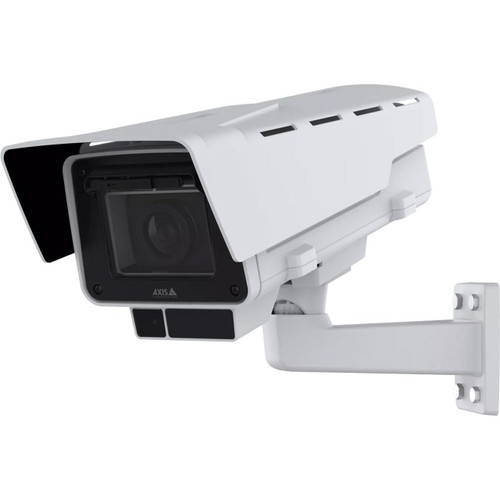
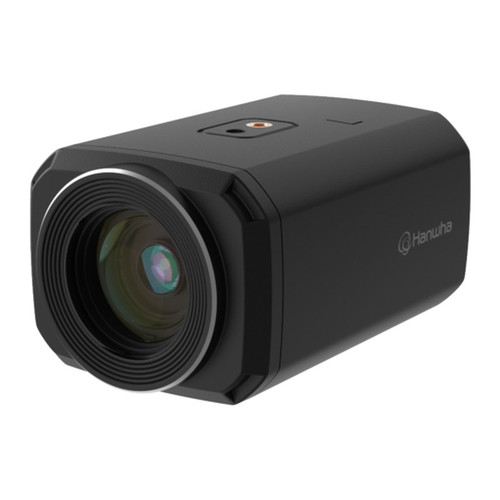
The Axis Q1728-LE and Hanwha XNB-9002 are both 8MP outdoor-capable box cameras designed for fixed-scene surveillance, positioned for installers who need a lens-interchangeable platform with network video integration. The comparison covers imaging performance, environmental and power specifications, and VMS/analytics integration depth. Both support ONVIF and H.265/H.264 compression and carry microSD edge storage. Key differentiators include operating temperature range, PoE class, warranty duration, on-board analytics depth, and WDR specification.
In This Guide
How do the imaging specs compare?
Both cameras deliver 8MP resolution, but the Hanwha XNB-9002 specifies a native 3840×2160 output at 30fps using a 1/2.8-inch progressive CMOS sensor, with a minimum illumination of 0.05 lux in color and 0.005 lux in B/W. Its extremeWDR is rated at 120dB. The Axis Q1728-LE lists 8MP resolution and WDR (labeled 'Forensic WDR') but does not provide a lux rating, sensor size, or a dB figure for WDR in the supplied specifications.
For lens flexibility, the XNB-9002 supports DC auto iris, P-iris, manual, and I-CS mount types (C and CS mount), giving integrators broad lens choice. The Q1728-LE is specified with a varifocal lens and includes image stabilization (electronic/mechanical not specified in the data). The XNB-9002 also includes a built-in gyro sensor for digital image stabilization. IR range on the Q1728-LE is listed at 0.5m — an unusually short figure likely indicating a supplemental or probe-dependent illuminator rather than a standalone IR module; the XNB-9002 lists IR night vision but no numeric range in the provided specs.
What about installation and environment?
The Axis Q1728-LE carries an IP66 and NEMA 4X environmental rating and is explicitly designated outdoor-ready, with an operating temperature range of -40°C to +60°C. No IK impact rating is specified. It draws power via PoE+ (IEEE 802.3af/at) at Class 4. The Hanwha XNB-9002 does not list an IP ingress rating in the provided specifications, operates from -10°C to +55°C, and accepts PoE (IEEE 802.3af, Class 3), 12VDC, or 24VAC — offering more power-input flexibility. Maximum power draw for the XNB-9002 is stated as 12.95W.
The Q1728-LE's -40°C lower threshold gives it a meaningful cold-weather advantage over the XNB-9002's -10°C floor, a difference of 30°C relevant for unheated enclosures in northern climates. The XNB-9002 weighs 880g (1.94 lb) with dimensions of 81×67×165mm; comparable physical dimensions are not provided for the Q1728-LE. Neither product lists an IK rating in the supplied data. The XNB-9002 includes RS-485 serial interface and two configurable alarm I/O ports, which are not listed for the Q1728-LE.
Which fits your VMS and analytics better?
Both cameras support ONVIF. The Q1728-LE is specified for ONVIF Profile S and T; the XNB-9002 supports ONVIF Profile S, G, and T, plus Hanwha's SUNAPI (HTTP API) and the Wisenet open platform for third-party app deployment. The XNB-9002 includes an extensive on-board analytics suite: defocus detection, directional detection, digital auto tracking, appear/disappear, enter/exit, loitering, tampering, fog detection, virtual line, audio detection, sound classification, shock detection, face/upper body detection, people counting, queue management, and heatmap. The Q1728-LE does not list on-board analytics in the provided specifications.
Edge storage on the Q1728-LE is microSD (single slot, capacity not specified). The XNB-9002 provides dual microSD/SDHC/SDXC slots supporting up to 1TB total (512GB × 2) and 4GB RAM with 512MB flash. Audio: the XNB-9002 includes selectable mic/line audio input with built-in mic, line audio output, and G.711/G.726 compression. The Q1728-LE does not list audio I/O in the provided specifications. The XNB-9002's protocol stack includes SNMPv1/v2c/v3, MQTT, SRTP, 802.1X (EAP-TLS, EAP-LEAP, EAP-PEAP), and device certificate pre-installation. The Q1728-LE lists HTTPS, secure boot, and signed firmware; further cybersecurity protocol detail is not provided in the supplied specifications.
Which should you choose: the Q1728-LE or the XNB-9002?
Our take: The XNB-9002 is the stronger choice when deep on-board analytics, dual-slot edge storage, multi-protocol security, and audio I/O are required at the camera level. Hanwha specifies extremeWDR at 120dB, a minimum illumination of 0.005 lux in B/W, dual microSD slots up to 1TB, and an analytics library covering 14+ event types including face/upper body detection and business intelligence functions — none of which are listed for the Q1728-LE in the provided data. The Q1728-LE holds a clear advantage in environmental hardness: its IP66/NEMA 4X rating and -40°C operating floor versus the XNB-9002's unspecified IP rating and -10°C floor make it the appropriate choice for exposed outdoor industrial installations in harsh or cold climates. The Q1728-LE also carries a 5-year warranty versus the XNB-9002's 3-year warranty. Choose the Q1728-LE for rugged outdoor deployments on Axis VMS; choose the XNB-9002 where analytics depth, audio, and storage redundancy matter more than environmental rating.
Side-by-Side Comparison
Spec-for-spec, from manufacturer data.
| Specification | Axis Q1728-LE | Hanwha XNB-9002 |
|---|---|---|
| Resolution | 8MP | 3840×2160 (8MP) |
| Max Frame Rate | Not specified | 30fps @ 8MP |
| Image Sensor | Not specified | 1/2.8" progressive CMOS |
| Min. Illumination | Not specified | 0.05 lux color / 0.005 lux B/W |
| WDR | WDR (Forensic WDR; dB not specified) | extremeWDR 120dB |
| IR Night Vision | Built-in IR; 850nm; 0.5m range | Yes (range not specified) |
| Lens Type | Varifocal | DC auto iris, P-iris, Manual, I-CS (C/CS mount) |
| Image Stabilization | Yes | Yes (built-in gyro sensor) |
| Video Compression | H.265, H.264, MJPEG | H.265, H.264, MJPEG |
| IP / Environmental Rating | IP66 / NEMA 4X | Not specified |
| Operating Temperature | -40°C to +60°C | -10°C to +55°C |
| Power Input / PoE Class | PoE+ Class 4 | PoE Class 3 / 12VDC / 24VAC; max 12.95W |
| ONVIF Profiles | Profile S, T | Profile S, G, T |
| Edge Storage | microSD (capacity not specified) | Dual microSD/SDHC/SDXC; max 1TB (512GB×2) |
| Audio I/O | Not specified | Mic/line in (built-in mic); line out |
| On-Board Analytics | Not specified | 14+ types incl. face detection, loitering, people counting, heatmap |
| Alarm I/O | Not specified | 2 configurable I/O ports |
| Warranty | 5 years | 3 years |
Frequently Asked Questions
Which should you choose: the Q1728-LE or the XNB-9002?
The XNB-9002 is the stronger choice when deep on-board analytics, dual-slot edge storage, multi-protocol security, and audio I/O are required at the camera level. Hanwha specifies extremeWDR at 120dB, a minimum illumination of 0.005 lux in B/W, dual microSD slots up to 1TB, and an analytics library covering 14+ event types including face/upper body detection and business intelligence functions — none of which are listed for the Q1728-LE in the provided data. The Q1728-LE holds a clear advantage in environmental hardness: its IP66/NEMA 4X rating and -40°C operating floor versus the XNB-9002's unspecified IP rating and -10°C floor make it the appropriate choice for exposed outdoor industrial installations in harsh or cold climates. The Q1728-LE also carries a 5-year warranty versus the XNB-9002's 3-year warranty. Choose the Q1728-LE for rugged outdoor deployments on Axis VMS; choose the XNB-9002 where analytics depth, audio, and storage redundancy matter more than environmental rating.
Is the Q1728-LE or XNB-9002 better for low-light performance?
Based on the provided specs, the XNB-9002 has a documented minimum illumination of 0.05 lux in color and 0.005 lux in B/W, plus extremeWDR rated at 120dB. The Q1728-LE lists built-in IR and day/night capability but does not specify a lux rating or a dB figure for its WDR in the supplied data, so a direct low-light number comparison cannot be made.
Which camera is better suited for cold outdoor environments?
The Q1728-LE is specified to operate from -40°C to +60°C and carries an IP66/NEMA 4X ingress rating, making it explicitly designed for exposed outdoor and industrial use in extreme cold. The XNB-9002 is rated from -10°C to +55°C and does not list an IP rating in the provided specifications, so it is less suitable for harsh or sub-freezing outdoor installations without an additional enclosure.
Does either camera support on-board video analytics without a separate server?
Yes — the XNB-9002 lists an extensive built-in analytics suite including loitering detection, directional detection, enter/exit, face/upper body detection, people counting, queue management, and heatmap, all running at the camera edge. The Q1728-LE does not list on-board analytics capabilities in the provided specifications.
Get a Second Opinion on Your Camera Choice
Share your site layout, coverage goals, and budget. Our team will validate the camera selection, flag anything we would change, and recommend products that match the use case.