
Axis Q1728-LE vs Geovision BX8700V-3D010: Specification Comparison
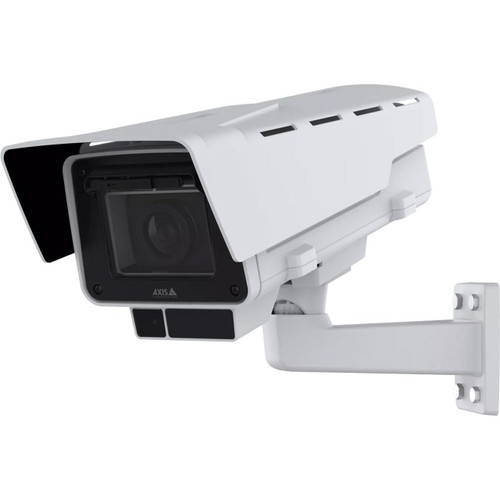
Both the Axis Q1728-LE and the Geovision BX8700V-3D010 are 8MP outdoor-capable fixed box cameras targeting commercial and industrial installations where a varifocal or CS-mount lens is swapped in by the integrator. This comparison covers imaging performance, environmental and power ratings, and VMS/analytics integration — the three decision axes that most frequently separate these two platforms during bid evaluation. Neither unit is a PTZ; both share the same resolution class, making them genuine cross-shop candidates.

In This Guide
How do the imaging specs compare?
The Axis Q1728-LE is specified at 8MP with a varifocal lens, built-in IR illumination at 850 nm with a stated range of 0.5 m, Wide Dynamic Range (WDR — Axis labels this Forensic WDR in marketing, though the spec sheet submitted here lists it simply as WDR), day/night functionality, and electronic image stabilization. Compression support covers H.265, H.264, and MJPEG. The Geovision BX8700V-3D010 is also specified at 8MP with WDR and H.265/H.264 compression. However, the Geovision spec set provided does not list a lens type, minimum illumination value, IR illumination range, or image stabilization capability, so a direct numerical low-light comparison cannot be made from the data on hand.
On the imaging features that are documented, the Q1728-LE holds a clear informational advantage: it carries a confirmed varifocal lens, a concrete IR range (0.5 m — short, suggesting this unit is primarily intended to be paired with an external illuminator in true long-range outdoor use), and image stabilization. The BX8700V-3D010 adds face detection analytics at the edge, which the Q1728-LE spec sheet does not mention. Buyers prioritising documented low-light or IR reach should note that the Geovision unit's IR and illumination specs are absent from the provided data.
What about installation and environment?
The Axis Q1728-LE carries an IP66 and NEMA 4X environmental rating, confirming protection against powerful water jets and corrosive atmospheres — suitable for industrial washdown or coastal deployments. Its operating temperature range is specified at -40 °C to +60 °C, covering extreme cold climates without an external heater. Power input is PoE+ (IEEE 802.3at, Class 4), which requires a Class 4-capable switch or midspan. The form factor is a box camera with pendant mounting noted; mounting flexibility otherwise depends on the lens/housing accessories selected.
The Geovision BX8700V-3D010 is described as suitable for fixed installation and lists ceiling, wall, and recessed mounting options. However, the provided specifications do not include an IP ingress-protection rating, an IK impact rating, or an operating temperature range. Power is listed only as 'PoE' without a class designation, so whether it supports 802.3af or 802.3at cannot be confirmed from the supplied data. Integrators deploying in harsh or outdoor environments should verify the Geovision unit's environmental ratings directly with the manufacturer before specifying it in those conditions.
Which fits your VMS and analytics better?
Both cameras declare ONVIF compliance. The Axis Q1728-LE is specified to ONVIF Profile S and Profile T. The Geovision BX8700V-3D010 lists compatibility with ONVIF, Geovision VMS, Milestone, and Axis Camera Station — a notably broad confirmed VMS list for a non-Axis unit. The Q1728-LE's VMS compatibility is listed as ONVIF Profile S/T; native driver support beyond ONVIF for third-party platforms is not detailed in the supplied spec set.
On edge capabilities, the Geovision BX8700V-3D010 specifies face detection analytics on board. The Q1728-LE specification provided does not list any edge analytics. For on-board storage, the Q1728-LE supports microSD; the Geovision spec sheet does not mention local storage. Audio input/output is not documented for either unit in the provided data. Cybersecurity features — signed firmware, secure boot, and HTTPS encryption — are explicitly listed for the Q1728-LE; no equivalent cybersecurity specs are provided for the BX8700V-3D010.
Which should you choose: the Q1728-LE or the BX8700V-3D010?
Our take: The Q1728-LE is the stronger choice when environmental resilience, cybersecurity posture, and a fully documented spec set are non-negotiable. It carries a confirmed IP66/NEMA 4X rating versus no stated IP rating for the BX8700V-3D010; it specifies PoE+ Class 4 power versus an unclassified PoE designation on the Geovision; and it documents signed firmware, secure boot, and HTTPS encryption that the Geovision spec sheet does not address. The Q1728-LE also guarantees a -40 °C floor with no equivalent temperature rating published for the Geovision unit. Conversely, the BX8700V-3D010 lists on-board face detection analytics and confirmed Milestone and Axis Camera Station driver support, which may favour it in analytics-driven or mixed-VMS environments. Integrators should not read the Geovision's missing specs as equivalent to the Axis specs — they are absent from the provided data and must be verified before bid.
Side-by-Side Comparison
Spec-for-spec, from manufacturer data.
| Specification | Axis Q1728-LE | Geovision BX8700V-3D010 |
|---|---|---|
| Resolution | 8 MP | 8 MP |
| Form Factor | Box | Box |
| Lens Type | Varifocal | — |
| IR Illumination | Built-in 850 nm | — |
| IR Range | 0.5 m | — |
| Wide Dynamic Range | WDR | WDR |
| Image Stabilization | Yes | — |
| Video Compression | H.265 / H.264 / MJPEG | H.265 / H.264 |
| IP Rating | IP66 / NEMA 4X | — |
| Operating Temperature | -40 °C to +60 °C | — |
| Power Input / PoE Class | PoE+ Class 4 (802.3at) | PoE (class not specified) |
| Edge Storage | microSD | — |
| Edge Analytics | — | Face Detection |
| VMS Compatibility | ONVIF Profile S/T | ONVIF; Geovision; Milestone; Axis Camera Station |
| Cybersecurity | Signed firmware; Secure boot; HTTPS | — |
| Day/Night | Yes | — |
| Warranty | 5 Year(s) | — |
Frequently Asked Questions
Which should you choose: the Q1728-LE or the BX8700V-3D010?
The Q1728-LE is the stronger choice when environmental resilience, cybersecurity posture, and a fully documented spec set are non-negotiable. It carries a confirmed IP66/NEMA 4X rating versus no stated IP rating for the BX8700V-3D010; it specifies PoE+ Class 4 power versus an unclassified PoE designation on the Geovision; and it documents signed firmware, secure boot, and HTTPS encryption that the Geovision spec sheet does not address. The Q1728-LE also guarantees a -40 °C floor with no equivalent temperature rating published for the Geovision unit. Conversely, the BX8700V-3D010 lists on-board face detection analytics and confirmed Milestone and Axis Camera Station driver support, which may favour it in analytics-driven or mixed-VMS environments. Integrators should not read the Geovision's missing specs as equivalent to the Axis specs — they are absent from the provided data and must be verified before bid.
Is the Q1728-LE or BX8700V-3D010 better for low-light performance?
Based on the specifications provided, only the Q1728-LE documents built-in IR illumination (850 nm, 0.5 m range) and day/night capability. The BX8700V-3D010 spec sheet does not list IR range, minimum illumination, or day/night switching. A meaningful low-light comparison cannot be made from the available data for the Geovision unit; verify those figures directly with Geovision before specifying it in low-light applications.
Which camera works better in cold outdoor environments?
The Axis Q1728-LE is rated for operation down to -40 °C, making it suitable for harsh winter climates without additional heating. The Geovision BX8700V-3D010 does not include an operating temperature range in the specifications provided, so its cold-weather suitability cannot be confirmed from the available data.
Can either camera run on a standard 802.3af PoE switch?
The Axis Q1728-LE requires PoE+ (IEEE 802.3at, Class 4), which exceeds the 15.4 W budget of a standard 802.3af port — a PoE+ switch or midspan is required. The Geovision BX8700V-3D010 lists only 'PoE' without a class designation in the provided specs, so whether it operates on 802.3af or requires 802.3at cannot be determined from the supplied data; confirm the power class with Geovision before selecting switch hardware.
Get a Second Opinion on Your Camera Choice
Share your site layout, coverage goals, and budget. Our team will validate the camera selection, flag anything we would change, and recommend products that match the use case.