
Axis Q1728-LE vs Hanwha XNB-9003: Specification Comparison
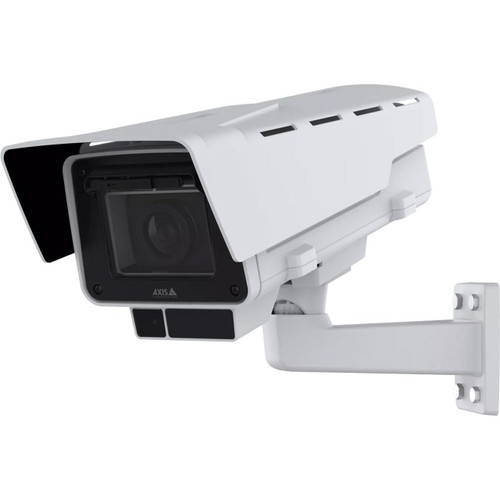
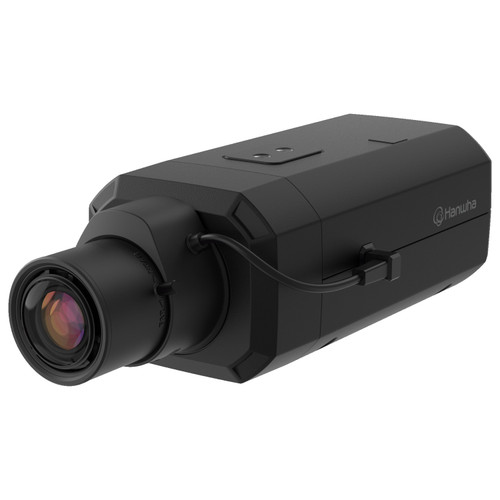
The Axis Q1728-LE and Hanwha XNB-9003 are both 8MP outdoor-capable box cameras aimed at professional fixed-surveillance deployments. The Q1728-LE is a traditional varifocal box camera with a probe-dependent mount, while the XNB-9003 is a 4K AI-analytics box camera with C/CS-mount lens compatibility. Both share ONVIF compliance and H.265/H.264 compression, making them legitimate cross-shop candidates for system integrators evaluating an 8MP box platform for outdoor or semi-outdoor installations.
In This Guide
How do the imaging specs compare?
Both cameras deliver 8MP resolution, but the Hanwha XNB-9003 specifies a native 3840×2160 (4K UHD) sensor on a 1/1.8" progressive CMOS imager with a minimum illumination of 0.03 Lux color and 0.003 Lux B&W, supported by Auto ICR day/night switching and AI-based noise reduction (WiseNR II). Its WDR is rated at 120dB (extremeWDR). The Axis Q1728-LE lists 8MP resolution and built-in IR at 850nm with a 0.5m IR range, WDR (level not numerically specified in the provided specs), and a varifocal lens with image stabilization. No sensor size or minimum illumination figure is provided for the Q1728-LE.
The XNB-9003 does not include a built-in IR illuminator; its low-light performance relies on the 0.03/0.003 Lux sensor sensitivity and an optional external IR source determined by the chosen lens. The Q1728-LE includes built-in 850nm IR but with a stated range of only 0.5m, suggesting the IR is primarily a residual or close-proximity illuminator rather than a long-range night-vision source. The XNB-9003 supports digital image stabilization via a built-in gyro sensor; the Q1728-LE also lists image stabilization. Frame rate for the XNB-9003 is specified at 30fps at full 8MP; no maximum frame rate figure is provided in the Q1728-LE specs.
What about installation and environment?
The Axis Q1728-LE carries an IP66 and NEMA 4X environmental rating and is explicitly spec'd as outdoor-ready, with an operating temperature range of -40°C to +60°C. The Hanwha XNB-9003 lists an operating temperature of -10°C to +55°C and no IP ingress-protection rating is stated in the provided specifications, indicating it is not independently weather-sealed and would require a compatible outdoor housing for exposed installations.
For power, the Q1728-LE requires PoE+ (IEEE 802.3af/at Class 4), drawing more power than a standard PoE budget. The XNB-9003 operates on PoE IEEE 802.3af Class 3 (max 12.95W) or 12VDC, giving installers a standard PoE option without requiring a PoE+ switch. The XNB-9003 provides a metal-shielded RJ-45 Gigabit Ethernet port; no Ethernet speed is specified for the Q1728-LE. The XNB-9003 also includes RS-485 serial interface and 2 configurable alarm I/O ports; no alarm I/O or serial interface is listed for the Q1728-LE. Mounting differs: the Q1728-LE uses a pendant/probe-dependent mount, while the XNB-9003 accepts C-mount and CS-mount lenses, giving greater lens flexibility.
Which fits your VMS and analytics better?
Both cameras are ONVIF-compliant. The Q1728-LE supports ONVIF Profile S and T. The XNB-9003 supports ONVIF Profiles S, G, T, and M, adding media-2 and metadata streaming capabilities useful for AI-event delivery to a VMS. The XNB-9003 also exposes HTTP API and Wisenet SDK integration. Security protocols on the XNB-9003 include TPM 2.0 (FIPS 140-2 Level 2), 802.1X (EAP-TLS/LEAP/PEAP), SRTP, MQTT, and SNMPv1/v2c/v3. The Q1728-LE lists signed firmware, secure boot, and HTTPS encryption; no TPM or 802.1X detail is provided in its specs.
On-camera analytics differ substantially. The XNB-9003 includes AI-engine object detection classifying person, face, vehicle (car/bus/truck/motorcycle/bicycle), and license plate, with line-crossing, virtual area, counting, queuing, and heatmap functions. The Q1728-LE provides no edge analytics in the supplied specifications. For storage, the XNB-9003 has dual microSD/SDHC/SDXC slots supporting up to 1TB (512GB × 2) and NAS recording; the Q1728-LE lists single microSD support with no stated capacity limit. The XNB-9003 includes a built-in microphone, line-in/line-out audio, and G.711/G.726 audio compression; no audio capability is listed for the Q1728-LE. The XNB-9003 also supports up to 10 stream profiles and 20 unicast users simultaneously.
Which should you choose: the Q1728-LE or the XNB-9003?
Our take: The XNB-9003 is the stronger choice when the deployment requires AI-edge analytics, standard PoE Class 3 power, dual-slot edge storage, and flexible C/CS-mount lens selection in a controlled or housed environment. The XNB-9003 delivers a specified 120dB extremeWDR rating versus an unquantified WDR on the Q1728-LE, a confirmed 0.03 Lux color minimum illumination versus no stated figure for the Q1728-LE, and dual microSD slots (up to 1TB) against a single microSD with no stated capacity. Conversely, the Q1728-LE is the appropriate choice when native IP66/NEMA 4X weather sealing is mandatory without an external housing, when the operating environment reaches below -10°C (the Q1728-LE is rated to -40°C versus -10°C for the XNB-9003), or when the switch infrastructure is limited to PoE+ ports only. Platform integrators using Wisenet VMS gain native SDK support with the XNB-9003; ONVIF-only environments can accommodate either.
Side-by-Side Comparison
Spec-for-spec, from manufacturer data.
| Specification | Axis Q1728-LE | Hanwha XNB-9003 |
|---|---|---|
| Resolution | 8MP | 8MP / 3840×2160 (4K UHD) |
| Image Sensor | — | 1/1.8" Progressive CMOS |
| Lens Type | Varifocal | DC auto iris / P-iris / Manual / I-CS (C/CS mount) |
| Min. Illumination | — | 0.03 Lux color / 0.003 Lux B&W |
| IR Illuminator | Built-in 850nm, 0.5m range | — |
| Wide Dynamic Range | WDR (level not specified) | 120dB extremeWDR |
| Max Frame Rate | — | 30fps @ 8MP |
| Video Compression | H.265 / H.264 / MJPEG | H.265 / H.264 / MJPEG |
| IP / Weather Rating | IP66 / NEMA 4X | — (not stated) |
| Operating Temperature | -40°C to +60°C | -10°C to +55°C |
| Power Input / PoE Class | PoE+ Class 4 | PoE 802.3af Class 3 / 12VDC (max 12.95W) |
| Edge Storage | Single microSD | Dual microSD/SDHC/SDXC, up to 1TB (512GB × 2) |
| Audio | — | Built-in mic / Line in / Line out; G.711 / G.726 |
| Alarm I/O | — | 2 configurable I/O ports |
| Edge AI Analytics | — | Person / Face / Vehicle / License Plate; Line crossing; Area monitoring; Counting; Heatmaps |
| ONVIF Profiles | Profile S / T | Profile S / G / T / M |
| Security Features | Signed firmware / Secure boot / HTTPS | TPM 2.0 (FIPS 140-2 L2) / 802.1X / SRTP / HTTPS / Signed firmware / Secure boot |
| Warranty | 5 years | 3 years |
Frequently Asked Questions
Which should you choose: the Q1728-LE or the XNB-9003?
The XNB-9003 is the stronger choice when the deployment requires AI-edge analytics, standard PoE Class 3 power, dual-slot edge storage, and flexible C/CS-mount lens selection in a controlled or housed environment. The XNB-9003 delivers a specified 120dB extremeWDR rating versus an unquantified WDR on the Q1728-LE, a confirmed 0.03 Lux color minimum illumination versus no stated figure for the Q1728-LE, and dual microSD slots (up to 1TB) against a single microSD with no stated capacity. Conversely, the Q1728-LE is the appropriate choice when native IP66/NEMA 4X weather sealing is mandatory without an external housing, when the operating environment reaches below -10°C (the Q1728-LE is rated to -40°C versus -10°C for the XNB-9003), or when the switch infrastructure is limited to PoE+ ports only. Platform integrators using Wisenet VMS gain native SDK support with the XNB-9003; ONVIF-only environments can accommodate either.
Is the Axis Q1728-LE or Hanwha XNB-9003 better for low-light performance?
The XNB-9003 specifies a minimum illumination of 0.03 Lux color and 0.003 Lux B&W with AI-based noise reduction (WiseNR II). The Q1728-LE includes a built-in 850nm IR illuminator with a stated range of 0.5m but no minimum illumination figure is provided in its specifications, so a direct numerical comparison cannot be made from the available data. The XNB-9003's sensor specification is the only quantified low-light figure between the two.
Can I install the Hanwha XNB-9003 outdoors without an additional housing?
Based on the provided specifications, the XNB-9003 does not carry an IP ingress-protection rating and has an operating temperature range of -10°C to +55°C. An outdoor housing would be required for exposed installations. The Axis Q1728-LE, by contrast, is rated IP66 and NEMA 4X and is explicitly listed as outdoor-ready down to -40°C, making it suitable for direct outdoor mounting without a separate enclosure.
Which camera supports on-camera AI analytics — the Q1728-LE or the XNB-9003?
The Hanwha XNB-9003 includes on-board AI analytics covering person, face, vehicle type (car/bus/truck/motorcycle/bicycle), and license plate detection, plus virtual line crossing, virtual area monitoring, object counting, queuing analysis, and heatmaps. No edge analytics capability is listed in the provided specifications for the Axis Q1728-LE. Buyers requiring camera-level AI without a separate analytics server should evaluate the XNB-9003.
Get a Second Opinion on Your Camera Choice
Share your site layout, coverage goals, and budget. Our team will validate the camera selection, flag anything we would change, and recommend products that match the use case.