
APC by Schneider Electric SYA4K8I vs APC by Schneider Electric SYH4K6RMT-P1: Specification Comparison
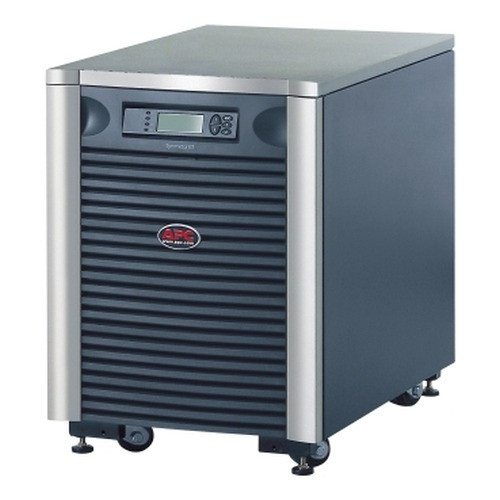
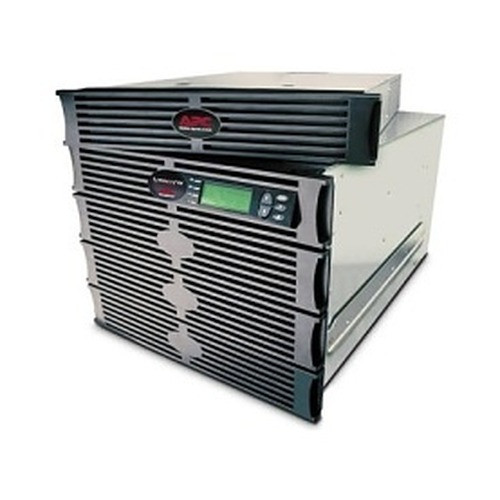
The SYA4K8I and SYH4K6RMT-P1 are both APC Symmetra-series modular UPS systems rated at 4 kVA / 2800 W output, designed for critical infrastructure environments. The SYA4K8I is a tower-form Symmetra LX scalable to 8 kVA with hardwire AC output targeting 220–240 V or 380–415 V markets, while the SYH4K6RMT-P1 is a rack-mount Symmetra RM scalable to 6 kVA with NEMA receptacle output targeting 120/208 V North American installations. Buyers comparing these are typically choosing between tower vs. rack-mount form factor and voltage-region suitability.
In This Guide
- How far can each UPS scale, and what output connections does it provide?
- What runtime and battery maintenance characteristics does each model offer?
- How do the physical form factor, operating environment, and management interfaces compare?
- Which should you choose: the SYA4K8I or the SYH4K6RMT-P1?
- Side-by-Side Specs
- FAQ
How far can each UPS scale, and what output connections does it provide?
Both units ship at 4 kVA / 2800 W, but their scalability ceilings differ. The SYA4K8I scales to 8 kVA, doubling the starting capacity, which suits environments anticipating significant load growth. The SYH4K6RMT-P1 scales only to 6 kVA—a 50% growth ceiling—which may constrain longer-term expansion.
Output connection architecture is fundamentally different. The SYA4K8I uses hardwire AC terminations, making it appropriate for facilities with permanently wired distribution panels operating at 220/230/240 V or 380/400/415 V. The SYH4K6RMT-P1 provides 12× NEMA 5-20R and 2× NEMA L6-20R receptacles, enabling direct plug-in for North American 120 V and 208 V equipment without a dedicated PDU. Neither model's outlet spec can substitute for the other in the opposing voltage region.
What runtime and battery maintenance characteristics does each model offer?
The SYA4K8I specifies backup runtime directly: 7.5 minutes at full load (4 kVA / 2800 W) and 20 minutes at half load (2 kVA / 1400 W). The SYH4K6RMT-P1 provides no rated runtime figures in the supplied specifications; buyers must consult APC's runtime curves or the product datasheet for that model.
Battery serviceability differs meaningfully. The SYH4K6RMT-P1 explicitly supports hot-swap battery replacement, allowing cells to be exchanged under load without a maintenance window—a critical operational advantage for 24/7 facilities. The SYA4K8I specifications do not list hot-swap capability; its replacement battery cartridge is the SYBT5. The SYH4K6RMT-P1 states a 4-hour recharge time; no recharge time is provided for the SYA4K8I. Both units use sealed lead-acid (VRLA) battery technology.
How do the physical form factor, operating environment, and management interfaces compare?
The SYA4K8I is a tower unit weighing 158 kg with no rack dimensions specified. It carries explicit environmental ratings: 0–40 °C operating, –15–45 °C storage, 0–95% RH (both states), and 0–3,000 m altitude. The SYH4K6RMT-P1 is rack-mountable at 483 × 730 × 445 mm (W×D×H) and weighs 147.3 kg—10.7 kg lighter. Its specifications omit operating temperature, humidity, and altitude ratings.
On management, the SYA4K8I includes one Smart Slot interface with an AP9619 card pre-installed, supporting network management integration. The SYH4K6RMT-P1 provides DB-9 RS-232 and RJ-45 interfaces and includes an audible alarm; its specifications do not reference a Smart Slot or equivalent card. The SYA4K8I also carries an Emergency Power Off (EPO) feature; the SYH4K6RMT-P1 likewise lists EPO. Input frequency for the SYH4K6RMT-P1 is specified at 60 Hz (North American grid); no input frequency is listed for the SYA4K8I.
Which should you choose: the SYA4K8I or the SYH4K6RMT-P1?
Our take: The SYA4K8I is the stronger choice when the deployment is outside North America, when load growth beyond 6 kVA is anticipated, or when network management via a pre-installed SmartSlot card (AP9619) is required from day one. Its scalability ceiling of 8 kVA versus the SYH4K6RMT-P1's 6 kVA provides an additional 2 kVA of headroom, and it ships with documented runtime figures (7.5 min full / 20 min half load) and explicit environmental ratings up to 3,000 m altitude—specs absent from the SYH4K6RMT-P1. Conversely, the SYH4K6RMT-P1 is the correct choice for North American 120/208 V rack environments: it offers 14 NEMA receptacles for direct equipment connection, confirmed hot-swap battery replacement for zero-downtime maintenance, a 4-hour recharge time, and a 10.7 kg weight advantage. Buyers running a North American data center or wiring closet with standard rack infrastructure should specify the SYH4K6RMT-P1; those in international markets or needing greater scalability should specify the SYA4K8I.
Side-by-Side Comparison
Spec-for-spec, from manufacturer data.
| Specification | APC by Schneider Electric SYA4K8I | APC by Schneider Electric SYH4K6RMT-P1 |
|---|---|---|
| Output power capacity | 4 kVA | 4 kVA |
| Output power (watts) | 2800 W | 2800 W |
| Scalability ceiling | 8 kVA | 6 kVA |
| Form factor | Tower | Rack-mountable |
| Dimensions (WxDxH) | — | 483 x 730 x 445 mm |
| Weight | 158 kg | 147.3 kg |
| Output connections | Hardwire AC | 12x NEMA 5-20R, 2x NEMA L6-20R |
| Input connection | — | NEMA L6-30P (3-wire, 2PH+G) |
| Input frequency | — | 60 Hz |
| Emergency Power Off (EPO) | Yes | Yes |
| Hot-swap battery | — | Yes |
| Battery recharge time | — | 4 h |
| Backup time at full load | 7.5 min | — |
| Backup time at half load | 20 min | — |
| Replacement battery | SYBT5 | — |
| Management interface | Smart Slot (AP9619 pre-installed) | DB-9 RS-232, RJ-45 |
| Audible alarm | — | Yes |
| Operating temperature | 0 – 40 °C | — |
| Storage temperature | -15 – 45 °C | — |
| Operating humidity | 0 – 95% | — |
| Operating altitude | 0 – 3000 m | — |
| Battery technology | Sealed Lead-Acid (VRLA) | Sealed Lead-Acid (VRLA) |
| Product colour | Black | Black |
Frequently Asked Questions
Which should you choose: the SYA4K8I or the SYH4K6RMT-P1?
The SYA4K8I is the stronger choice when the deployment is outside North America, when load growth beyond 6 kVA is anticipated, or when network management via a pre-installed SmartSlot card (AP9619) is required from day one. Its scalability ceiling of 8 kVA versus the SYH4K6RMT-P1's 6 kVA provides an additional 2 kVA of headroom, and it ships with documented runtime figures (7.5 min full / 20 min half load) and explicit environmental ratings up to 3,000 m altitude—specs absent from the SYH4K6RMT-P1. Conversely, the SYH4K6RMT-P1 is the correct choice for North American 120/208 V rack environments: it offers 14 NEMA receptacles for direct equipment connection, confirmed hot-swap battery replacement for zero-downtime maintenance, a 4-hour recharge time, and a 10.7 kg weight advantage. Buyers running a North American data center or wiring closet with standard rack infrastructure should specify the SYH4K6RMT-P1; those in international markets or needing greater scalability should specify the SYA4K8I.
Is the SYA4K8I or SYH4K6RMT-P1 better for larger deployments that may need to grow beyond 4 kVA?
The SYA4K8I scales to 8 kVA versus the SYH4K6RMT-P1's 6 kVA ceiling, so it offers more headroom for load growth. If your projected peak load could exceed 6 kVA, the SYA4K8I is the safer long-term investment based on the provided specifications.
Can I replace the batteries on either UPS without taking it offline?
The SYH4K6RMT-P1 explicitly lists hot-swap battery replacement, meaning batteries can be exchanged under load. The SYA4K8I specifications do not mention hot-swap capability; its replacement battery is the SYBT5 cartridge, but whether it supports hot-swap is not confirmed by the supplied specs.
Which model is appropriate for use in Europe or other international markets?
The SYA4K8I is specified for 220/230/240 V and 380/400/415 V operation, which aligns with European and many international grid standards. The SYH4K6RMT-P1 lists a 60 Hz input frequency and NEMA input/output connectors, indicating it is designed for the North American 120/208 V market. The SYA4K8I is the internationally-oriented unit based on the provided specifications.
Get a Second Opinion on Your Camera Choice
Share your site layout, coverage goals, and budget. Our team will validate the camera selection, flag anything we would change, and recommend products that match the use case.