
Aiphone NI-JA vs Aiphone IX-NVP2: Specification Comparison
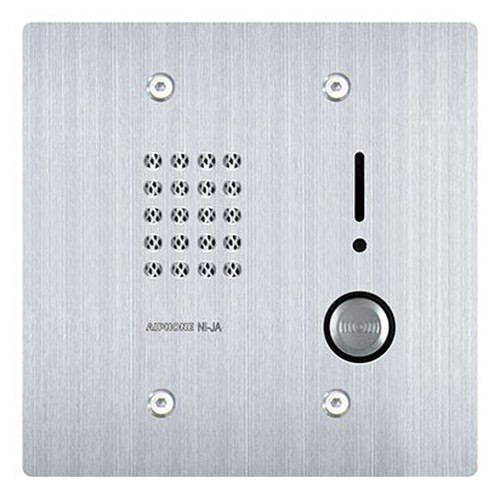
Both the Aiphone NI-JA and the Aiphone IX-NVP2 are flush- or surface-mountable audio door stations designed for commercial entry-point intercom duty — the same product class a buyer would evaluate side by side. The NI-JA is a hardwired analog station targeting Aiphone NI-series master systems, while the IX-NVP2 is a PoE-powered, SIP-compatible IP station on the Aiphone IX platform. The comparison covers connectivity and protocol stack, physical installation and environmental resilience, and platform compatibility — the three axes that drive purchasing decisions in this category.

In This Guide
- How do the NI-JA and IX-NVP2 differ in connectivity and protocol support?
- Which station offers stronger environmental and physical protection for outdoor deployment?
- What master-station or platform ecosystems does each door station require?
- Which should you choose: the NI-JA or the IX-NVP2?
- Side-by-Side Specs
- FAQ
How do the NI-JA and IX-NVP2 differ in connectivity and protocol support?
The NI-JA is a purely analog, hardwired station. It runs on 3-conductor shielded cable (18 AWG, Aiphone #821803) with a maximum communication distance of 650 feet and delivers hands-free, full-duplex two-way audio. No IP address, no network switch, no codec selection is required or available — the system is self-contained on wire.
The IX-NVP2 operates entirely over IP via Cat-5e/6 and draws its power from the same cable through 802.3af PoE (3.36 W). It supports audio codecs G.711 and G.722 and communicates over a broad protocol stack: IPv4, IPv6, TCP, UDP, SIP, HTTP, HTTPS, RTSP, RTP, RTCP, IGMP, MLD, SMTP, FTP, DHCP, NTP, and DNS. SIP compatibility means it can register to third-party SIP call managers beyond the Aiphone IX platform. The NI-JA has no equivalent IP or SIP capability per the provided specs.
Which station offers stronger environmental and physical protection for outdoor deployment?
The NI-JA is specified as weather- and vandal-resistant with a 300-series stainless steel body and a 2-gang form factor. No formal ingress-protection rating (IP65 or equivalent) is stated in the provided specs, and no operating temperature range is listed.
The IX-NVP2 carries a published IP65 rating — dust-tight and protected against low-pressure water jets — and an operating temperature range of -40 °F to 140 °F (-40 °C to 60 °C). Its 3-gang stainless steel body accommodates two call buttons. Both stations list flush or surface mounting, so installation flexibility is equivalent. Where the NI-JA relies on material-based weather resistance without a certified IP rating, the IX-NVP2 provides a testable, auditable environmental standard, which matters for warranty claims and specification-compliance on projects.
What master-station or platform ecosystems does each door station require?
The NI-JA is explicitly compatible with Aiphone NIM-20B and NIM-40B master stations only, per the provided specs. It is a dedicated component within the Aiphone NI analog series; wiring to any other master or system is not supported by the specifications provided.
The IX-NVP2 is part of the Aiphone IX IP platform and adds SIP compatibility, meaning it can also register to standards-based SIP call servers from other manufacturers. It carries one contact output for door-release or auxiliary-device control. The IX-NVP2 also offers a two-button configuration (two call buttons), allowing it to serve two separate tenants or entry zones from a single station — a feature with no analog equivalent in the NI-JA specification. No maximum call distance is listed for the IX-NVP2, as range is governed by the IP network rather than cable run length.
Which should you choose: the NI-JA or the IX-NVP2?
Our take: The NI-JA is the stronger choice when the project is a straightforward analog NI-series deployment with existing wiring infrastructure and no IP network at the door, especially where the 650-foot cable run and a single-button, single-master topology meet all requirements. The IX-NVP2 is the stronger choice in every other scenario: it carries a verified IP65 ingress rating and an operating range of -40 °F to 140 °F versus no rated equivalents on the NI-JA; it supports two call buttons versus one station-wide audio port; and its SIP protocol stack plus 14-protocol network support allow integration with IP call managers, access control systems, and multi-site platforms that the NI-JA cannot address. Buyers replacing or extending an existing Aiphone NI analog system should stay with the NI-JA. Any new installation, multi-tenant entry, or IP-infrastructure project should specify the IX-NVP2.
Side-by-Side Comparison
Spec-for-spec, from manufacturer data.
| Specification | Aiphone NI-JA | Aiphone IX-NVP2 |
|---|---|---|
| Product Class | Analog Audio Door Station | IP Audio Door Station |
| Call Buttons | — | 2 |
| Form Factor / Gang Size | 2-gang | 3-gang |
| Connectivity | 3-conductor shielded wire (18 AWG) | Cat-5e/6 (IP network) |
| Power Source | — | 802.3af PoE |
| Power Draw | — | 3.36 W |
| Audio | Hands-free two-way | G.711, G.722 (SIP) |
| SIP Compatible | No | Yes |
| Protocol Stack | — | IPv4, IPv6, SIP, HTTP/S, RTSP, RTP, RTCP, IGMP, MLD, SMTP, FTP, DHCP, NTP, DNS |
| Contact Output | — | 1 |
| Max Cable Run | 650 ft | Network-dependent (not specified) |
| Ingress Protection | — (weather/vandal-resistant, no IP rating stated) | IP65 |
| Operating Temperature | — | -40 to 140 °F (-40 to 60 °C) |
| Mounting Options | Flush (2-gang box) or surface (SBX-2G/A) | Flush or surface |
| Material | Stainless steel (300-series) | Stainless steel (grade not specified) |
| Compatible Platform | Aiphone NIM-20B, NIM-40B | Aiphone IX series + SIP |
| Warranty | 2-year | — |
Frequently Asked Questions
Which should you choose: the NI-JA or the IX-NVP2?
The NI-JA is the stronger choice when the project is a straightforward analog NI-series deployment with existing wiring infrastructure and no IP network at the door, especially where the 650-foot cable run and a single-button, single-master topology meet all requirements. The IX-NVP2 is the stronger choice in every other scenario: it carries a verified IP65 ingress rating and an operating range of -40 °F to 140 °F versus no rated equivalents on the NI-JA; it supports two call buttons versus one station-wide audio port; and its SIP protocol stack plus 14-protocol network support allow integration with IP call managers, access control systems, and multi-site platforms that the NI-JA cannot address. Buyers replacing or extending an existing Aiphone NI analog system should stay with the NI-JA. Any new installation, multi-tenant entry, or IP-infrastructure project should specify the IX-NVP2.
Can either door station work without a dedicated Aiphone master station?
The NI-JA is specified exclusively for Aiphone NIM-20B and NIM-40B master stations and has no stated compatibility outside that analog ecosystem. The IX-NVP2 supports SIP, so it can register to third-party SIP-compatible call servers or IP PBX systems — making it usable without an Aiphone IX master unit, provided a SIP infrastructure exists.
Is the NI-JA or IX-NVP2 better suited for harsh outdoor environments?
The IX-NVP2 is better documented for harsh outdoor use: it carries an IP65 ingress-protection rating and a tested operating range of -40 °F to 140 °F (-40 °C to 60 °C). The NI-JA is described as weather- and vandal-resistant with stainless steel construction, but no formal IP rating or operating temperature range appears in the provided specifications.
Which station is easier to wire and commission for a small single-door installation?
The NI-JA is simpler to wire for a small analog job: it uses standard 18 AWG shielded 3-conductor cable (Aiphone #821803) run directly to the master station — no network switch, PoE injector, IP addressing, or SIP configuration required. The IX-NVP2 requires a Cat-5e/6 run to a PoE switch or injector and network/SIP provisioning, which adds commissioning steps but also eliminates the dedicated cable type and integrates into an existing IP infrastructure.
More Intercom Comparisons
- Ubiquiti UA-G3-INTERCOM vs SDC IPDSE
- Ubiquiti UA-G3-INTERCOM vs Comelit TP6842
- Ubiquiti UA-G3-INTERCOM vs ACTi Q950
- Axis 03448-001 vs Axis 02892-001
- Comelit TP6842 vs ACTi Q950
- Comelit TP6842 vs Comelit 3460HEV
Intercom Buying Guides
Get a Second Opinion on Your Camera Choice
Share your site layout, coverage goals, and budget. Our team will validate the camera selection, flag anything we would change, and recommend products that match the use case.