
ACTi E217 vs ACTi E222: Specification Comparison
The ACTi E217 and ACTi E222 are both 2-megapixel, box-form-factor, Day/Night IP cameras powered by 802.3af PoE — squarely the same resolution class and camera type, making them a legitimate cross-shop for installers evaluating ACTi's fixed-box lineup. The comparison centers on lens configuration, video compression support, analytics capability, VMS integration depth, and mounting flexibility, since both share the same resolution, WDR designation, IR low-light mode, and PoE power standard.
In This Guide
How do the imaging specs compare?
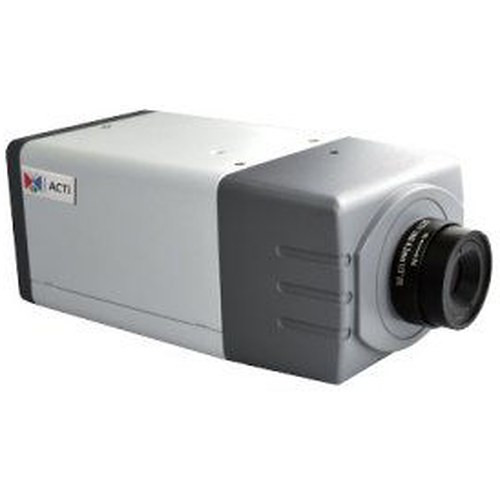
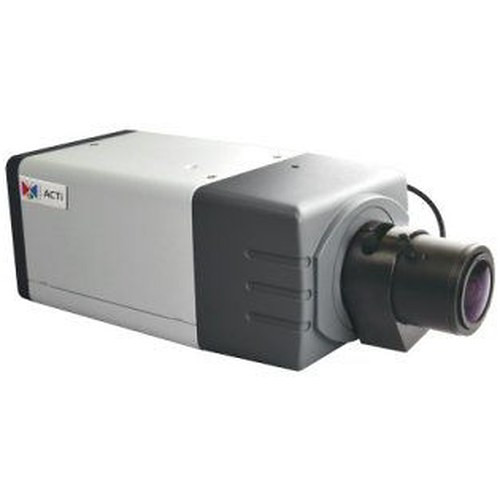
Both cameras deliver 2 MP resolution with Day/Night IR capability and Advanced WDR. The E217 specifies a maximum frame rate of 1080p/60 fps, a concrete throughput figure absent from the E222's provided specs. The E217 uses a fixed lens; the E222 uses a varifocal lens, which allows focal-length adjustment post-installation to frame the scene without physically repositioning the camera — a meaningful field advantage when the exact mounting distance is uncertain at design time.
Both units list Advanced WDR and Day/Night IR low-light operation. No minimum illumination figures, IR range distances, or sensor size data are present in the provided specifications for either model, so a quantitative low-light comparison cannot be made from the available data. Compression support is documented only for the E217 (H.265, H.264, MJPEG); the E222's compression codecs are not stated in the provided specs.
What about installation and environment?
Both cameras are box-form-factor units powered by PoE 802.3af (under 15.4 W class maximum). The E222 explicitly lists Wall and Ceiling as supported mount types; the E217's mounting options are not enumerated in the provided specs. Neither product's provided specifications include an IP ingress-protection rating, IK impact rating, operating temperature range, or dimensions, so environmental suitability and enclosure compatibility cannot be compared from available data.
The E222's varifocal lens is noted as compatible with 'flexible' deployment scenarios, while the E217's fixed lens is tagged 'medium-range,' suggesting ACTi positions them for different coverage situations — the E217 for a predetermined field of view and the E222 for scenes where zoom adjustment is needed after mounting.
Which fits your VMS and analytics better?
The E217 explicitly lists ONVIF compliance and VMS compatibility with both ONVIF-conformant platforms and ACTi's native VMS, along with 2D+3D DNR (digital noise reduction) as an analytics/processing feature. The E222's provided specifications do not state ONVIF support, VMS compatibility, or any edge analytics functions. On-board storage, audio input/output, and alarm I/O specifications are absent for both models in the provided data, preventing any comparison of those capabilities.
Which should you choose: the E217 or the E222?
Our take: The E217 is the stronger choice when a fixed field of view is acceptable, VMS ecosystem breadth matters, and high frame-rate recording is a priority. Documented spec deltas favor it on three points: (1) the E217 confirms H.265/H.264/MJPEG compression support — reducing storage and bandwidth costs — while the E222's codecs are unspecified; (2) the E217 is confirmed ONVIF-compliant with documented ACTi VMS compatibility, whereas the E222 lists neither in the provided specs; (3) the E217 specifies 1080p/60 fps, a frame rate relevant for capturing fast motion, while no frame-rate figure is available for the E222. The E222 is preferable when the mounting location is finalized after infrastructure is set, since its varifocal lens allows on-site focal adjustment that the E217's fixed lens cannot provide. Buyers should request full datasheets for both models to verify IP rating, operating temperature, and audio/storage specs before finalizing.
Side-by-Side Comparison
Spec-for-spec, from manufacturer data.
| Specification | ACTi E217 | ACTi E222 |
|---|---|---|
| Resolution | 2 MP | 2 MP |
| Form Factor | Box | Box |
| Lens Type | Fixed | Varifocal |
| Day/Night | Yes (IR) | Yes (IR) |
| WDR | Advanced WDR | Advanced WDR |
| Max Frame Rate | 1080p / 60 fps | — |
| Video Compression | H.265; H.264; MJPEG | — |
| ONVIF | Yes | — |
| VMS Compatibility | ONVIF; ACTi | — |
| Edge Analytics | 2D+3D DNR | — |
| Power / PoE Standard | PoE 802.3af | PoE 802.3af |
| Mount Types | — | Wall; Ceiling |
Frequently Asked Questions
Which should you choose: the E217 or the E222?
The E217 is the stronger choice when a fixed field of view is acceptable, VMS ecosystem breadth matters, and high frame-rate recording is a priority. Documented spec deltas favor it on three points: (1) the E217 confirms H.265/H.264/MJPEG compression support — reducing storage and bandwidth costs — while the E222's codecs are unspecified; (2) the E217 is confirmed ONVIF-compliant with documented ACTi VMS compatibility, whereas the E222 lists neither in the provided specs; (3) the E217 specifies 1080p/60 fps, a frame rate relevant for capturing fast motion, while no frame-rate figure is available for the E222. The E222 is preferable when the mounting location is finalized after infrastructure is set, since its varifocal lens allows on-site focal adjustment that the E217's fixed lens cannot provide. Buyers should request full datasheets for both models to verify IP rating, operating temperature, and audio/storage specs before finalizing.
Is the E217 or E222 better for low light?
Both cameras specify Day/Night IR operation and Advanced WDR, but neither product's provided specifications include a minimum illumination value or IR range distance. A quantitative low-light comparison cannot be made from the available data — request the full datasheet for each model to obtain those figures.
Can I use either camera with my third-party VMS?
The E217 explicitly lists ONVIF compliance, which enables integration with the broad ecosystem of ONVIF-conformant VMS platforms. The E222's provided specifications do not state ONVIF support, so third-party VMS compatibility for the E222 cannot be confirmed from available data. Verify directly with ACTi or consult the E222 datasheet before committing to a VMS pairing.
Which camera is better for a location where I can't pre-plan the exact zoom level?
The E222 is the better fit in that scenario. It uses a varifocal lens that allows focal-length adjustment after the camera is mounted, so installers can fine-tune the field of view on-site. The E217 has a fixed lens, meaning the coverage angle is set at the factory and cannot be adjusted without replacing the lens or repositioning the camera.
Get a Second Opinion on Your Camera Choice
Share your site layout, coverage goals, and budget. Our team will validate the camera selection, flag anything we would change, and recommend products that match the use case.