
ACTi B85 vs ACTi Z812: Specification Comparison
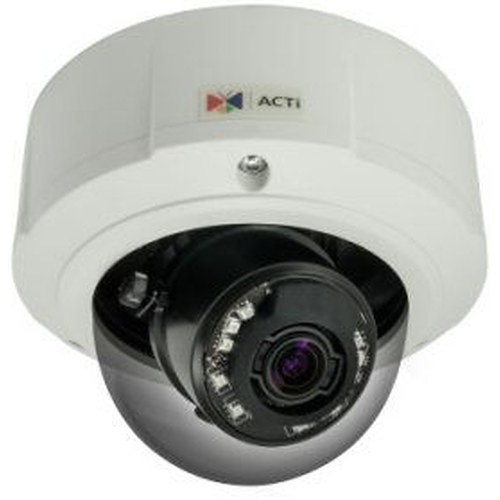
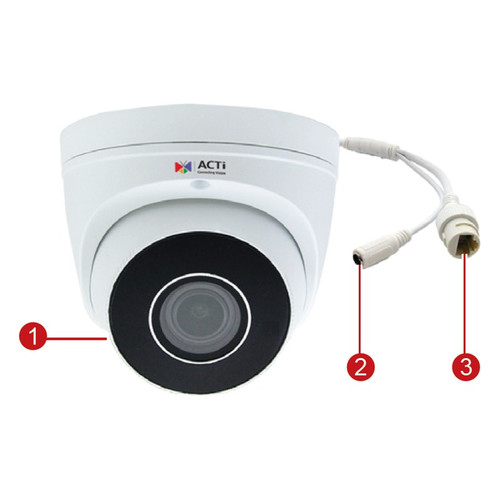
Both the ACTi B85 and ACTi Z812 are 2MP outdoor zoom dome cameras designed for perimeter and general surveillance deployments. This comparison examines how they differ across imaging capability, environmental hardening, power requirements, and integration features. The B85 uses a 3x optical zoom with a 3.0–9mm lens, while the Z812 offers a motorized 4.3x zoom at 2.8–12mm. Buyers evaluating either model are typically choosing between a feature-rich analytics platform and a streamlined, low-power retrofit-friendly option.
In This Guide
How do the imaging specs compare?
Both cameras deliver 2MP resolution at up to 30 fps. The B85 uses a 1/2.8-inch sensor with a 3.0–9mm (3x optical zoom) varifocal lens, covering a field of view from 103.6° wide to 36.2° telephoto. It achieves a minimum illumination of 0.003 lux in color mode (F1.2) and 0 lux in B/W with 850nm IR active, with an IR range specified at 40 meters. WDR is rated at 75 dB (Basic WDR). The Z812's sensor size is not specified in the provided data. Its motorized 2.8–12mm lens provides 4.3x zoom range. Minimum illumination, IR wavelength, IR range, and a numerical WDR dB rating are not provided for the Z812.
On compression, the B85 supports H.264 (Baseline, Main, and High profiles) and MJPEG. The Z812 supports H.265 and H.264, meaning the Z812 adds H.265 for potentially more efficient bandwidth and storage utilization—a meaningful operational advantage the B85 lacks. Maximum frame rate for the Z812 is listed as 30 fps, matching the B85, but per-resolution fps breakdowns are not provided for the Z812.
What about installation and environment?
The B85 carries IP67, IK10, and NEMA 4X ratings, covering temporary immersion up to 1 meter, 20-joule vandal impact, and protection against hose-directed water and dust. It is UL Listed (UL 60950-1) and holds CE Class B, FCC Class B, EAC, and CB certifications. Operating temperature is specified as -40°C to 50°C (-40°F to 122°F), making it suitable for cold-climate installations. Weight is 1,291 g (2.846 lb). Mounting options include wall, pole, pendant, corner, and rack configurations.
The Z812 is rated IP68 and IK10. IP68 exceeds IP67 by allowing continuous submersion beyond 1 meter at a manufacturer-defined depth—an advantage in flood-prone or wash-down environments. However, the Z812 lacks the NEMA 4X designation present on the B85. Operating temperature, weight, and physical dimensions are not provided for the Z812. The Z812's mount options are listed as ceiling and wall only. On power, the B85 requires PoE+ (802.3af/at Class 3, up to ~30W budget) or DC 12V; the provided specs list 'PoE Class 3 (IEEE802.3af)' for the B85, indicating standard PoE suffices at Class 3. The Z812 draws below 13W typical on standard 802.3af PoE, meaning it imposes a lower power budget and is compatible with a wider range of existing PoE switches without upgrade.
Which fits your VMS and analytics better?
The B85 supports ONVIF Profiles S, G, T, and Q, providing broad VMS interoperability across recording, metadata, and configuration management profiles. It includes edge analytics for VMD, People Counting, and Smoke Detection. Audio is two-way with dedicated line-in and line-out connections. On-board storage is not mentioned in the provided specs for the B85.
The Z812 supports ONVIF Profile S only, limiting native VMS integration compared to the B85. No edge analytics beyond basic IR Day/Night switching are specified for the Z812 in the provided data. Audio is provided via a built-in microphone (receive only; no line-out or two-way capability is listed). The Z812 includes a MicroSD slot for local on-board storage, a feature absent from the B85's listed specs. GPS positioning is available on the B85 via manual setting; this capability is not listed for the Z812.
Which should you choose: the B85 or the Z812?
Our take: The B85 is the stronger choice when analytics depth, VMS flexibility, and cold-climate certification are priorities. It supports ONVIF Profiles S, G, T, and Q versus the Z812's Profile S only, delivers documented edge analytics (VMD, People Counting, Smoke Detection) where the Z812 lists none, and carries a verified operating range down to -40°C that the Z812 does not specify. Its minimum illumination is quantified at 0.003 lux with 850nm IR at 40m; equivalent figures are absent from the Z812's specs. Conversely, the Z812 is the better fit for low-power retrofits and flood-prone sites: it draws below 13W on standard 802.3af PoE (versus the B85's PoE+ Class 3 requirement), carries IP68 for continuous submersion tolerance, adds H.265 compression for bandwidth efficiency, and includes MicroSD edge storage. Where PoE budget is constrained or the site is subject to standing water, the Z812's lower power draw and higher ingress rating are concrete advantages.
Side-by-Side Comparison
Spec-for-spec, from manufacturer data.
| Specification | ACTi B85 | ACTi Z812 |
|---|---|---|
| Resolution | 2 MP | 2 MP |
| Sensor Size | 1/2.8 inch | — |
| Lens / Focal Length | 3.0–9mm (3x optical zoom) | 2.8–12mm motorized (4.3x zoom) |
| Min. Illumination | 0.003 lux (color, F1.2); 0 lux (B/W, IR on) | — |
| IR Range | 40m | — |
| IR Wavelength | 850nm | — |
| WDR | Basic WDR (75 dB) | WDR (dB not specified) |
| Max Frame Rate | 30 fps @ 1080p; per-resolution breakdowns available | 30 fps (per-resolution breakdown not specified) |
| Video Compression | H.264 (Baseline/Main/High); MJPEG | H.265; H.264 |
| IP Rating | IP67 | IP68 |
| IK / Impact Rating | IK10 | IK10 |
| NEMA Rating | NEMA 4X | — |
| Operating Temperature | -40°C to 50°C (-40°F to 122°F) | — |
| Power Input / PoE Class | PoE+ (802.3at) Class 3 or DC 12V | 802.3af PoE; below 13W typical |
| ONVIF Profiles | S, G, T, Q | S |
| Edge Analytics | VMD; People Counting; Smoke Detection | — |
| Audio | Two-way (line-in, line-out) | Built-in microphone (receive only) |
| Edge Storage | — | MicroSD |
| Mount Types | Wall; Pole; Pendant; Corner; Rack | Ceiling; Wall |
| Weight | 1,291 g (2.846 lb) | — |
| Certifications | CE Class B; FCC Class B; EAC; CB; UL Listed (UL 60950-1); NEMA 4X | — |
Frequently Asked Questions
Which should you choose: the B85 or the Z812?
The B85 is the stronger choice when analytics depth, VMS flexibility, and cold-climate certification are priorities. It supports ONVIF Profiles S, G, T, and Q versus the Z812's Profile S only, delivers documented edge analytics (VMD, People Counting, Smoke Detection) where the Z812 lists none, and carries a verified operating range down to -40°C that the Z812 does not specify. Its minimum illumination is quantified at 0.003 lux with 850nm IR at 40m; equivalent figures are absent from the Z812's specs. Conversely, the Z812 is the better fit for low-power retrofits and flood-prone sites: it draws below 13W on standard 802.3af PoE (versus the B85's PoE+ Class 3 requirement), carries IP68 for continuous submersion tolerance, adds H.265 compression for bandwidth efficiency, and includes MicroSD edge storage. Where PoE budget is constrained or the site is subject to standing water, the Z812's lower power draw and higher ingress rating are concrete advantages.
Is the B85 or Z812 better for low-light performance?
Based on available specs, the B85 provides more documented low-light data: 0.003 lux minimum illumination in color, 0 lux in B/W with IR active, 850nm IR at a 40-meter range. The Z812 lists IR and Day/Night capability but does not specify minimum illumination in lux, IR wavelength, or IR range, so a direct numerical comparison cannot be made from the provided specifications.
Can the Z812 run on a standard PoE switch without upgrades?
Yes. The Z812 is specified to draw below 13W typical on 802.3af standard PoE, which is within the 15.4W budget of a Class 0–3 802.3af port. The B85 is listed as PoE+ (802.3at) Class 3, which also falls within the 802.3af 15.4W ceiling at Class 3, though its spec sheet simultaneously references 802.3at—installers should verify with the datasheet before assuming standard PoE sufficiency for the B85.
Which camera supports more VMS platforms out of the box?
The B85 supports ONVIF Profiles S, G, T, and Q, covering streaming, recording, metadata, and device configuration management. The Z812 supports ONVIF Profile S only. Installers integrating with VMS platforms that leverage Profile G (recording), Profile T (advanced metadata/analytics), or Profile Q (zero-configuration onboarding) will find the B85 compatible where the Z812 is not.
Get a Second Opinion on Your Camera Choice
Share your site layout, coverage goals, and budget. Our team will validate the camera selection, flag anything we would change, and recommend products that match the use case.