
ACTi B85 vs ACTi E69: Specification Comparison
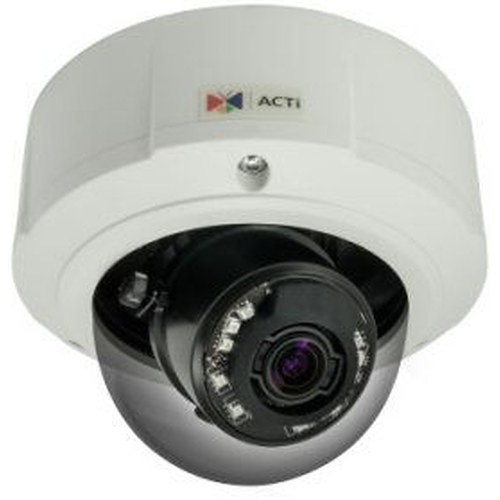
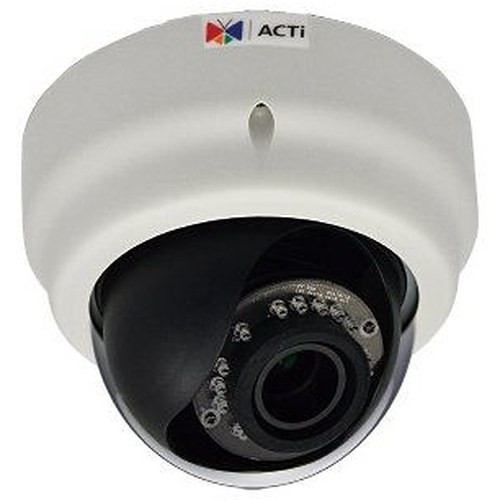
The ACTi B85 and ACTi E69 are both 2MP dome cameras from the same manufacturer, each delivering 1920×1080 resolution over Ethernet with IR night vision and ONVIF compatibility. Despite sharing a resolution class and dome form factor, they target distinctly different deployment scenarios: the B85 is an outdoor-rated vandal-resistant zoom dome designed for perimeter and adverse-environment use, while the E69 is an indoor ceiling dome optimized for low-power, cost-efficient interior surveillance. This comparison examines where their specs converge and diverge across imaging, installation, and integration dimensions.
In This Guide
How do the imaging specs compare?
Both cameras deliver 2MP (1920×1080) resolution at up to 30 fps, so raw pixel count is equivalent. The B85 specifies a 1/2.8-inch sensor, a 3.0–9mm varifocal lens with 3× optical zoom spanning 103.6° to 36.2° FOV, and a minimum illumination of 0.003 lux in color mode (0 lux in B/W with IR active). Its IR illuminators operate at 850nm with a rated range of 40m. WDR is listed as Basic WDR at 75 dB. The E69's sensor size is not specified in the provided data. Its lens is described only as varifocal with no focal length or zoom ratio given. Minimum illumination, IR wavelength, and IR range are absent from the E69 spec sheet provided. WDR is listed for the E69 but no dB value is stated.
In practice, the B85 provides measurably more imaging detail on paper: a confirmed 40m IR range, a quantified 0.003 lux sensitivity floor, a 3× optical zoom for flexible post-install reframing, and a named 75 dB WDR figure. The E69's imaging performance beyond 1080p resolution and the presence of IR and WDR cannot be numerically compared from the specifications provided, as focal length, IR range, minimum illumination, and WDR strength are unspecified for that model.
What about installation and environment?
The B85 carries IP67, IK10, and NEMA 4X ratings, making it suitable for full dust ingress prevention, sustained water immersion, and 20-joule vandal impact resistance in outdoor or harsh indoor environments. Its operating temperature range spans -40°C to 50°C (-40°F to 122°F), covering extreme cold climates. It is powered by PoE+ (802.3af/802.3at Class 3) or DC 12V, and weighs 1,291g (approximately 2.85 lb). Mounting options include wall, pole, pendant, corner, and rack accessories. The E69 carries no IP or IK rating in the provided specifications, is rated for indoor/ceiling mounting only, and draws under 13W on standard 802.3af PoE—no PoE+ switch required.
For outdoor or vandal-prone locations the B85 is the only option of the two with documented environmental protection. The E69's lower power draw (under 13W vs the B85's PoE+ Class 3, which can reach up to approximately 25W) is an advantage in dense indoor deployments where switch port wattage budgets are a constraint. No operating temperature range or weight is provided for the E69 in the specifications supplied.
Which fits your VMS and analytics better?
The B85 is ONVIF-compliant at Profile S, G, T, and Q—covering live streaming, recording, metadata, and device discovery. It includes on-board edge analytics: VMD (video motion detection), People Counting, and Smoke Detection are listed in its specifications. Two-way audio is supported via line-in and line-out connections. No on-board storage specification is provided in the data supplied for the B85.
The E69 lists ONVIF IP camera protocol compatibility but does not specify which ONVIF profiles are supported. No edge analytics, audio capability, or on-board storage are listed for the E69 in the provided specifications. Buyers requiring People Counting, Smoke Detection, or two-way audio at the camera edge will find those features documented only on the B85.
Which should you choose: the B85 or the E69?
Our take: The B85 is the stronger choice when the deployment involves outdoor environments, vandal exposure, extreme temperatures, or a need for optical zoom and edge analytics. Concretely: the B85 carries IP67/IK10/NEMA 4X environmental ratings versus no published rating for the E69; its IR illuminators are specified at 40m range and 0.003 lux minimum illumination versus no stated figures for the E69; and it adds ONVIF Profiles S/G/T/Q plus People Counting and Smoke Detection analytics versus unspecified ONVIF profiles and no listed analytics on the E69. The E69's advantage is its standard 802.3af draw (under 13W), which suits budget-constrained PoE switches in high-density indoor installations where no environmental hardening is needed. Choose the B85 for any outdoor, perimeter, or mixed-condition site; consider the E69 only for straightforward indoor ceiling applications where PoE wattage per port is the binding constraint and detailed imaging specs are confirmed through ACTi's full datasheet.
Side-by-Side Comparison
Spec-for-spec, from manufacturer data.
| Specification | ACTi B85 | ACTi E69 |
|---|---|---|
| Resolution | 2MP (1920×1080) | 2MP (1920×1080) |
| Image Sensor Size | 1/2.8 inch | — |
| Lens / Focal Length | 3.0–9mm (3× optical zoom) | Varifocal (focal length not specified) |
| Field of View | 103.6° to 36.2° (zoom range) | — |
| Min Illumination | 0.003 lux (color); 0 lux (B/W, IR on) | — |
| IR Range | 40m (850nm) | — |
| WDR | Basic WDR, 75 dB | WDR (dB not specified) |
| Max Frame Rate | 30 fps @ 1920×1080 | — |
| Video Compression | H.264 (Baseline/Main/High); MJPEG | — |
| IP Rating | IP67 | — |
| IK / Impact Rating | IK10 | — |
| Operating Temperature | -40°C to 50°C (-40°F to 122°F) | — |
| Power Input / PoE Class | PoE+ 802.3at Class 3; DC 12V | PoE 802.3af, under 13W |
| ONVIF | Profile S, G, T, Q | ONVIF (profiles not specified) |
| Edge Analytics | VMD; People Counting; Smoke Detection | — |
| Audio | Two-way (line-in, line-out) | — |
| Form Factor / Mount | Dome; Wall, Pole, Pendant, Corner, Rack | Dome; Ceiling |
| Weight | 1291g (2.85 lb) | — |
Frequently Asked Questions
Which should you choose: the B85 or the E69?
The B85 is the stronger choice when the deployment involves outdoor environments, vandal exposure, extreme temperatures, or a need for optical zoom and edge analytics. Concretely: the B85 carries IP67/IK10/NEMA 4X environmental ratings versus no published rating for the E69; its IR illuminators are specified at 40m range and 0.003 lux minimum illumination versus no stated figures for the E69; and it adds ONVIF Profiles S/G/T/Q plus People Counting and Smoke Detection analytics versus unspecified ONVIF profiles and no listed analytics on the E69. The E69's advantage is its standard 802.3af draw (under 13W), which suits budget-constrained PoE switches in high-density indoor installations where no environmental hardening is needed. Choose the B85 for any outdoor, perimeter, or mixed-condition site; consider the E69 only for straightforward indoor ceiling applications where PoE wattage per port is the binding constraint and detailed imaging specs are confirmed through ACTi's full datasheet.
Is the B85 or E69 better for low-light performance?
Based on available specifications, the B85 is the only model with a quantified low-light figure: 0.003 lux in color mode and 0 lux in B/W with IR active, supported by 850nm IR at a 40m range. The E69's minimum illumination, IR wavelength, and IR range are not stated in the specifications provided, so a numerical comparison cannot be made. Buyers who need a confirmed sensitivity floor should verify the E69's datasheet directly with ACTi before specifying it.
Can either camera be used outdoors?
Only the B85 is rated for outdoor use based on the specifications provided. It carries IP67 (dust-tight, immersion-resistant), IK10 (20-joule impact resistance), and NEMA 4X ratings, and its operating temperature is documented from -40°C to 50°C. The E69 has no IP rating, no IK rating, and no operating temperature range listed in its published specifications, and it is described as an indoor dome. Installing the E69 outdoors without confirmed environmental ratings from ACTi would be inadvisable.
Which camera requires less from my PoE switch infrastructure?
The E69 draws under 13W and runs on standard 802.3af PoE, meaning any 802.3af-capable switch port can power it without upgrade. The B85 is specified as PoE+ (802.3at) Class 3, which can require up to approximately 25W per port and needs a PoE+ capable switch or midspan injector. In high-camera-count indoor deployments where switch port power budgets are tight, the E69's lower power draw is a practical advantage.
Get a Second Opinion on Your Camera Choice
Share your site layout, coverage goals, and budget. Our team will validate the camera selection, flag anything we would change, and recommend products that match the use case.