
ACTi B83 vs ACTi B85: Specification Comparison
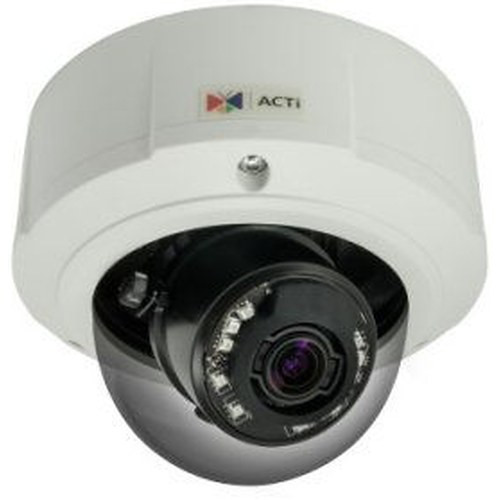
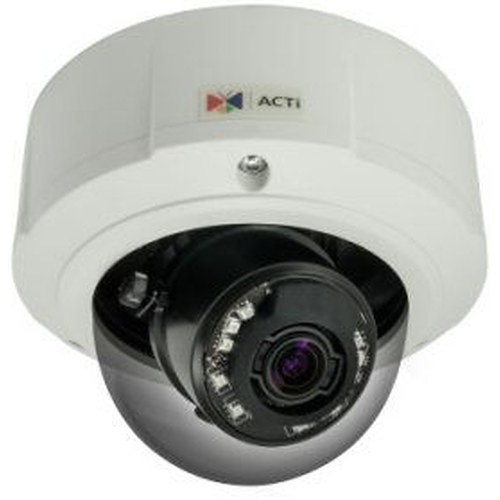
The ACTi B83 and ACTi B85 are both 2 MP outdoor zoom dome cameras sharing the same 1/2.8-inch sensor, 3.0–9.0 mm 3× optical zoom lens, IP67/IK10 housing, and PoE+ Class 3 power input. They target the same outdoor perimeter and entrance-monitoring applications. This comparison examines where the two models diverge—principally in WDR performance, maximum frame rate, ONVIF profile depth, certifications, and minor weight differences—to help installers and IT buyers choose the right unit for their site requirements.
In This Guide
How do the imaging specs compare?
Both cameras share a 1/2.8-inch sensor, a 3.0–9.0 mm 3× optical zoom lens, 850 nm IR illumination with a 40 m range, and a minimum color illumination of 0.003 lux (0 lux in B/W with IR active). The core low-light sensitivity is therefore identical between the two models based on the provided specifications.
The most significant imaging difference is WDR capability: the B83 is specified at Extreme WDR of 145 dB, while the B85 is specified at Basic WDR of 75 dB—a 70 dB gap that is substantial for scenes with simultaneous bright and shadowed zones such as entryways or parking structures. Frame rate is also a differentiator: the B83 supports up to 60 fps at 1920×1080 and 60 fps at 1280×720, whereas the B85 caps at 30 fps across all resolutions. For forensic-detail applications or fast-moving subjects, the B83's higher frame rate provides more captured frames per second.
What about installation and environment?
Both cameras carry identical environmental ratings: IP67 (dust-tight, submersion-resistant), IK10 (vandal-resistant to 20-joule impact), and an operating temperature range of −40 °C to 50 °C (−40 °F to 122 °F). Power input is identical for both: DC 12 V or PoE Class 3 (IEEE 802.3af/at). Mounting options listed for each model are also the same: wall, pole, pendant, corner, and rack.
One installation-side distinction is certifications: the B85 carries CE Class B, FCC Class B, EAC, CB, UL Listed (UL 60950-1), and NEMA 4X listings per the provided specs. The B83's specifications do not include a certifications field in the provided data, so no equivalent list can be confirmed for that model. Weight differs slightly—B83 is listed at 1,266 g (2.791 lb) versus B85 at 1,291 g (2.846 lb)—a negligible difference for mounting hardware selection.
Which fits your VMS and analytics better?
ONVIF compliance differs between the two models. The B83 is listed as compliant with ONVIF Profile S, G, T, Q, and M (Profile M noted as available through a future firmware upgrade per the spec). The B85 is listed as compliant with ONVIF Profile S, G, T, and Q only—Profile M is not listed. Profile T adds H.265 and metadata streaming support; Profile M adds metadata for analytics events. Installers integrating with VMS platforms that leverage Profile T or Profile M should verify their specific software requirements against each model's confirmed firmware state.
Edge analytics specified for both models are VMD (video motion detection), People Counting, and Smoke Detection. Audio capability is listed as two-way (line-in, line-out) for both models. Neither model's provided specifications include an on-board storage (SD card) field; this spec is absent for both and cannot be confirmed from the data supplied.
Which should you choose: the B83 or the B85?
Our take: The B83 is the stronger choice when high-contrast scene rendering and smooth motion capture are the primary requirements. The B83's 145 dB Extreme WDR outperforms the B85's 75 dB Basic WDR by 70 dB—a material advantage at building entrances, driveways, or any scene mixing direct sunlight and shade. The B83 also delivers up to 60 fps at full 1920×1080 resolution versus the B85's 30 fps cap, which benefits license-plate or fast-subject capture. Additionally, the B83's ONVIF Profile M support (via firmware) extends analytics metadata integration options absent from the B85's confirmed profile list. The B85 holds an edge in documented certifications—UL Listed (UL 60950-1) and NEMA 4X are explicitly confirmed in its specs but are not listed in the B83's provided data—which may matter for projects with compliance mandates. Where certifications are a contract requirement and WDR demands are moderate, verify B83 certification status with ACTi before specifying.
Side-by-Side Comparison
Spec-for-spec, from manufacturer data.
| Specification | ACTi B83 | ACTi B85 |
|---|---|---|
| Resolution | 2 MP | 2 MP |
| Image Sensor | 1/2.8 inch | 1/2.8 inch |
| Lens / Focal Length | 3.0–9.0 mm, 3× optical zoom | 3.0–9.0 mm, 3× optical zoom |
| Min Illumination (Color) | 0.003 lux @ F1.3 | 0.003 lux @ F1.2 |
| Min Illumination (B/W) | 0 lux (IR on) | 0 lux (IR on) |
| IR Range | 40 m | 40 m |
| IR Wavelength | 850 nm | 850 nm |
| WDR | Extreme WDR, 145 dB | Basic WDR, 75 dB |
| Max Frame Rate | 60 fps @ 1920×1080; 60 fps @ 1280×720 | 30 fps @ 1920×1080; 30 fps @ 1280×720 |
| Video Compression | H.264 (Baseline/Main/High); MJPEG | H.264 (Baseline/Main/High); MJPEG |
| ONVIF Profiles | S, G, T, Q, M (M via future firmware) | S, G, T, Q |
| IP Rating | IP67 | IP67 |
| IK Rating | IK10 | IK10 |
| Operating Temperature | -40°C to 50°C (-40°F to 122°F) | -40°C to 50°C (-40°F to 122°F) |
| Power Input / PoE Class | DC 12V; PoE Class 3 (IEEE 802.3af/at) | DC 12V; PoE Class 3 (IEEE 802.3af/at) |
| Certifications | — | CE Class B; FCC Class B; EAC; CB; UL Listed (UL 60950-1); NEMA 4X |
| Audio | Two-way (line-in, line-out) | Two-way (line-in, line-out) |
| Edge Analytics | VMD; People Counting; Smoke Detection | VMD; People Counting; Smoke Detection |
| Weight | 1,266 g (2.791 lb) | 1,291 g (2.846 lb) |
Frequently Asked Questions
Which should you choose: the B83 or the B85?
The B83 is the stronger choice when high-contrast scene rendering and smooth motion capture are the primary requirements. The B83's 145 dB Extreme WDR outperforms the B85's 75 dB Basic WDR by 70 dB—a material advantage at building entrances, driveways, or any scene mixing direct sunlight and shade. The B83 also delivers up to 60 fps at full 1920×1080 resolution versus the B85's 30 fps cap, which benefits license-plate or fast-subject capture. Additionally, the B83's ONVIF Profile M support (via firmware) extends analytics metadata integration options absent from the B85's confirmed profile list. The B85 holds an edge in documented certifications—UL Listed (UL 60950-1) and NEMA 4X are explicitly confirmed in its specs but are not listed in the B83's provided data—which may matter for projects with compliance mandates. Where certifications are a contract requirement and WDR demands are moderate, verify B83 certification status with ACTi before specifying.
Is the B83 or B85 better for scenes with bright sunlight and dark shadows, like a building entrance?
Based on the provided specifications, the B83 is better suited for high-contrast scenes. It is rated at 145 dB Extreme WDR versus the B85's 75 dB Basic WDR—a 70 dB difference that indicates significantly greater ability to render detail in both bright and shadowed areas simultaneously.
Do both cameras work with the same VMS platforms via ONVIF?
Both cameras support ONVIF Profile S, G, T, and Q per the provided specs. The B83 additionally lists Profile M (via a future firmware upgrade), which adds analytics metadata event streaming. If your VMS requires Profile M, the B83 is the specified option, though you should confirm firmware availability with ACTi before deploying.
Are there any meaningful differences in how the B83 and B85 are installed or powered?
No meaningful differences in power or environmental ratings exist based on the provided specifications: both use DC 12 V or PoE Class 3 (IEEE 802.3af/at), both are rated IP67 and IK10, and both operate from −40 °C to 50 °C. Mounting options are identical. The primary installation-side distinction is that the B85 lists explicit certifications (UL Listed UL 60950-1, NEMA 4X, CE, FCC, EAC, CB) in the provided data, while equivalent certifications are not listed in the B83's provided specifications.
Get a Second Opinion on Your Camera Choice
Share your site layout, coverage goals, and budget. Our team will validate the camera selection, flag anything we would change, and recommend products that match the use case.