
ACTi B57 vs Hanwha XND-8082RV: Specification Comparison
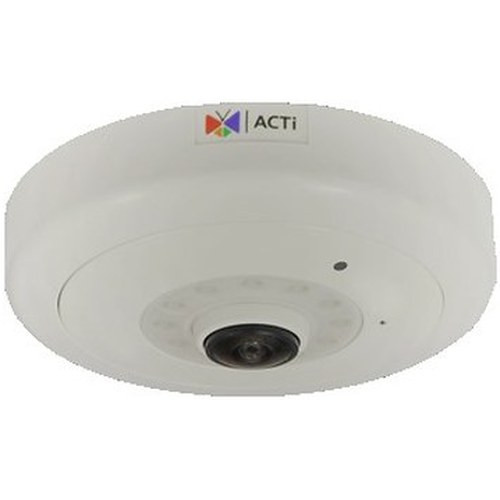
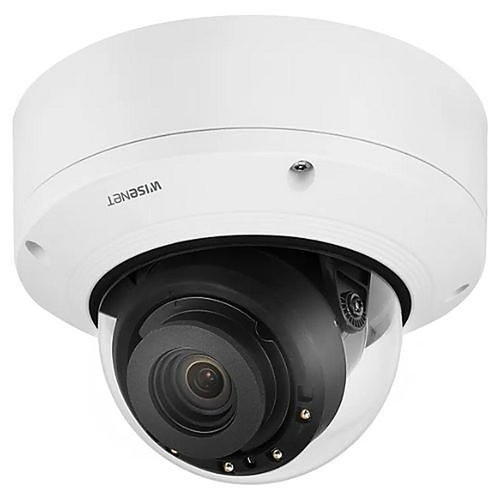
Both the ACTi B57 and Hanwha XND-8082RV are 6MP indoor fixed cameras targeting commercial surveillance installations. However, they serve meaningfully different use cases: the B57 is a hemispheric fisheye dome delivering 360° coverage with on-board people counting, while the XND-8082RV is a conventional narrow-field dome with a motorized varifocal lens, IK10 vandal resistance, and H.265 compression. Buyers cross-shopping these will be weighing wide-area situational awareness against targeted, adjustable-field coverage in higher-risk indoor environments.
In This Guide
How do the imaging specs compare?
Both cameras resolve at 6MP, but their native pixel arrays and lens configurations differ fundamentally. The B57 uses a 1/1.8-inch CMOS sensor at 3096×2080 with a fixed f/1.3mm fisheye lens, delivering ePTZ-enabled 360° coverage at up to 20 fps at full 3072×2048 resolution (30 fps at sub-megapixel modes). Its WDR is rated at 130dB, and minimum illumination reaches 0.003 lux in color (F2.6) with 850nm IR illuminating to 20m. The XND-8082RV uses a 1/2.8-inch CMOS sensor at 3328×1872 with a motorized varifocal 2.8–8.4mm lens providing 3× optical zoom and remote focus adjustment, running at 30 fps at full 6MP in H.265 or H.264.
On low-light performance, the B57's 0.003 lux color sensitivity and 20m IR range outclass the XND-8082RV's 0.05 lux color (F1.2) with a stated 40m IR range — though the XND-8082RV's spec also lists '0.7m IR illumination' in one field, which conflicts with the 40m range noted elsewhere in its spec data. The B57's 130dB WDR exceeds the XND-8082RV's 120dB WDR. The B57's larger 1/1.8-inch sensor versus the XND-8082RV's 1/2.8-inch sensor is consistent with its lower lux figure. The XND-8082RV's varifocal lens provides scene-framing flexibility the fixed-lens B57 cannot match.
What about installation and environment?
The XND-8082RV carries a clear environmental and physical durability advantage for indoor high-risk sites: it is rated IP52 and IK10 (impact resistant), making it suitable for locations subject to deliberate tampering or accidental impact. Its operating temperature range extends from -25°C to +60°C. It accepts PoE (802.3af) or 12VDC input. The B57 carries no IP or IK rating in its provided specifications, limiting its suitability for environments where ingress protection or vandal resistance is a requirement. The B57 operates from -10°C to 50°C, a narrower range on both ends.
Mounting options differ by form factor. The B57 supports wall, pole, pendant, corner, and rack mounts — a broader mechanical footprint appropriate for its hemispheric coverage use case. The XND-8082RV is specified for ceiling mount. Both cameras accept PoE Class 3. The XND-8082RV adds a USB interface (per its connectivity spec) and dual microSD card slots supporting up to 512GB each. The B57 does not list on-board storage capacity in its provided specifications. The XND-8082RV also specifies 4GB RAM and 512MB Flash onboard. The B57's weight is 461g (1.02 lb); the XND-8082RV's weight is not provided in the supplied specifications.
Which fits your VMS and analytics better?
Both cameras support ONVIF Profile S, G, and T, providing broad VMS compatibility. The B57 additionally lists Milestone XProtect and Axis Camera Station as verified VMS partners. The XND-8082RV adds SUNAPI (HTTP API) for deeper Hanwha/Wisenet ecosystem integration. Neither camera's provided specifications indicates proprietary VMS lock-in beyond those named integrations.
Edge analytics differ in scope. The B57 includes video motion detection and people counting on-board. The XND-8082RV provides a broader analytics set per its specifications: defocus detection, directional detection, motion detection, digital auto tracking, audio detection, shock detection, and face/upper body detection. On audio, both cameras support audio input; the B57 adds a built-in microphone, mic-in, line-in, and line-out for full two-way audio. The XND-8082RV lists audio input with selectable mic-in, line-in, or built-in mic, but does not list a line-out or explicit two-way audio output in the provided specifications. The XND-8082RV supports dual microSD (up to 512GB each) and HTTPS encryption for cybersecurity; the B57's on-board storage configuration is not specified in the provided data.
Which should you choose: the B57 or the XND-8082RV?
Our take: The XND-8082RV is the stronger choice when the deployment requires adjustable field of view, vandal resistance, or a richer on-board analytics suite in a conventional dome form factor. Its IK10 rating, IP52 ingress protection, motorized 2.8–8.4mm varifocal lens (3× optical zoom), H.265 compression, and broader analytics set (face/upper body, digital auto tracking, shock detection) make it better suited to targeted coverage of high-risk indoor zones. The B57 is the stronger choice when 360° area coverage from a single camera is the priority: its fixed fisheye delivers full hemispheric situational awareness with ePTZ, its 130dB WDR edges the XND-8082RV's 120dB, its 0.003 lux color sensitivity is meaningfully lower than the XND-8082RV's 0.05 lux, and it provides confirmed two-way audio with line-out. Neither camera should be selected solely on resolution — both are 6MP. Choose the B57 for open-plan spaces requiring coverage consolidation; choose the XND-8082RV for corridors, entrances, or vandal-risk zones where lens adjustability and physical durability are required.
Side-by-Side Comparison
Spec-for-spec, from manufacturer data.
| Specification | ACTi B57 | Hanwha XND-8082RV |
|---|---|---|
| Resolution | 6MP (3096 × 2080) | 6MP (3328 × 1872) |
| Image Sensor Size | 1/1.8 inch CMOS | 1/2.8 inch CMOS |
| Lens / Focal Length | Fixed fisheye f/1.3mm | Motorized varifocal 2.8–8.4mm (3× zoom) |
| Min Illumination (Color) | 0.003 lux (F2.6) | 0.05 lux (F1.2) |
| Min Illumination (B/W / IR on) | 0 lux (IR on) | 0 lux (IR on) |
| IR Range | 20m (850nm) | 40m (per IR_Range spec; note: conflicting 0.7m value in IR_Distance field — verify with datasheet) |
| WDR | 130dB | 120dB (Extreme WDR) |
| Max Frame Rate | 20 fps @ 3072×2048; 30 fps @ 1024×768 | 30 fps @ 6MP |
| Video Compression | H.264 (Baseline/Main/High); MJPEG | H.265; H.264; MJPEG |
| IP Rating | — | IP52 |
| IK / Impact Rating | — | IK10 |
| Operating Temperature | -10°C to +50°C (14°F to 122°F) | -25°C to +60°C (-13°F to +140°F) |
| Power Input / PoE Class | PoE+ (802.3at) Class 3; DC 12V | PoE (802.3af); DC 12V |
| Edge Storage | — | Dual microSD up to 512GB each |
| Audio | Two-way: built-in mic, mic-in, line-in, line-out | Audio input: selectable mic-in / line-in / built-in mic |
| Weight | 461g (1.02 lb) | — |
| Warranty | — | 5-Year Warranty |
| ONVIF | Profile S, G, T (Profile Q via future firmware) | Profile S, G, T |
Frequently Asked Questions
Which should you choose: the B57 or the XND-8082RV?
The XND-8082RV is the stronger choice when the deployment requires adjustable field of view, vandal resistance, or a richer on-board analytics suite in a conventional dome form factor. Its IK10 rating, IP52 ingress protection, motorized 2.8–8.4mm varifocal lens (3× optical zoom), H.265 compression, and broader analytics set (face/upper body, digital auto tracking, shock detection) make it better suited to targeted coverage of high-risk indoor zones. The B57 is the stronger choice when 360° area coverage from a single camera is the priority: its fixed fisheye delivers full hemispheric situational awareness with ePTZ, its 130dB WDR edges the XND-8082RV's 120dB, its 0.003 lux color sensitivity is meaningfully lower than the XND-8082RV's 0.05 lux, and it provides confirmed two-way audio with line-out. Neither camera should be selected solely on resolution — both are 6MP. Choose the B57 for open-plan spaces requiring coverage consolidation; choose the XND-8082RV for corridors, entrances, or vandal-risk zones where lens adjustability and physical durability are required.
Is the ACTi B57 or Hanwha XND-8082RV better for low-light performance?
Based on the provided specifications, the B57 has a lower minimum illumination — 0.003 lux in color versus the XND-8082RV's 0.05 lux in color — and a larger 1/1.8-inch sensor compared to the XND-8082RV's 1/2.8-inch sensor. The B57's 850nm IR covers 20m. The XND-8082RV's spec lists a 40m IR range in one field but also shows '0.7m' in another, which is an inconsistency in the supplied data that should be verified against the manufacturer's datasheet before specifying.
Which camera is better suited for a location where vandalism is a concern?
The Hanwha XND-8082RV is the appropriate choice. It carries an IK10 impact-resistance rating and an IP52 ingress-protection rating per its provided specifications. The ACTi B57 does not list an IK or IP rating in its provided specifications, so no claim of vandal or ingress resistance can be made for it based on the available data.
Can either camera replace multiple fixed cameras for wide-area coverage?
The ACTi B57 is specifically designed for this application. Its fixed 1.3mm fisheye lens delivers 360° hemispheric coverage with ePTZ virtual pan/tilt/zoom, and ACTi's own product materials position it as a replacement for multiple fixed cameras in open-plan indoor environments. The Hanwha XND-8082RV uses a conventional varifocal lens (2.8–8.4mm, 3× zoom) and covers a single adjustable field of view; it is not a wide-area replacement camera.
Get a Second Opinion on Your Camera Choice
Share your site layout, coverage goals, and budget. Our team will validate the camera selection, flag anything we would change, and recommend products that match the use case.