
ACTi A87 vs ACTi Z715: Specification Comparison
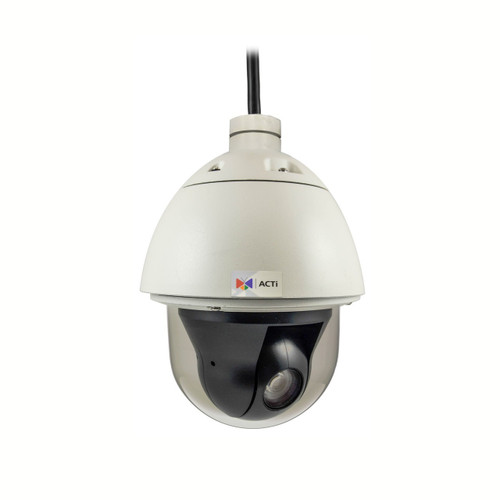
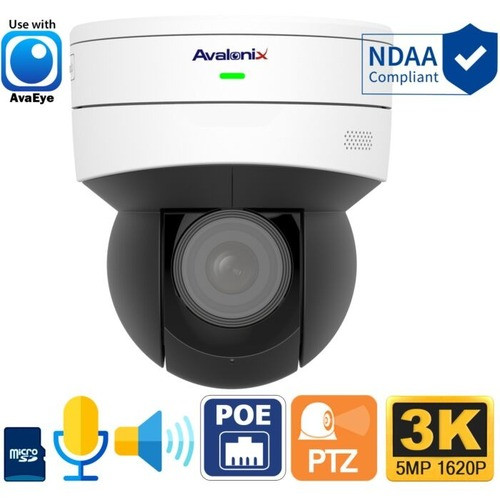
Both the ACTi A87 and ACTi Z715 are 5MP outdoor IP dome cameras designed for perimeter and area surveillance. The A87 is a full-size zoom dome with a varifocal lens and extended environmental ratings, while the Z715 is a compact mini dome with a fixed wide-angle lens. Buyers choosing between them are weighing flexibility—pan/tilt adjustment, zoom range, and multi-mount options—against a simpler, lower-power fixed installation. Both share the same sensor resolution class and vandal-resistant IK10 construction, making them legitimate cross-shop candidates for outdoor deployments.
In This Guide
How do the imaging specs compare?
Both cameras resolve at 5MP, but their optical approaches differ substantially. The A87 uses a 2.8–12mm varifocal lens (yielding approximately 4.3x optical zoom per the lens spec) on a 1/2.9-inch sensor, delivering up to 30 fps at 2592×1944. It specifies Advanced WDR at 120 dB, a minimum illumination of 0.15 lux in color and 0 lux in B/W with IR active, and an IR range of 30 meters using adaptive 700–1150nm LEDs. The Z715 uses a fixed 2.8mm f/1.6 lens covering a 112.9° field of view. Its WDR level is listed only as 'WDR' with no dB figure provided in the supplied specifications, and minimum illumination and IR range figures are not specified—only 'Adaptive IR; Day/Night' is noted.
For installers who need to frame a scene precisely or cover a long corridor, the A87's varifocal range is a material advantage; the Z715's wide fixed lens suits broad, close-in coverage where lens adjustment after mounting is not required. The A87's 120 dB WDR figure and documented 0.15/0 lux thresholds give procurement teams concrete numbers for low-light and high-contrast scene evaluation; equivalent numbers are absent from the Z715 spec set provided.
What about installation and environment?
The A87 carries IP66, NEMA 4X, and IK10 ratings with certification from CE Class A, FCC Class A, EAC, CB, UL (UL 62368-1), and EAC. It operates from −40°C to +50°C (−40°F to +122°F), making it suitable for extreme cold environments such as unheated outdoor enclosures or northern climates. It accepts DC 12V or PoE Class 3 (802.3af/802.3at up to 30W) and supports wall, pole, pendant, corner, and rack mounting with a 2-meter cable tail. The Z715 is rated IP67 and IK10; IP67 provides full dust exclusion and temporary water immersion resistance versus the A87's IP66 (dust exclusion, water jet resistance). The Z715 draws standard PoE (802.3af) only—lower power budget. Operating temperature and mounting options for the Z715 are not specified in the provided data.
The A87's broader mount compatibility and dual-power input (12VDC or PoE) give installers more flexibility on retrofit sites where conduit power is already run. The Z715's 802.3af draw is an advantage on switches without 802.3at ports, but its lower power budget may constrain IR output, though IR wattage is not documented for either model.
Which fits your VMS and analytics better?
The A87 specifies ONVIF Profile S, G, T, and Q compliance plus Pelco-D and Pelco-P serial protocol support, and lists VMD (video motion detection) and People Counting as on-board analytics. Audio is two-way with mic-in, line-in, and line-out connections. No on-board storage specification is listed for the A87 in the provided data.
The Z715 lists ONVIF compliance without specifying which profiles are supported. Its analytics capabilities are not specified beyond what ONVIF itself implies. Audio is limited to a built-in microphone (no line-in or line-out). The Z715 includes a MicroSD card slot for edge storage, which is not listed for the A87. Buyers on VMS platforms requiring specific ONVIF profiles (G for edge recording, T for H.265 metadata) should verify Z715 profile support directly with ACTi before specifying, as profile detail is absent from the supplied specs.
Which should you choose: the A87 or the Z715?
Our take: The A87 is the stronger choice when scene framing flexibility, extended temperature range, or richer analytics and audio I/O are required. Three concrete spec deltas support this: first, the A87's 2.8–12mm varifocal lens versus the Z715's fixed 2.8mm gives installers optical zoom for repositioning coverage post-install without remounting; second, the A87 documents a 120 dB Advanced WDR rating and 0 lux IR sensitivity to 30 meters, while the Z715 supplies no equivalent figures, leaving low-light performance unverifiable from spec alone; third, the A87 supports two-way audio with line-level I/O and four named ONVIF profiles plus Pelco serial, versus the Z715's built-in mic only and unspecified ONVIF profiles. The Z715's advantages are its IP67 rating (one step above IP66 for immersion), lower 802.3af power draw, and on-board MicroSD storage—making it a practical fit for simple wide-area coverage on switches without PoE+ ports where edge recording is needed.
Side-by-Side Comparison
Spec-for-spec, from manufacturer data.
| Specification | ACTi A87 | ACTi Z715 |
|---|---|---|
| Resolution | 5MP | 5MP |
| Form Factor | Zoom Dome | Mini Dome |
| Image Sensor Size | 1/2.9 inch | — |
| Lens / Focal Length | 2.8–12mm varifocal (~4.3x optical zoom) | 2.8mm fixed, f/1.6 |
| Field of View | — | 112.9° |
| Min Illumination | 0.15 lux (color); 0 lux (B/W with IR) | — |
| IR Range | 30m | — |
| WDR | Advanced WDR (120 dB) | WDR (dB not specified) |
| Max Frame Rate | 30 fps @ 2592×1944 | — |
| Video Compression | H.265; H.264 (B/M/H); MJPEG | H.265; H.264 |
| IP Rating | IP66 / NEMA 4X | IP67 |
| IK / Impact Rating | IK10 | IK10 |
| Operating Temperature | -40°C to +50°C | — |
| Power Input / PoE Class | DC 12V or PoE Class 3 (802.3af/802.3at, up to 30W) | PoE (802.3af) |
| ONVIF Profiles | Profile S, G, T, Q; Pelco-D; Pelco-P | ONVIF (profiles not specified) |
| Edge Analytics | VMD; People Counting | — |
| Audio | Two-way; Mic-in; Line-in; Line-out | Built-in microphone |
| Edge Storage | — | MicroSD card slot |
| PTZ / Adjustment Range | Pan ±135°; Tilt 0°–90°; Rotation ±90° | — |
| Weight | 858g (1.892 lb) | — |
| Certifications | CE-A; FCC-A; EAC; CB; UL 62368-1; NEMA 4X; IK10; IP66 | IK10; IP67 |
Frequently Asked Questions
Which should you choose: the A87 or the Z715?
The A87 is the stronger choice when scene framing flexibility, extended temperature range, or richer analytics and audio I/O are required. Three concrete spec deltas support this: first, the A87's 2.8–12mm varifocal lens versus the Z715's fixed 2.8mm gives installers optical zoom for repositioning coverage post-install without remounting; second, the A87 documents a 120 dB Advanced WDR rating and 0 lux IR sensitivity to 30 meters, while the Z715 supplies no equivalent figures, leaving low-light performance unverifiable from spec alone; third, the A87 supports two-way audio with line-level I/O and four named ONVIF profiles plus Pelco serial, versus the Z715's built-in mic only and unspecified ONVIF profiles. The Z715's advantages are its IP67 rating (one step above IP66 for immersion), lower 802.3af power draw, and on-board MicroSD storage—making it a practical fit for simple wide-area coverage on switches without PoE+ ports where edge recording is needed.
Is the A87 or Z715 better for low-light performance?
Based on the provided specifications, the A87 is the only model with documented low-light figures: 0.15 lux in color and 0 lux in B/W with IR active, with a stated IR range of 30 meters. The Z715 lists 'Adaptive IR; Day/Night' but provides no minimum illumination value or IR range in the supplied specs, so a direct numeric comparison cannot be made.
Can I use the Z715 on a standard 802.3af PoE switch without upgrading hardware?
Yes. The Z715 draws standard PoE (802.3af), which is supported on most existing managed switches. The A87 specifies PoE Class 3 under 802.3af/802.3at with up to 30W draw; installers should confirm their switch port supports 802.3at (PoE+) if powering the A87 via PoE, or supply DC 12V locally instead.
Which camera supports on-board edge storage for recording without an NVR?
The Z715 specifications list a MicroSD card slot for local edge storage. The A87 specifications provided do not mention an SD card slot or any on-board storage capability. Buyers requiring standalone recording without an NVR should verify A87 storage support directly with ACTi, and can rely on the Z715's documented MicroSD slot for that use case.
Get a Second Opinion on Your Camera Choice
Share your site layout, coverage goals, and budget. Our team will validate the camera selection, flag anything we would change, and recommend products that match the use case.