
ACTi A83 vs ACTi Z97: Specification Comparison
Both the ACTi A83 and ACTi Z97 are 2MP outdoor IP dome cameras aimed at perimeter and facility surveillance, making them a valid cross-shop for installers evaluating a motorized-zoom dome against a fixed wide-angle mini dome. The comparison covers imaging capability, environmental durability, power requirements, and platform integration — areas where the two cameras diverge meaningfully despite sharing the same resolution class and brand.
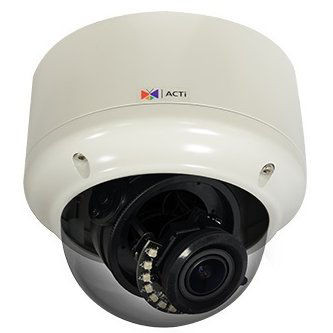
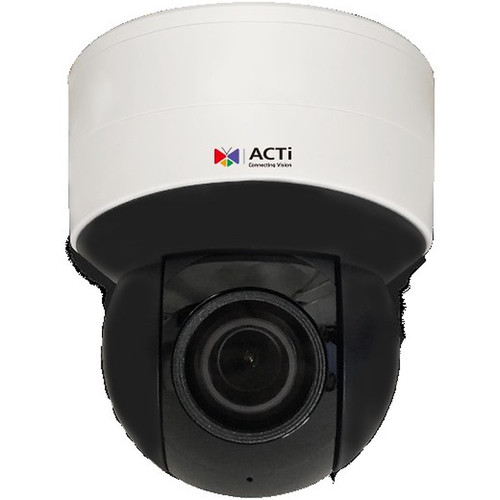
In This Guide
How do the imaging specs compare?
The A83 uses a 1/2.8" sensor paired with a 2.8–12mm motorized varifocal lens delivering approximately 4.3× optical zoom, enabling remote field-of-view adjustment post-installation. Minimum illumination is rated at 0.002 lux (color) and 0.001 lux (B/W) at F1.4, dropping to 0 lux with IR active. Its 12× adaptive IR LEDs cover a 30m working distance at 850nm. Extreme WDR is specified at 142 dB. Maximum frame rate is 30fps at 1920×1080.
The Z97 uses a 2.8mm fixed lens at f/2.0 with a 102.1° horizontal field of view — suited to wide-area entrance coverage from a single mounting point. Minimum illumination, IR working distance, sensor size, and WDR dB value are not specified in the provided data; the listing notes WDR and IR as present but without quantified performance figures. Maximum frame rate is also 30fps at 1080p. Buyers requiring measured low-light or WDR benchmarks for the Z97 should consult the manufacturer datasheet directly.
What about installation and environment?
The A83 carries IP66 (dust-tight, protected against powerful water jets) and NEMA 4X ratings alongside IK10 impact resistance, and operates from −40°C to 50°C (−40°F to 122°F) — a range that covers arctic and subtropical deployments. It accepts DC 12V or PoE+ (802.3at, Class 3) at up to 13W. Mounting options include wall, pole, pendant, corner, and rack via accessory mounts, with a 2m pigtail cable and 1× RJ-45 connector. Unit weight is 877.5g.
The Z97 is rated IP68 (dust-tight and protected against continuous immersion) and IK10, making it the stronger choice for wash-down, submersion-risk, or marine-adjacent environments where IP66 is insufficient. It draws standard PoE (802.3af) — no PoE+ injector or switch port budget required. Operating temperature range, dimensions, and weight are not provided in the available specifications for the Z97.
Which fits your VMS and analytics better?
The A83 is explicitly ONVIF-compliant at Profiles S, G, T, and Q, and additionally supports Pelco-D and Pelco-P protocols, broadening compatibility with legacy VMS platforms. Edge analytics include Video Motion Detection (VMD) and People Counting. Two-way audio is supported via mic-in, line-in, and line-out connections. On-board storage capability is not specified in the provided data.
The Z97 lists H.265 and H.264 compression (the A83 additionally supports MJPEG) and includes a MicroSD slot for on-board edge storage — useful for buffering or standalone recording where NVR connectivity is intermittent. ONVIF profile support, audio capability, and edge analytics are not detailed in the Z97's provided specifications; buyers requiring those capabilities should verify against the manufacturer datasheet.
Which should you choose: the A83 or the Z97?
Our take: The A83 is the stronger choice when optical zoom reach, quantified low-light performance, and deep VMS/analytics integration are the primary requirements. Its 4.3× motorized varifocal lens allows remote FOV tuning without remounting, its 142 dB Extreme WDR outperforms the Z97's unquantified WDR figure, and its minimum illumination of 0.002 lux (color) with 30m IR gives measurable night-performance data. Two-way audio, ONVIF Profiles S/G/T/Q plus Pelco-D/P, VMD, and People Counting add capability the Z97's spec sheet does not confirm. The Z97 earns its place where IP68 immersion resistance is mandatory — IP66 on the A83 does not cover sustained submersion — and where a standard 802.3af port (no PoE+) is the only available power source. For wide-angle fixed-lens entrance coverage on PoE-af infrastructure in wet or wash-down environments, the Z97 is the appropriate fit.
Side-by-Side Comparison
Spec-for-spec, from manufacturer data.
| Specification | ACTi A83 | ACTi Z97 |
|---|---|---|
| Resolution | 2 MP (1920×1080) | 2 MP (1920×1080) |
| Image Sensor | 1/2.8" | — |
| Lens / Focal Length | 2.8–12mm motorized varifocal (4.3× optical zoom) | 2.8mm fixed, f/2.0 (102.1° HOV) |
| Min Illumination | 0.002 lux color / 0.001 lux B&W @ F1.4; 0 lux (IR on) | — |
| IR Range | 30m (850nm, 12× adaptive IR LEDs) | — (IR present; range not specified) |
| WDR | Extreme WDR — 142 dB | WDR (dB value not specified) |
| Max Frame Rate | 30fps @ 1920×1080 | 30fps @ 1080p |
| Video Compression | H.265; H.264; MJPEG | H.265; H.264 |
| IP Rating | IP66 / NEMA 4X | IP68 |
| IK / Impact Rating | IK10 | IK10 |
| Operating Temperature | −40°C to 50°C (−40°F to 122°F) | — |
| Power Input / PoE Class | DC 12V or PoE+ 802.3at Class 3 (13W max) | PoE 802.3af |
| Edge Storage | — | MicroSD |
| Audio | Two-way (mic-in, line-in, line-out) | — |
| ONVIF | Profile S, G, T, Q; Pelco-D; Pelco-P | — |
| Warranty | 3 years | — |
Frequently Asked Questions
Which should you choose: the A83 or the Z97?
The A83 is the stronger choice when optical zoom reach, quantified low-light performance, and deep VMS/analytics integration are the primary requirements. Its 4.3× motorized varifocal lens allows remote FOV tuning without remounting, its 142 dB Extreme WDR outperforms the Z97's unquantified WDR figure, and its minimum illumination of 0.002 lux (color) with 30m IR gives measurable night-performance data. Two-way audio, ONVIF Profiles S/G/T/Q plus Pelco-D/P, VMD, and People Counting add capability the Z97's spec sheet does not confirm. The Z97 earns its place where IP68 immersion resistance is mandatory — IP66 on the A83 does not cover sustained submersion — and where a standard 802.3af port (no PoE+) is the only available power source. For wide-angle fixed-lens entrance coverage on PoE-af infrastructure in wet or wash-down environments, the Z97 is the appropriate fit.
Is the A83 or Z97 better for low-light performance?
Based on available specifications, the A83 provides quantified low-light data: 0.002 lux (color) and 0.001 lux (B/W) at F1.4, reaching 0 lux with its 850nm IR LEDs active at up to 30m. The Z97's minimum illumination figure and IR working distance are not stated in the provided specs, so a direct numerical comparison cannot be made — consult the Z97 datasheet for those values before making a low-light decision.
Can the Z97 be used in a flooded or wash-down area where the A83 cannot?
Yes. The Z97 is rated IP68, meaning it is protected against continuous water immersion — the threshold for wash-down, flood-prone, or marine-adjacent installations. The A83 is rated IP66 (powerful water jets) and NEMA 4X, which covers most outdoor and hose-down scenarios but does not guarantee submersion protection. If the installation environment involves standing water or pressure washing that could submerge the camera, the Z97's IP68 rating is the appropriate choice.
Does the A83 or Z97 work with more VMS platforms?
The A83 specifies ONVIF Profiles S, G, T, and Q plus Pelco-D and Pelco-P protocol support, giving documented compatibility breadth across modern and legacy VMS systems. The Z97's ONVIF profile support is not listed in the provided specifications, so VMS compatibility for the Z97 should be confirmed directly with ACTi or the VMS vendor before deployment.
Get a Second Opinion on Your Camera Choice
Share your site layout, coverage goals, and budget. Our team will validate the camera selection, flag anything we would change, and recommend products that match the use case.