
ACTi A83 vs ACTi Z812: Specification Comparison
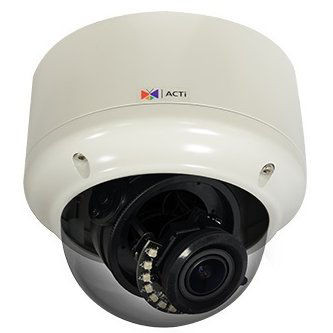
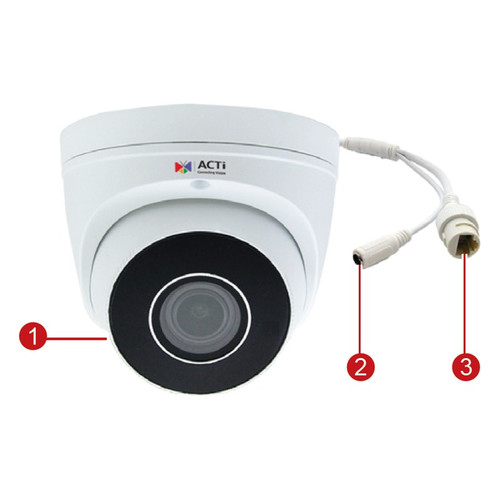
Both the ACTi A83 and ACTi Z812 are 2MP outdoor zoom dome cameras sharing an identical 2.8–12mm motorized lens range and IK10 vandal resistance, making them genuine cross-shop candidates for installers evaluating outdoor perimeter or general surveillance applications. The comparison surfaces meaningful differences in ingress protection class, PoE standard, WDR capability, VMS profile support, analytics, audio architecture, and operating temperature tolerance — all of which carry real deployment consequences depending on site conditions and integration requirements.
In This Guide
How do the imaging specs compare?
Both cameras deliver 2MP (1920×1080) at up to 30 fps and share a 2.8–12mm motorized zoom lens. The A83 specifies a 1/2.8" sensor, a minimum illumination of 0.002 lux (color) and 0.001 lux (B/W) at F1.4, and 0 lux with IR active, backed by 12 adaptive IR LEDs rated to a 30m working distance at 850nm. The Z812's sensor size, minimum illumination figure, IR LED count, and IR working distance are not specified in the provided data, making a direct low-light sensitivity comparison impossible from available specs.
On dynamic range, the A83 carries an Extreme WDR rating of 142 dB, a quantified figure relevant to high-contrast backlit scenes such as building entrances and parking exits. The Z812 is listed only as 'WDR' with no dB value provided. Video compression on the A83 includes H.265, H.264, and MJPEG; the Z812 supports H.265 and H.264 but MJPEG is not listed. Both cameras support up to 30 fps at full resolution.
What about installation and environment?
The A83 carries an IP66 rating (dust-tight, protected against powerful water jets) and is also rated NEMA 4X, while the Z812 is rated IP68 (dust-tight, protected against continuous submersion). Both achieve IK10 vandal resistance. For sites with standing water, flooding risk, or pressure-wash cleaning routines, IP68 on the Z812 provides a higher ingress protection tier; for sites requiring NEMA 4X compliance, only the A83 meets that standard.
Power input differs: the A83 accepts PoE+ (802.3at) at up to 13W maximum draw, and also supports DC 12V. The Z812 operates on standard PoE (802.3af) at below 13W typical — no DC 12V input is listed. The A83's operating temperature range is specified as –40°C to 50°C (–40°F to 122°F). No operating temperature range is provided for the Z812. Mounting options for the A83 include Wall, Pole, Pendant, Corner, and Rack; the Z812 lists Ceiling and Wall only.
Which fits your VMS and analytics better?
The A83 supports ONVIF Profiles S, G, T, and Q, as well as Pelco-D and Pelco-P protocols, broadening compatibility with legacy and current VMS platforms. The Z812 is listed as ONVIF Profile S only; Profiles G, T, Q, and serial protocols are not specified. On-board edge storage is listed for the Z812 (MicroSD) but is not mentioned in the A83's provided specifications.
For edge analytics, the A83 lists VMD (Video Motion Detection) and People Counting. No analytics capabilities are specified for the Z812. Audio architecture also differs: the A83 provides two-way audio with Mic-in, Line-in, and Line-out connections, and includes a 2m pigtail cable; the Z812 has a built-in microphone only, with no line-in or line-out listed. The A83 carries a stated 3-year warranty; no warranty term is provided for the Z812.
Which should you choose: the A83 or the Z812?
Our take: The A83 is the stronger choice when VMS breadth, low-light performance, analytics, or sub-zero operating conditions are priorities. On imaging, the A83 delivers a documented 142 dB Extreme WDR versus an unquantified WDR on the Z812, and specifies 0.002 lux color minimum illumination and a 30m IR range where the Z812 provides none of those figures. For integration, the A83 supports ONVIF Profiles S, G, T, and Q plus Pelco-D/P versus Profile S alone on the Z812, and adds People Counting analytics and two-way audio that the Z812 does not list. The Z812 holds a specific advantage where IP68 submersion resistance is required and a standard 802.3af switch is in place — its lower power budget simplifies retrofits on older infrastructure. Choose the Z812 for high-moisture or submersion-risk environments with Profile-S-only VMS; choose the A83 for sites demanding verified low-light data, broader protocol support, or arctic-rated temperature tolerance.
Side-by-Side Comparison
Spec-for-spec, from manufacturer data.
| Specification | ACTi A83 | ACTi Z812 |
|---|---|---|
| Resolution | 2 MP (1920×1080) | 2 MP (1920×1080) |
| Image Sensor Size | 1/2.8" | — |
| Lens / Focal Length | 2.8–12mm motorized (4.3x optical zoom) | 2.8–12mm motorized (4.3x zoom) |
| Min Illumination | Color: 0.002 lux @ F1.4; B/W: 0.001 lux @ F1.4; 0 lux (IR on) | — |
| IR Wavelength | 850nm | — |
| IR Range | 30m | — |
| WDR | Extreme WDR (142 dB) | WDR (no dB value specified) |
| Max Frame Rate | 30 fps @ 1920×1080 | 30 fps |
| Video Compression | H.265; H.264; MJPEG | H.265; H.264 |
| IP Rating | IP66 / NEMA 4X | IP68 |
| IK / Impact Rating | IK10 | IK10 |
| Operating Temperature | –40°C to 50°C (–40°F to 122°F) | — |
| Power Input / PoE Class | PoE+ (802.3at) / DC 12V; 13W max | PoE (802.3af); below 13W typical |
| ONVIF Profiles | S, G, T, Q; Pelco-D; Pelco-P | Profile S only |
| Edge Storage | — | MicroSD |
| Audio | Two-way (Mic-in, Line-in, Line-out) | Built-in microphone only |
| Analytics | VMD; People Counting | — |
| Mount Types | Wall; Pole; Pendant; Corner; Rack | Ceiling; Wall |
| Warranty | 3 years | — |
Frequently Asked Questions
Which should you choose: the A83 or the Z812?
The A83 is the stronger choice when VMS breadth, low-light performance, analytics, or sub-zero operating conditions are priorities. On imaging, the A83 delivers a documented 142 dB Extreme WDR versus an unquantified WDR on the Z812, and specifies 0.002 lux color minimum illumination and a 30m IR range where the Z812 provides none of those figures. For integration, the A83 supports ONVIF Profiles S, G, T, and Q plus Pelco-D/P versus Profile S alone on the Z812, and adds People Counting analytics and two-way audio that the Z812 does not list. The Z812 holds a specific advantage where IP68 submersion resistance is required and a standard 802.3af switch is in place — its lower power budget simplifies retrofits on older infrastructure. Choose the Z812 for high-moisture or submersion-risk environments with Profile-S-only VMS; choose the A83 for sites demanding verified low-light data, broader protocol support, or arctic-rated temperature tolerance.
Is the A83 or Z812 better for low-light performance?
Based on available specifications, the A83 is the only model with documented low-light figures: 0.002 lux (color) and 0.001 lux (B/W) at F1.4, dropping to 0 lux with its 850nm IR LEDs active at up to 30m. The Z812 lists IR and Day/Night capability but provides no minimum illumination value, IR wavelength, LED count, or working distance in the provided specs, so a quantified comparison cannot be made.
Which camera is better for an installation site that floods or gets pressure-washed?
The Z812 carries an IP68 rating, meaning it is rated for continuous submersion — a higher ingress protection level than the A83's IP66, which covers powerful water jets but not submersion. For sites with standing water, flood exposure, or aggressive pressure-wash cleaning, the Z812's IP68 rating provides greater protection. Both cameras share IK10 impact resistance.
Will either camera work with my existing 802.3af PoE switch?
The Z812 is specified to operate on standard 802.3af PoE below 13W typical, making it compatible with standard PoE switches. The A83 is specified as PoE+ (802.3at) at up to 13W maximum; while 13W falls within the 802.3af 15.4W budget in theory, the spec lists 802.3at as the designated standard — confirm with ACTi whether 802.3af ports are supported before deploying the A83 on a non-802.3at switch.
Get a Second Opinion on Your Camera Choice
Share your site layout, coverage goals, and budget. Our team will validate the camera selection, flag anything we would change, and recommend products that match the use case.