
ACTi A83 vs ACTi E69: Specification Comparison
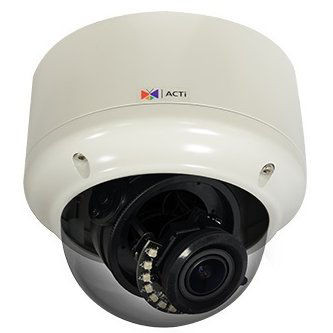
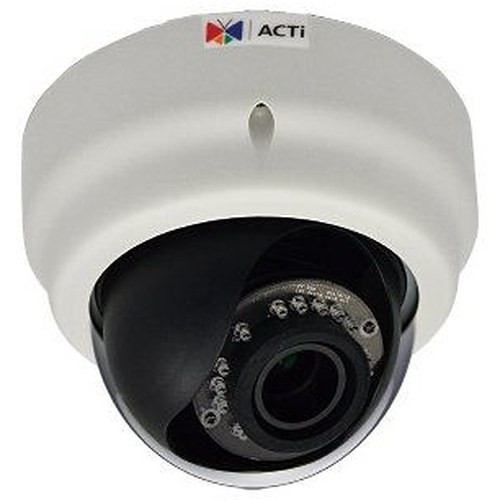
The ACTi A83 and ACTi E69 are both 2 MP dome cameras from the same manufacturer, making them natural candidates for cross-shoppers evaluating indoor versus outdoor deployments at equivalent resolution. The A83 is a motorized-zoom outdoor unit rated for harsh environments, while the E69 is a fixed varifocal indoor dome. This comparison covers imaging capability, installation and environmental suitability, and VMS/analytics integration to help installers and IT buyers allocate each model to the right application.
In This Guide
How do the imaging specs compare?
Both cameras output 1920×1080 at 2 MP. The A83 specifies a 1/2.8" sensor, a motorized 2.8–12 mm lens delivering approximately 4.3× optical zoom, and a minimum illumination of 0.002 lux (color) / 0.001 lux (B/W) at F1.4, dropping to 0 lux with IR active. It backs this with 12 adaptive IR LEDs rated to 30 m at 850 nm and Extreme WDR rated at 142 dB. The A83 also carries a specified max frame rate of 30 fps at full 1080p resolution.
The E69 specs describe a varifocal lens without stating a focal-length range, minimum illumination value, sensor size, or IR working distance. WDR is listed generically as 'WDR' with no dB rating provided. IR is noted as present alongside a Day/Night mode, but no range figure or LED count is given. Buyers requiring quantified low-light or WDR performance for the E69 should consult ACTi's datasheet directly, as those values are absent from the supplied specification set.
What about installation and environment?
The A83 carries IP66, IK10, and NEMA 4X ratings and is specified for –40 °C to 50 °C (–40 °F to 122 °F), making it suitable for exposed outdoor installations subject to water jets, dust ingress, and physical impact, as well as extreme cold. It accepts DC 12 V or PoE+ (802.3at, Class 3) at up to 13 W, requires a PoE+ capable switch or injector, and ships with a 2 m pigtail cable terminating in RJ-45. Mounting options listed include wall, pole, pendant, corner, and rack. Weight is 877.5 g.
The E69 is specified for indoor ceiling mounting only. No IP or IK ratings are stated in the provided specifications, and no operating temperature range is given, so environmental suitability cannot be confirmed from the available data. It draws under 13 W over standard 802.3af PoE, meaning it will run on legacy switches without a PoE+ upgrade—a meaningful infrastructure cost advantage in retrofit scenarios.
Which fits your VMS and analytics better?
The A83 declares ONVIF compliance with Profiles S, G, T, and Q, and also supports Pelco-D and Pelco-P serial protocols. Edge analytics include VMD (video motion detection) and People Counting. Two-way audio is supported via mic-in, line-in, and line-out connections. PTZ control ranges are specified as pan ±135°, tilt 0–90°, and rotation ±90°. No on-board edge storage specification is listed in the provided data.
The E69 lists 'ONVIF IP camera protocols' without specifying which profiles are supported. No edge analytics, audio input or output, or on-board storage capability is stated in the supplied specification set. Installers requiring profile-specific ONVIF feature negotiation (G for edge recording, T for metadata streaming) should verify E69 profile support with ACTi before specifying it in a project.
Which should you choose: the A83 or the E69?
Our take: The A83 is the stronger choice when the deployment demands outdoor-rated, analytically capable surveillance with verified environmental resilience. Concretely: the A83 carries IP66/IK10/NEMA 4X ratings versus no stated IP or IK rating on the E69; it specifies Extreme WDR at 142 dB versus a generic 'WDR' claim with no dB figure for the E69; and it declares ONVIF Profiles S, G, T, and Q plus Pelco-D/P versus unspecified ONVIF profiles on the E69. The A83 also adds People Counting analytics and two-way audio that are absent from the E69 spec set. However, the E69's 802.3af PoE (under 13 W) is a genuine infrastructure advantage in indoor retrofits where the switch plant has no PoE+ ports. Specify the A83 for perimeter, façade, or any environment requiring confirmed ingress protection and rich analytics; consider the E69 where the installation is strictly interior and switch budget constraints favor 802.3af.
Side-by-Side Comparison
Spec-for-spec, from manufacturer data.
| Specification | ACTi A83 | ACTi E69 |
|---|---|---|
| Resolution | 2 MP (1920×1080) | 2 MP (1920×1080) |
| Image Sensor | 1/2.8" | — |
| Lens / Focal Length | 2.8–12 mm motorized (≈4.3× optical zoom) | Varifocal (range not specified) |
| Min. Illumination | 0.002 lux color / 0.001 lux B/W @ F1.4; 0 lux (IR on) | — |
| IR Range | 30 m (850 nm, 12 adaptive LEDs) | Not specified |
| WDR | Extreme WDR — 142 dB | WDR (dB rating not specified) |
| Max Frame Rate | 30 fps @ 1920×1080 | — |
| Video Compression | H.265; H.264; MJPEG | — |
| IP Rating | IP66 | — |
| IK / Impact Rating | IK10 | — |
| NEMA Rating | NEMA 4X | — |
| Operating Temperature | –40 °C to 50 °C (–40 °F to 122 °F) | — |
| Power Input / PoE Class | PoE+ 802.3at Class 3 (max 13 W); DC 12 V | PoE 802.3af (under 13 W) |
| ONVIF Profiles | S, G, T, Q | Listed as compliant; profiles not specified |
| Edge Analytics | VMD; People Counting | — |
| Audio | Two-way (mic-in, line-in, line-out) | — |
| Mount Type | Wall; Pole; Pendant; Corner; Rack | Ceiling |
| Application Environment | Outdoor | Indoor |
| Weight | 877.5 g (1.935 lb) | — |
| Warranty | 3 years | — |
Frequently Asked Questions
Which should you choose: the A83 or the E69?
The A83 is the stronger choice when the deployment demands outdoor-rated, analytically capable surveillance with verified environmental resilience. Concretely: the A83 carries IP66/IK10/NEMA 4X ratings versus no stated IP or IK rating on the E69; it specifies Extreme WDR at 142 dB versus a generic 'WDR' claim with no dB figure for the E69; and it declares ONVIF Profiles S, G, T, and Q plus Pelco-D/P versus unspecified ONVIF profiles on the E69. The A83 also adds People Counting analytics and two-way audio that are absent from the E69 spec set. However, the E69's 802.3af PoE (under 13 W) is a genuine infrastructure advantage in indoor retrofits where the switch plant has no PoE+ ports. Specify the A83 for perimeter, façade, or any environment requiring confirmed ingress protection and rich analytics; consider the E69 where the installation is strictly interior and switch budget constraints favor 802.3af.
Is the A83 or E69 better for low-light performance?
Based on the provided specifications, the A83 is documentably stronger: it states a minimum illumination of 0.002 lux (color) and 0.001 lux (B/W) at F1.4, dropping to 0 lux with its 12 adaptive IR LEDs active at up to 30 m. The E69 lists IR and Day/Night capability but provides no minimum illumination figure, no IR working distance, and no LED count in the available spec data, so a direct numeric comparison cannot be made.
Can I run either camera on a standard 802.3af PoE switch?
The E69 is specified at under 13 W on 802.3af and will run on any standard PoE switch. The A83 requires PoE+ (802.3at, Class 3) at up to 13 W—despite the Class 3 label technically fitting within 802.3af's 15.4 W budget, ACTi's specification explicitly lists 802.3at, so a PoE+ switch or injector should be used to ensure compliance. DC 12 V is also listed as an alternative power source for the A83.
Which camera is appropriate for outdoor installation?
The A83 is explicitly rated for outdoor use with IP66 (dust-tight, water-jet resistant), IK10 (impact resistant), NEMA 4X, and an operating range of –40 °C to 50 °C. The E69 is specified for indoor ceiling mounting only; no IP rating, IK rating, or operating temperature range is provided in the available specifications, making it unsuitable for outdoor or harsh-environment deployment based on the data at hand.
Get a Second Opinion on Your Camera Choice
Share your site layout, coverage goals, and budget. Our team will validate the camera selection, flag anything we would change, and recommend products that match the use case.