
ACTi A83 vs ACTi B85: Specification Comparison
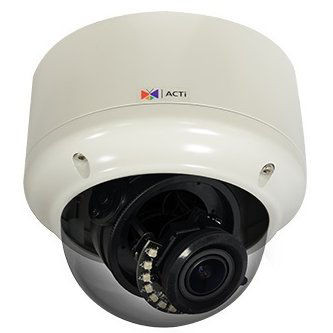
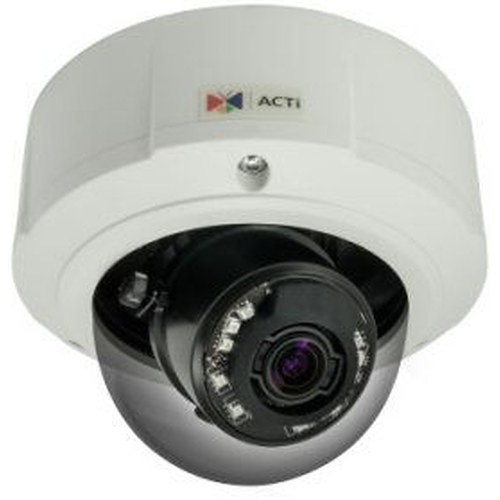
Both the ACTi A83 and ACTi B85 are 2MP outdoor zoom dome cameras sharing the same general resolution class, form factor, and varifocal lens category—making them legitimate cross-shop candidates for installers evaluating outdoor perimeter and fixed surveillance deployments. The comparison covers imaging capability, environmental and installation requirements, and integration fit across VMS, analytics, and audio, drawing exclusively from the specifications provided for each model.
In This Guide
How do the imaging specs compare?
Both cameras share a 1/2.8" sensor, 2MP (1920×1080) resolution at 30 fps, and 850nm IR illumination. The A83's motorized varifocal lens spans 2.8–12mm, providing a wider zoom range than the B85's 3.0–9mm lens. IR working distance differs meaningfully: the A83 is specified at 30m with 12 adaptive IR LEDs, while the B85 reaches 40m. Minimum illumination gives a slight edge to the A83 at 0.002 lux (color, F1.4) versus the B85's 0.003 lux (color, F1.2), though both reach 0 lux with IR active.
The most significant imaging differentiator is WDR performance. The A83 carries Extreme WDR rated at 142 dB, suited for scenes with severe backlight or high-contrast lighting transitions. The B85 is specified at Basic WDR of 75 dB—a 67 dB gap that is operationally relevant in entrances, parking structures, or any scene with mixed artificial and natural lighting. On compression, the A83 supports H.265, H.264, and MJPEG; the B85 is limited to H.264 (Baseline, Main, High profile) and MJPEG, meaning no H.265 bandwidth savings on the B85.
What about installation and environment?
Both cameras are rated IK10 for vandal resistance and NEMA 4X for weather protection, and both operate across an identical temperature range of -40°C to 50°C. The IP rating differs: the A83 is rated IP66 (protected against powerful water jets) while the B85 carries IP67 (protected against temporary immersion up to 1m). For most rooftop or wall-mount outdoor deployments this distinction is marginal, but the B85's IP67 rating may be preferred in low-elevation or flood-prone installations.
Power input is nominally identical—both accept DC 12V or PoE Class 3 (IEEE 802.3af)—though the A83's spec also references PoE+ (802.3at) and lists a maximum draw of 13W. The B85's wattage is not specified in the provided data. Weight differs substantially: the A83 is 877.5g versus the B85 at 1,291g, a 413g difference that may affect pendant or corner mount hardware selection. Both support Wall, Pole, Pendant, Corner, and Rack mounting. Certifications diverge: the A83 holds CE Class A and FCC Class A; the B85 holds CE Class B, FCC Class B, and adds CB and UL Listed (UL 60950-1)—the UL listing being relevant for projects with US code compliance requirements.
Which fits your VMS and analytics better?
Both cameras are ONVIF-compliant across Profile S, G, T, and Q. The A83 adds Pelco-D and Pelco-P protocol support per its provided specs; no equivalent legacy protocol support is listed for the B85. Edge analytics on both include VMD and People Counting. The B85 additionally lists Smoke Detection in its analytics spec; this capability is not listed for the A83.
Audio capability is two-way on both, but the A83 specifies Mic-in, Line-in, and Line-out; the B85 lists Line-in and Line-out only—no microphone input is specified, which affects deployments requiring direct microphone connection at the camera. On-board edge storage is not specified in the provided data for either model. The B85 lists a 6 Mbps network speed parameter; no equivalent value is listed for the A83.
Which should you choose: the A83 or the B85?
Our take: The A83 is the stronger choice when image fidelity in high-contrast or backlit conditions is the primary requirement. Its 142 dB Extreme WDR versus the B85's 75 dB Basic WDR is the single largest performance gap between these two models. The A83 also adds H.265 compression—reducing storage and bandwidth costs relative to the B85's H.264/MJPEG-only output—and supports a wider zoom range (2.8–12mm vs. 3.0–9mm). The B85 holds advantages in three areas: a longer IR range (40m vs. 30m), IP67 immersion-rated ingress protection versus the A83's IP66, and UL 60950-1 listing for jurisdictions requiring UL compliance. The B85 also carries Smoke Detection analytics not listed on the A83. Choose the A83 for backlit or high-contrast scenes and H.265-dependent infrastructure; choose the B85 where UL listing is mandated, longer IR throw is needed, or Smoke Detection is a project requirement.
Side-by-Side Comparison
Spec-for-spec, from manufacturer data.
| Specification | ACTi A83 | ACTi B85 |
|---|---|---|
| Resolution | 2 MP (1920×1080) | 2 MP (1920×1080) |
| Image Sensor | 1/2.8" | 1/2.8" |
| Lens / Focal Length | 2.8–12mm motorized varifocal (3x–4.3x optical zoom) | 3.0–9mm varifocal (3x optical zoom) |
| Min. Illumination (Color) | 0.002 lux @ F1.4 | 0.003 lux @ F1.2 |
| Min. Illumination (IR on) | 0 lux | 0 lux |
| IR Range | 30m (12 adaptive IR LEDs, 850nm) | 40m (850nm, Day/Night) |
| WDR | Extreme WDR — 142 dB | Basic WDR — 75 dB |
| Max Frame Rate | 30 fps @ 1920×1080 | 30 fps @ 1920×1080 |
| Video Compression | H.265; H.264; MJPEG | H.264 (Baseline/Main/High); MJPEG |
| IP Rating | IP66 | IP67 |
| IK / Impact Rating | IK10 | IK10 |
| NEMA Rating | NEMA 4X | NEMA 4X |
| Operating Temperature | -40°C to 50°C (-40°F to 122°F) | -40°C to 50°C (-40°F to 122°F) |
| Power Input / PoE Class | DC 12V; PoE+ (802.3at) Class 3 — 13W max | DC 12V; PoE Class 3 (IEEE 802.3af) — wattage not specified |
| Audio | Two-way: Mic-in, Line-in, Line-out | Two-way: Line-in, Line-out (no Mic-in specified) |
| Edge Analytics | VMD; People Counting | VMD; People Counting; Smoke Detection |
| ONVIF Profiles | S, G, T, Q; Pelco-D; Pelco-P | S, G, T, Q |
| Certifications | CE Class A; FCC Class A; EAC; NEMA 4X | CE Class B; FCC Class B; EAC; CB; UL Listed (UL 60950-1); NEMA 4X |
| Weight | 877.5g (1.935 lb) | 1,291g (2.846 lb) |
| Warranty | 3 years | — |
Frequently Asked Questions
Which should you choose: the A83 or the B85?
The A83 is the stronger choice when image fidelity in high-contrast or backlit conditions is the primary requirement. Its 142 dB Extreme WDR versus the B85's 75 dB Basic WDR is the single largest performance gap between these two models. The A83 also adds H.265 compression—reducing storage and bandwidth costs relative to the B85's H.264/MJPEG-only output—and supports a wider zoom range (2.8–12mm vs. 3.0–9mm). The B85 holds advantages in three areas: a longer IR range (40m vs. 30m), IP67 immersion-rated ingress protection versus the A83's IP66, and UL 60950-1 listing for jurisdictions requiring UL compliance. The B85 also carries Smoke Detection analytics not listed on the A83. Choose the A83 for backlit or high-contrast scenes and H.265-dependent infrastructure; choose the B85 where UL listing is mandated, longer IR throw is needed, or Smoke Detection is a project requirement.
Is the A83 or B85 better for low-light performance?
Both cameras reach 0 lux with IR active. In ambient light, the A83's minimum illumination is 0.002 lux at F1.4 versus the B85's 0.003 lux at F1.2—a marginal color sensitivity edge to the A83. However, the B85's IR range extends to 40m compared to the A83's 30m, so for longer-distance nighttime coverage the B85 illuminates farther. For close-to-medium range scenes, the A83's lower lux floor is a slight advantage.
Does either camera require UL-listed equipment on my project?
If your project specification or local authority requires UL listing, only the B85 carries UL Listed (UL 60950-1) certification. The A83 is not listed as UL-certified in the provided specifications; it holds CE Class A, FCC Class A, EAC, and NEMA 4X.
Which camera is better for a site with significant backlight or mixed lighting conditions—such as a lobby entrance or parking garage exit?
The A83 is the appropriate choice for high-contrast lighting environments. Its Extreme WDR is rated at 142 dB versus the B85's Basic WDR at 75 dB. In scenes where a camera must simultaneously expose a bright exterior and a darker interior—or handle direct sun combined with shadow—the A83's 142 dB rating provides substantially more dynamic range headroom.
Get a Second Opinion on Your Camera Choice
Share your site layout, coverage goals, and budget. Our team will validate the camera selection, flag anything we would change, and recommend products that match the use case.