
ACTi A83 vs ACTi B83: Specification Comparison
The ACTi A83 and B83 are both 2 MP outdoor zoom dome cameras from ACTi, sharing the same resolution class, form factor, and intended outdoor deployment profile. Both feature motorized varifocal lenses, IR illumination, PoE+ power, IK10 vandal resistance, and edge analytics. Buyers evaluating these two models are typically choosing between them for perimeter or wide-area surveillance installations where zoom flexibility and environmental hardening are primary requirements. This comparison is based strictly on the published specifications for each model.
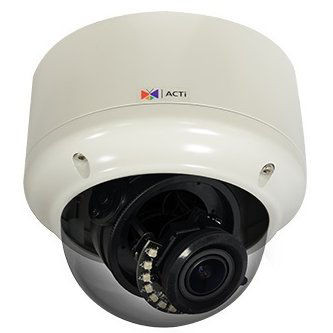
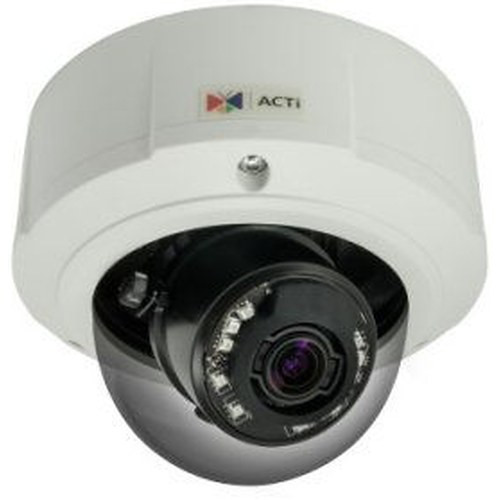
In This Guide
How do the imaging specs compare?
Both cameras use a 1/2.8-inch sensor at 2 MP resolution. The A83 delivers a wider zoom range of 2.8–12 mm (specified alternately as 3x and 4.3x optical zoom in the provided specs), while the B83 covers 3.0–9.0 mm at 3x optical zoom — a narrower telephoto reach. The A83's minimum illumination is 0.002 lux (color, F1.4), marginally better than the B83's 0.003 lux (color, F1.3). In IR mode, the B83 extends to 40 m versus the A83's 30 m, giving the B83 a longer night-vision reach despite the slightly higher lux floor. The A83 IR array consists of 12 adaptive LEDs at 850 nm; the B83 specification does not enumerate LED count.
WDR performance favors the B83 at 145 dB versus the A83's 142 dB — a 3 dB advantage in high-contrast scenes. Maximum frame rate is a clear differentiator: the B83 supports 60 fps at full 1920×1080, while the A83 is specified at 30 fps at 1920×1080. For smooth motion capture in high-activity environments, the B83's 60 fps capability is a meaningful advantage. The A83 supports H.265 compression in addition to H.264 and MJPEG, whereas the B83 is limited to H.264 (Baseline/Main/High) and MJPEG — relevant for storage and bandwidth efficiency on longer retention projects.
What about installation and environment?
The A83 carries an IP66 rating (protection against powerful water jets) plus NEMA 4X certification, while the B83 is rated IP67 (protection against temporary immersion up to 1 m). Both are IK10-rated for vandal resistance. For installations subject to standing water, wash-down, or brief flooding, the B83's IP67 rating provides greater ingress protection; the A83's NEMA 4X adds corrosion-resistance assurance relevant in coastal or industrial environments. Neither specification lists a conduit entry or drain plug detail beyond the noted 2 m cable tail on the A83.
Both cameras accept DC 12 V or PoE Class 3 (IEEE 802.3af) per their power supply spec, though both also list PoE+ (802.3at) as the PoE power class. The A83 specifies a maximum draw of 13 W. The B83 does not list a maximum wattage in the provided specs. Operating temperature is identical for both: –40°C to 50°C (–40°F to 122°F). The B83 is substantially heavier at 1,266 g (2.79 lb) versus the A83's 877.5 g (1.94 lb) — a relevant consideration for lightweight junction boxes or pole-top mounts. Both share the same mounting options: wall, pole, pendant, corner, and rack.
Which fits your VMS and analytics better?
Both cameras are ONVIF-compliant, supporting Profiles S, G, T, and Q. The B83 additionally lists Profile M (to be available via future firmware upgrade), which adds metadata streaming support relevant for analytics-forward VMS deployments. The A83 also lists Pelco-D and Pelco-P protocol compatibility in its VMS spec, which the B83 spec does not mention — an advantage for legacy Pelco-based systems. Neither model lists onboard SD card storage in the provided specifications.
Edge analytics for both include VMD (video motion detection) and people counting. The B83 spec additionally lists smoke detection as an analytics capability, which the A83 spec does not. Both models support two-way audio; the A83 specifies mic-in, line-in, and line-out, while the B83 lists line-in and line-out (mic-in not explicitly stated in the provided spec). The A83 carries a stated 3-year warranty; no warranty term is listed in the provided B83 specifications.
Which should you choose: the A83 or the B83?
Our take: The A83 is the stronger choice when H.265 compression, Pelco protocol compatibility, or legacy VMS integration is required, and where the 2.8–12 mm focal range better matches the site's field-of-view needs. The B83 is the stronger choice when maximum frame rate matters: it delivers 60 fps at full 1080p versus the A83's 30 fps — a decisive edge for fast-motion or forensic-detail applications. The B83 also extends IR range by 10 m (40 m vs. 30 m) and adds a smoke-detection analytics channel absent from the A83. The A83 counters with H.265 support for storage-efficient long-retention deployments and NEMA 4X certification for corrosion-prone environments. WDR favors the B83 by 3 dB (145 dB vs. 142 dB). For smooth-motion perimeter work without H.265 VMS requirements, the B83 is the more capable sensor platform; for bandwidth-constrained or Pelco-based systems, the A83 is the practical fit.
Side-by-Side Comparison
Spec-for-spec, from manufacturer data.
| Specification | ACTi A83 | ACTi B83 |
|---|---|---|
| Resolution | 2 MP (1920×1080) | 2 MP (1920×1080) |
| Image Sensor | 1/2.8" | 1/2.8" |
| Lens / Focal Length | 2.8–12 mm (3x / 4.3x optical zoom) | 3.0–9.0 mm (3x optical zoom) |
| Min. Illumination (Color) | 0.002 lux @ F1.4 | 0.003 lux @ F1.3 |
| Min. Illumination (B/W) | 0.001 lux @ F1.4; 0 lux (IR on) | 0 lux (IR on) |
| IR Range | 30 m | 40 m |
| IR Wavelength | 850 nm | 850 nm |
| WDR | 142 dB (Extreme WDR) | 145 dB (Extreme WDR) |
| Max Frame Rate | 30 fps @ 1920×1080 | 60 fps @ 1920×1080 |
| Video Compression | H.265; H.264; MJPEG | H.264 (Baseline/Main/High); MJPEG |
| IP Rating | IP66 / NEMA 4X | IP67 |
| IK / Impact Rating | IK10 | IK10 |
| Operating Temperature | -40°C to 50°C | -40°C to 50°C |
| Power Input / PoE Class | DC 12V; PoE+ (802.3at) Class 3; 13 W max | DC 12V; PoE+ (802.3at) Class 3; wattage not specified |
| ONVIF Profiles | S, G, T, Q | S, G, T, Q; M (future firmware) |
| Edge Analytics | VMD; People Counting | VMD; People Counting; Smoke Detection |
| Audio | Two-way (Mic-in, Line-in, Line-out) | Two-way (Line-in, Line-out) |
| Weight | 877.5 g (1.94 lb) | 1,266 g (2.79 lb) |
| Warranty | 3 years | — |
| Pelco Protocol Support | Pelco-D; Pelco-P | — |
Frequently Asked Questions
Which should you choose: the A83 or the B83?
The A83 is the stronger choice when H.265 compression, Pelco protocol compatibility, or legacy VMS integration is required, and where the 2.8–12 mm focal range better matches the site's field-of-view needs. The B83 is the stronger choice when maximum frame rate matters: it delivers 60 fps at full 1080p versus the A83's 30 fps — a decisive edge for fast-motion or forensic-detail applications. The B83 also extends IR range by 10 m (40 m vs. 30 m) and adds a smoke-detection analytics channel absent from the A83. The A83 counters with H.265 support for storage-efficient long-retention deployments and NEMA 4X certification for corrosion-prone environments. WDR favors the B83 by 3 dB (145 dB vs. 142 dB). For smooth-motion perimeter work without H.265 VMS requirements, the B83 is the more capable sensor platform; for bandwidth-constrained or Pelco-based systems, the A83 is the practical fit.
Is the A83 or B83 better for low-light performance?
The A83 has a marginally lower minimum illumination floor (0.002 lux vs. 0.003 lux in color mode), but the B83's IR illumination reaches 40 m versus the A83's 30 m. For scenes beyond 30 m in total darkness, the B83 maintains IR coverage where the A83 does not. For very close-range low-light scenes, the A83's 0.002 lux spec offers a slight edge, though both reach 0 lux with IR active.
Does it matter that the A83 supports H.265 and the B83 does not?
Yes, if storage or bandwidth is constrained. H.265 typically reduces bitrate by approximately 50% versus H.264 at equivalent quality, which directly affects NVR storage capacity and network load over long retention periods. The B83 is limited to H.264 and MJPEG per the provided specifications, so on a system storing 30+ days of 1080p footage, the A83's H.265 support can meaningfully reduce required storage.
Which camera is easier to install on a lightweight mount or junction box?
The A83 is lighter at 877.5 g (1.94 lb) compared to the B83 at 1,266 g (2.79 lb) — a difference of approximately 389 g (0.86 lb). On lightweight surface mounts, pole tops, or junction boxes with limited load ratings, the A83 imposes less mechanical stress. Both share identical mounting-type options per the provided specifications.
Get a Second Opinion on Your Camera Choice
Share your site layout, coverage goals, and budget. Our team will validate the camera selection, flag anything we would change, and recommend products that match the use case.