
ACTi A83 vs ACTi B65: Specification Comparison
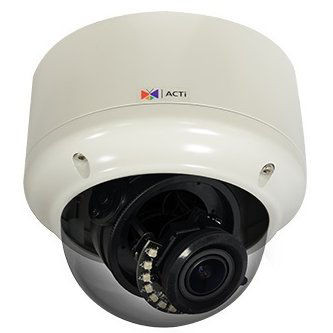
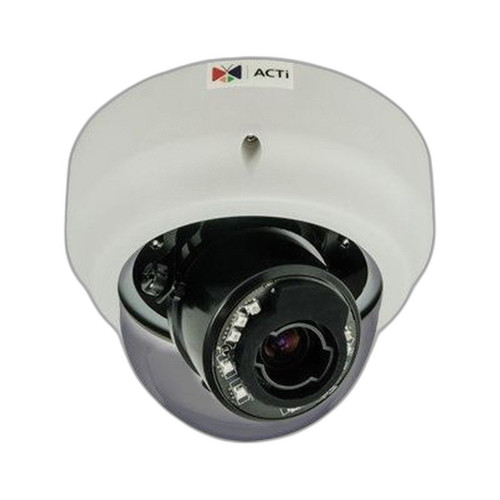
Both the ACTi A83 and ACTi B65 are 2MP zoom dome cameras offering 3x optical varifocal lenses, placing them in the same resolution class and camera-type category. This comparison addresses the meaningful divergence between the two: the A83 is an outdoor-rated, hardened model with advanced WDR and wide temperature tolerance, while the B65 is a lighter-duty indoor unit. Installers and IT buyers cross-shopping these two are typically deciding whether the target environment demands the A83's environmental and imaging hardening, or whether the B65's simpler indoor profile suffices.
In This Guide
How do the imaging specs compare?
Both cameras deliver 2MP resolution at up to 30 fps (1920×1080 confirmed on the A83; frame rate not specified in the B65 spec sheet). The A83 uses a 1/2.8" sensor with a motorized 2.8–12mm lens and achieves a minimum illumination of 0.002 lux (color) and 0.001 lux (B/W) at F1.4, dropping to 0 lux with IR active. It carries 12 adaptive IR LEDs at 850nm with a stated working distance of 30m. The B65 spec sheet lists varifocal 3x optical zoom and IR/Day-Night operation but does not specify sensor size, minimum illumination value, IR LED count, or IR working distance.
WDR is a significant differentiator: the A83 is rated at 142dB Extreme WDR, engineered for high-contrast backlit scenes. The B65 is listed only as 'Basic WDR' with no dB figure provided. For environments with mixed lighting, entrance lobbies, or windows in the field of view, the A83's WDR specification is substantially more detailed and higher-rated. The B65's WDR capability cannot be numerically compared due to absent spec data.
What about installation and environment?
The A83 carries IP66, IK10, and NEMA 4X ratings, making it suitable for outdoor installation, water/dust ingress resistance, and resistance to 20-joule mechanical impact. Its operating temperature range is –40°C to 50°C (–40°F to 122°F), covering arctic and subtropical deployments. The B65 has no IP rating, no IK rating, and no operating temperature range listed in the provided specifications, indicating an indoor-only profile with no confirmed environmental hardening.
On power, the A83 draws up to 13W and is compliant with PoE+ (802.3af/802.3at Class 3) as well as DC 12V. Note: the spec sheet lists both 'PoE Class 3 (802.3af)' and 'PoE+ (802.3at)' in different fields; installers should confirm the exact standard with ACTi documentation. The B65 operates on standard PoE (802.3af) at approximately 12–13W, consistent with a lower-power indoor unit. Mounting options differ: the A83 supports Wall, Pole, Pendant, Corner, and Rack mounts via accessories; the B65 supports Ceiling and Wall only. The A83 ships with a 2m cable; cable details are not specified for the B65. The A83 weighs 877.5g; B65 weight is not provided.
Which fits your VMS and analytics better?
The A83 supports ONVIF Profiles S, G, T, and Q, as well as Pelco-D and Pelco-P protocols, offering broad VMS compatibility including legacy DVR/NVR systems and modern profile-T streaming. It includes two-way audio (Mic-in, Line-in, Line-out) and edge analytics for VMD (Video Motion Detection) and People Counting. On-board storage is not explicitly listed in the provided specs for the A83.
The B65 is listed as ONVIF-compliant and compatible with standard IP VMS platforms, but no specific ONVIF profile levels (S, G, T, Q) are stated. Audio capability, edge analytics, and on-board storage are not specified for the B65. Buyers requiring People Counting, two-way audio, or confirmed multi-profile ONVIF support should note that these are documented only for the A83 in the provided specifications.
Which should you choose: the A83 or the B65?
Our take: The A83 is the stronger choice when the deployment demands outdoor survivability, high-contrast imaging performance, or confirmed edge analytics. Specifically: the A83 carries a documented 142dB Extreme WDR rating versus the B65's unquantified 'Basic WDR'; it is rated IP66/IK10/NEMA 4X with a –40°C to 50°C operating range while the B65 has no published environmental ratings; and it supports ONVIF Profiles S, G, T, and Q plus Pelco-D/P, two-way audio, and People Counting analytics—none of which are confirmed in the B65 spec sheet. The B65 may be appropriate for straightforward indoor ceiling or wall installations where PoE 802.3af sufficiency, basic zoom capability, and general ONVIF VMS compatibility are all that is required—and where the absence of published environmental, audio, and analytics specs is acceptable given the controlled indoor environment.
Side-by-Side Comparison
Spec-for-spec, from manufacturer data.
| Specification | ACTi A83 | ACTi B65 |
|---|---|---|
| Resolution | 2MP (1920×1080) | 2MP |
| Image Sensor Size | 1/2.8" | — |
| Lens / Focal Length | 2.8–12mm motorized varifocal (3×–4.3× optical zoom) | Varifocal 3× optical zoom (focal length not specified) |
| Min Illumination | 0.002 lux (color) / 0.001 lux (B/W) @ F1.4; 0 lux (IR on) | — |
| IR Range | 30m (12× adaptive IR LEDs, 850nm) | — (IR/Day-Night listed; range not specified) |
| WDR | Extreme WDR (142dB) | Basic WDR (no dB rating specified) |
| Max Frame Rate | 30 fps @ 1920×1080 | — |
| Video Compression | H.265; H.264; MJPEG | — |
| IP Rating | IP66 | — |
| IK / Impact Rating | IK10 | — |
| Additional Environmental | NEMA 4X; CE Class A; FCC Class A; EAC | — |
| Operating Temperature | –40°C to 50°C (–40°F to 122°F) | — |
| Power Input / PoE Class | PoE+ (802.3at) Class 3 / DC 12V; 13W max | PoE (802.3af); ~12–13W |
| ONVIF Profiles | S, G, T, Q; also Pelco-D; Pelco-P | ONVIF (profile levels not specified) |
| Edge Analytics | VMD; People Counting | — |
| Audio | Two-way (Mic-in, Line-in, Line-out) | — |
| Mount Types | Wall; Pole; Pendant; Corner; Rack | Ceiling; Wall |
| Weight | 877.5g (1.935 lb) | — |
| Warranty | 3 Years | — |
Frequently Asked Questions
Which should you choose: the A83 or the B65?
The A83 is the stronger choice when the deployment demands outdoor survivability, high-contrast imaging performance, or confirmed edge analytics. Specifically: the A83 carries a documented 142dB Extreme WDR rating versus the B65's unquantified 'Basic WDR'; it is rated IP66/IK10/NEMA 4X with a –40°C to 50°C operating range while the B65 has no published environmental ratings; and it supports ONVIF Profiles S, G, T, and Q plus Pelco-D/P, two-way audio, and People Counting analytics—none of which are confirmed in the B65 spec sheet. The B65 may be appropriate for straightforward indoor ceiling or wall installations where PoE 802.3af sufficiency, basic zoom capability, and general ONVIF VMS compatibility are all that is required—and where the absence of published environmental, audio, and analytics specs is acceptable given the controlled indoor environment.
Is the A83 or B65 better for low-light performance?
Based on available specifications, the A83 is better documented for low-light use: it lists a minimum illumination of 0.002 lux (color) and 0.001 lux (B/W) at F1.4, drops to 0 lux with IR active, and uses 12 adaptive IR LEDs with a 30m working distance. The B65 is listed as IR/Day-Night capable but provides no minimum illumination value, no IR LED count, and no IR working distance in the provided specs, so a direct numerical comparison is not possible.
Can the B65 be used outdoors?
The B65's provided specifications include no IP rating, no IK rating, and no operating temperature range. Without these published ratings, the B65 cannot be confirmed as suitable for outdoor installation based on the available data. The A83 is explicitly rated IP66, IK10, NEMA 4X, and –40°C to 50°C for outdoor use.
Do both cameras support People Counting analytics?
People Counting is listed as a supported edge analytic on the A83. The B65's provided specifications do not list any edge analytics capabilities, so People Counting is not confirmed for the B65.
Get a Second Opinion on Your Camera Choice
Share your site layout, coverage goals, and budget. Our team will validate the camera selection, flag anything we would change, and recommend products that match the use case.