
ACTi A818 vs Hanwha XNV-8083RZ: Specification Comparison
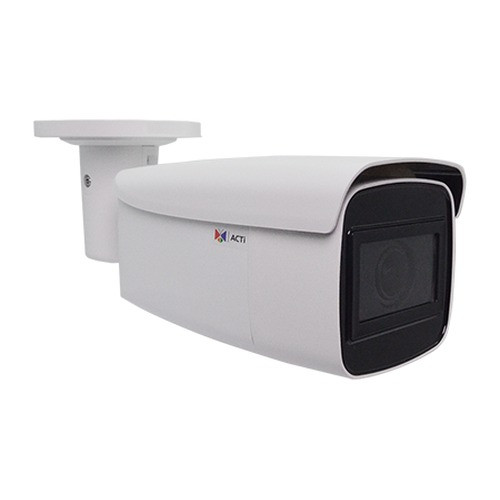
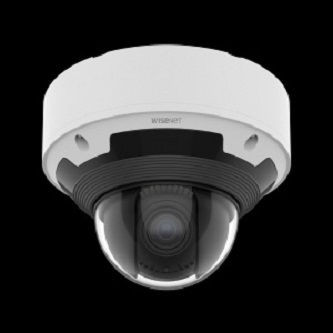
Both the ACTi A818 and Hanwha XNV-8083RZ are 6MP outdoor varifocal dome cameras targeting perimeter and general surveillance installations where remote lens adjustment matters. They occupy the same resolution class and share a fixed-dome form factor, PoE+ power, and ONVIF compliance—making them genuine cross-shop candidates for integrators evaluating mid-range outdoor domes. The comparison below examines imaging capability, environmental and installation characteristics, and platform integration based strictly on published specifications.
In This Guide
How do the imaging specs compare?
The A818 uses a 1/2.7-inch sensor delivering 6MP at resolutions up to 2592×1944, with a 2.7–13.5mm motorized varifocal lens providing a 5x optical zoom ratio. The XNV-8083RZ uses a larger 1/1.8-inch progressive CMOS sensor at a native 3328×1872 resolution and a 4.4–9.3mm motorized varifocal lens with a 2.1x zoom ratio. The Hanwha's physically larger sensor typically captures more light per pixel; its minimum illumination is specified at 0.03 lux color / 0 lux IR, compared to the A818's 0.01 lux color / 0 lux IR—both reaching 0 lux with IR active. The A818's 5x zoom range offers significantly greater scene compression flexibility versus the XNV-8083RZ's 2.1x range.
WDR performance differs meaningfully: the A818 is rated at 150dB Extreme WDR, while the XNV-8083RZ is rated at 120dB extremeWDR—a 30dB delta that can matter in high-contrast entrances or loading docks with direct sun and deep shadow. IR throw also diverges sharply: the A818 specifies 85m IR range at 1.0 lux (850nm LEDs), whereas the XNV-8083RZ specifies 15m in standard and 30m in a wall-installation scenario—roughly one-third the effective IR reach. The XNV-8083RZ adds Digital Image Stabilization and a Defog function, which are not specified for the A818. Maximum frame rate for both is 30fps at their respective 6MP resolutions.
What about installation and environment?
The A818 carries IP68, NEMA 4X, and IK10 ratings, making it suitable for full submersion scenarios and sustained washdown environments in addition to standard outdoor exposure. The XNV-8083RZ is rated IP66/IP67/IP6K9K and NEMA 4X with an IK10+ rating—slightly exceeding standard IK10 impact resistance, and adding IP6K9K (high-pressure/high-temperature wash) coverage. Both handle rain and hose-down cleaning; the A818's IP68 rating adds temporary immersion tolerance not explicitly listed for the Hanwha.
Power delivery differs by PoE class: the A818 draws up to 13W and is listed as PoE Class 3 (IEEE 802.3af/at), while the XNV-8083RZ is PoE+ Class 4 drawing up to 22.5W maximum (typical 12.1W)—requiring a PoE+ capable switch port. Operating temperature ranges also diverge: the A818 is rated −30°C to +60°C, while the XNV-8083RZ extends lower to −50°C to +55°C, offering an advantage in extreme cold-climate deployments. The A818 weighs 1,046g; the XNV-8083RZ is heavier at 2,000g. The A818 supports Wall, Pole, Corner, and Rack mounting; the XNV-8083RZ lists a compatible hanging dome mount (SBP-187HMW) and conduit/gangbox options. Both are dome form factor.
Which fits your VMS and analytics better?
Both cameras are ONVIF-compliant. The A818 supports ONVIF Profile S, G, T, and M. The XNV-8083RZ also supports ONVIF Profile S/G/T/M and additionally exposes SUNAPI and Wisenet native APIs, which benefit installers operating within Hanwha's own VMS ecosystem (Wisenet WAVE or SSM). The XNV-8083RZ's AI analytics engine classifies object types—Person, Face, Vehicle (with sub-types: car, bus, truck, motorcycle, bicycle), and License Plate—and supports virtual line crossing, virtual area loitering, and people counting. The A818's listed analytics include VMD, People Counting, Smoke Detection, Face Detection, and Tampering Detection; object classification depth and license plate detection are not specified for the A818.
For audio, the A818 specifies 2-way audio with microphone input, line input, and line output—supporting full intercom capability. The XNV-8083RZ does not list onboard audio I/O in the provided specifications; alarm I/O is noted as requiring an external NW I/O Box (SPM-4210). Edge storage on the XNV-8083RZ is robust: dual Micro SD/SDHC/SDXC slots supporting up to 1TB (512GB × 2) total, backed by 4GB RAM and 512MB Flash. The A818 does not specify onboard edge storage capacity in the provided specifications. The XNV-8083RZ also adds cybersecurity features including TPM 2.0 (FIPS 140-2 Level 2), 802.1X authentication, and device certificate support; the A818 holds Taiwan IoT Cybersecurity Certification Level 1.
Which should you choose: the A818 or the XNV-8083RZ?
Our take: The A818 is the stronger choice when long IR reach, higher WDR headroom, and 5x optical zoom are the primary requirements—its 85m IR range versus the XNV-8083RZ's 30m, its 150dB WDR versus 120dB, and its 5x versus 2.1x zoom ratio represent concrete advantages for large outdoor perimeters, parking areas, or high-contrast entry points. However, the XNV-8083RZ holds the edge in sensor size (1/1.8-inch vs. 1/2.7-inch), dual-slot edge storage up to 1TB, richer AI object classification including license plates and vehicle subtypes, a broader operating temperature floor of −50°C, and stronger cybersecurity credentials including TPM 2.0 FIPS 140-2 Level 2. Installers running Hanwha-native VMS will gain SUNAPI integration with the XNV-8083RZ. Choose the A818 for extended-range, high-contrast perimeter scenes requiring audio and wider zoom; choose the XNV-8083RZ for AI-driven analytics pipelines, dual SD redundancy, or extreme cold climates.
Side-by-Side Comparison
Spec-for-spec, from manufacturer data.
| Specification | ACTi A818 | Hanwha XNV-8083RZ |
|---|---|---|
| Resolution | 6MP (2592×1944 max) | 6MP (3328×1872) |
| Image Sensor | 1/2.7-inch | 1/1.8-inch progressive CMOS |
| Lens / Focal Length | 2.7–13.5mm motorized varifocal (5x optical zoom) | 4.4–9.3mm motorized varifocal (2.1x zoom) |
| Min. Illumination | 0.01 lux color / 0 lux IR | 0.03 lux color / 0 lux IR |
| IR Range | 85m @ 1.0 lux (850nm) | 15m standard / 30m wall-mount scenario |
| WDR | Extreme WDR 150dB | extremeWDR 120dB |
| Max Frame Rate | 30fps @ 1080p; 25fps @ 2688×1520; 20fps @ 2592×1944 | 30fps @ 6MP |
| Video Compression | H.265, H.264, MJPEG | H.265, H.264, MJPEG; WiseStream II/III |
| IP Rating | IP68, NEMA 4X | IP66 / IP67 / IP6K9K, NEMA 4X |
| IK / Impact Rating | IK10 | IK10+ |
| Operating Temperature | -30°C to +60°C | -50°C to +55°C |
| Power Input / PoE Class | PoE+ (802.3at) Class 3, DC 12V; max 13W | PoE+ (802.3at) Class 4; max 22.5W, typical 12.1W |
| Edge Storage | Not specified | Dual Micro SD/SDHC/SDXC; max 1TB (512GB × 2) |
| Audio | 2-way; Mic-in; Line-in; Line-out | Not specified in provided specs |
| Weight | 1,046g (2.31 lb) | 2,000g (4.41 lb) |
| Warranty | 3 years | 3 years |
Frequently Asked Questions
Which should you choose: the A818 or the XNV-8083RZ?
The A818 is the stronger choice when long IR reach, higher WDR headroom, and 5x optical zoom are the primary requirements—its 85m IR range versus the XNV-8083RZ's 30m, its 150dB WDR versus 120dB, and its 5x versus 2.1x zoom ratio represent concrete advantages for large outdoor perimeters, parking areas, or high-contrast entry points. However, the XNV-8083RZ holds the edge in sensor size (1/1.8-inch vs. 1/2.7-inch), dual-slot edge storage up to 1TB, richer AI object classification including license plates and vehicle subtypes, a broader operating temperature floor of −50°C, and stronger cybersecurity credentials including TPM 2.0 FIPS 140-2 Level 2. Installers running Hanwha-native VMS will gain SUNAPI integration with the XNV-8083RZ. Choose the A818 for extended-range, high-contrast perimeter scenes requiring audio and wider zoom; choose the XNV-8083RZ for AI-driven analytics pipelines, dual SD redundancy, or extreme cold climates.
Is the A818 or XNV-8083RZ better for low-light performance?
Both cameras reach 0 lux minimum illumination when IR is active, so neither has a functional advantage in complete darkness. In residual-light conditions, the XNV-8083RZ's larger 1/1.8-inch sensor (vs. the A818's 1/2.7-inch) generally yields better signal-to-noise performance at low lux, and its color minimum illumination is specified at 0.03 lux versus the A818's 0.01 lux. For IR-lit range, however, the A818's 85m throw significantly outreaches the XNV-8083RZ's 15–30m.
Which camera needs a PoE+ switch and which works on a standard PoE switch?
The A818 draws up to 13W and is listed as PoE Class 3 (IEEE 802.3af), meaning it can operate on a standard PoE switch port. The XNV-8083RZ is PoE+ Class 4 with a maximum draw of 22.5W, requiring a PoE+ (IEEE 802.3at) capable switch port. Verify your switch's per-port power budget before deploying the XNV-8083RZ.
Which camera is better suited for AI-based vehicle and license plate detection?
The XNV-8083RZ is the clear choice here. Its AI engine explicitly classifies vehicles by sub-type (car, bus, truck, motorcycle, bicycle) and includes license plate detection, along with virtual line crossing and loitering analytics. The A818 lists VMD, People Counting, Smoke Detection, Face Detection, and Tampering Detection in its specifications, but vehicle sub-classification and license plate analytics are not specified for the A818.
Get a Second Opinion on Your Camera Choice
Share your site layout, coverage goals, and budget. Our team will validate the camera selection, flag anything we would change, and recommend products that match the use case.